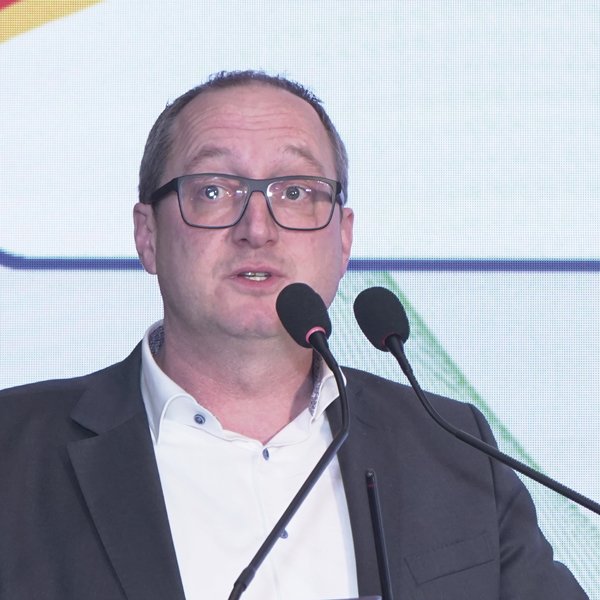
The HeiConnect Conference in Mumbai on 29 January was an excellent event. The company appears to have decided to leverage its strong foothold in the country and its extensive portfolio as an integrator and full solutions provider.
The offering now encompasses multicolor offset presses produced in both Germany and China, Gallus flexo, digital, and hybrid label presses, webfed Boardmaster carton presses, Masterwork diecutters, hot foil stamping and folder gluing machines, and digital presses sourced from Ricoh and Canon. The updated portfolio now extends to the CX 145 very large format multicolor offset press manufactured by Manroland Sheetfed.

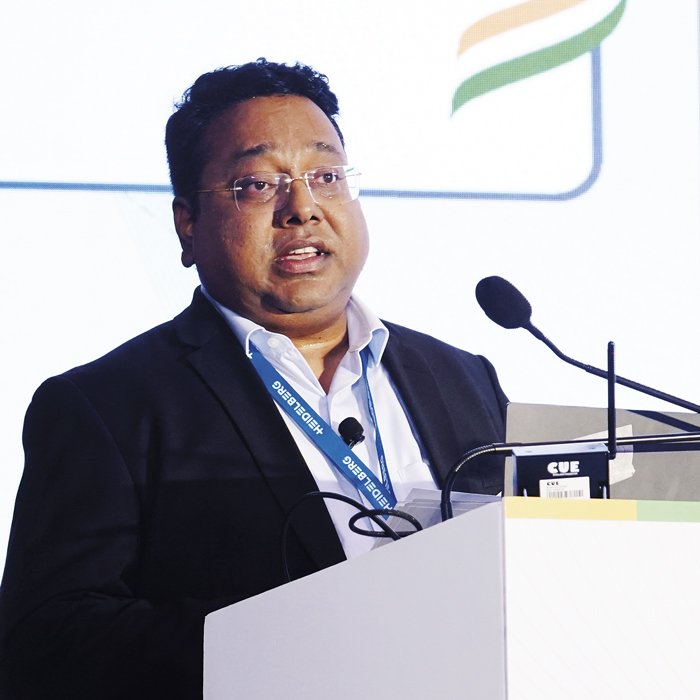
The one-day conference brought together a large number of Heidelberg commercial, packaging, and label printers in the country, together with many of the leading consumer brand owners and strategists for wide-ranging discussion. In what can be honestly described as a global networking event, commercial and packaging printers from Germany also took part. And this was after they had spent some time visiting leading Heidelberg users in the greater Mumbai area.
Heidelberg showed the breadth of its human resources, especially at the operational leadership level, in the first session. Its India team, led by Samir Patkar, spoke about the printscape and was followed by local Prinect product manager Indukalpa Saikia, its product manager for Gallus Narendra Kulkarni, its postpress product manager Prabaharan, its head of consumables Robert Joseph, and its territory manager for lifecycle operations Upendra Rajadyna. Justin Tye, the regional development manager for sheetfed, and Martin Ernst, head of service for Asia Pacific, participated in this substantive demonstration of Heidelberg resources in place across Asia.
The session on brand packaging included panelists from the food, FMCG, and eCommerce sectors as well as a leading Heidelberg label converter. Preceding the panel discussion was an interesting presentation by Ramaiah Muthusubramanian of Packfora that examined some of the global and local trends in consumer product marketing and packaging. Muthusubramaniam highlighted the complexity of the moment – between volumes and fragmentation, and between economy and complexity. The first moment of truth has now become the zero moment of truth, he said, as we are subjected to the world of Insta and TikTok.
The next panel session looked more specifically at the connection between branding and cartons and labels for the pharma and alcobev segments. A key takeaway from the panelists was that the high cost of taxation and compliance, especially on alcobev, puts extreme price pressure on what is considered to be a luxury sector, reducing the cost of the product itself to a fraction of the regulatory overheads.
The third and last panel of the day presented some of the young leaders who have ascended to the top position in legacy label, commercial printing, and packaging businesses in the country. Apart from their grasp of new technology and market demands, the young men were exceptionally thoughtful about future opportunities and challenges. They remained modest, polite, and articulate – remaining focused on their main business, and also in welcoming competition that may arise with the opening of the economy to the India-European Union FTA. The panel was followed by Heidelberg recognizing some of the leading print and packaging educators and institutions around the country.
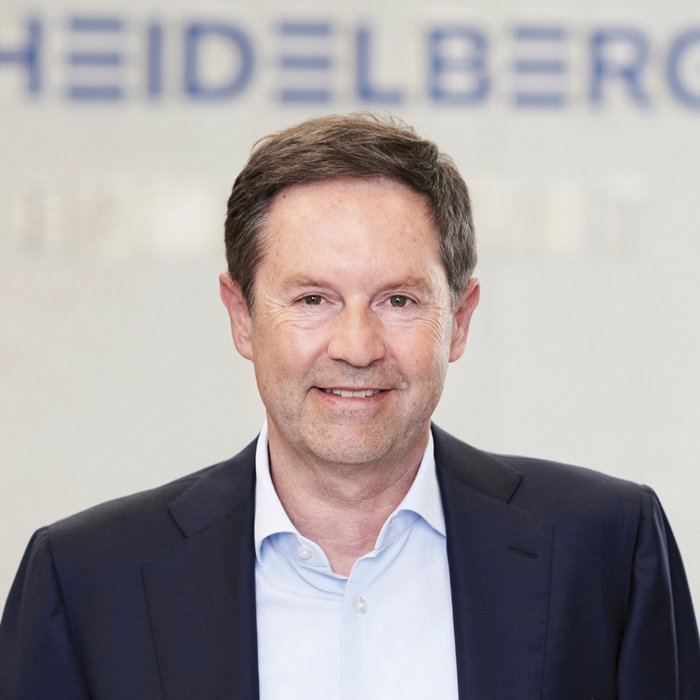
The next session was addressed by two of Heidelberg’s top management present at the event. First, David Schmedding, the company’s CTO and CSO, projected the opportunity presented by the Indian print and packaging industry’s growth. He spoke about the company shifting its focus to India, its awareness that the market’s price sensitivity is compelling it to become more efficient, and the need and opportunity to invest locally in service and capacity.
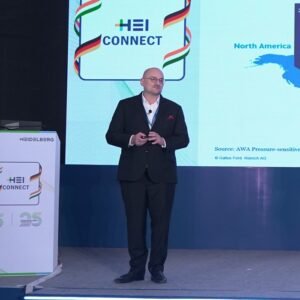
Dario Urbinati, CEO of Gallus Group, addressed the global scenario in label production and the competitive situation in the manufacture of flexo presses, including the increasing production from Asia and India. Then, citing the global trends of fragmented and short-run demands and premiumization, he spoke about the Gallus system to compose, emphasizing the ability of customers to design hybrid and digital label systems based on a particular set of applications.
This was followed by extremely interesting presentations by Klaus Sauer, the managing director of Saxoprint, and Mathias Bauer, the managing director of Druckerei Bauer. Both of these German companies are Heidelberg customers, and their visits to plants in the Mumbai area seemed to have impressed them. Their empathetic sharing of their own businesses and their outlook and belief in high technology implied that leading Indian printers will need to similarly invest to achieve the high levels of quality and efficiency demanded by current market conditions.
Saxoprint’s plant video showed an almost extreme level of automation on each machine based on a rule-based workflow, and the very high level of standardization and workflow procedures was eye-opening. The insistence on running all presses 24/7 at the full rated speed demonstrated an efficiency that has so far remained well-beyond the aspirations of most Indian print and packaging companies.