South Asia’s flexographic printing industry is undergoing a major technological transformation, driven by a rapid shift from traditional printing techniques to modern, sustainable flexo solutions, according to senior Flint Group officials.
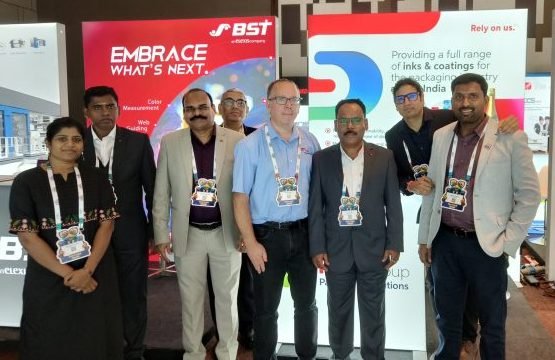
In a conversation with Packaging South Asia at Flexo Summit Asia 2026 in Bengaluru, Richard Birch, product and service manager, Northern EU, and Vipin Sharma, national application specialist, Flint Group, highlighted this market evolution, focusing on market trends, shifting paradigms, and advancing sustainability in the region.

The primary driver of this transformation is the shift from traditional gravure technology toward UV-based, water-based, and wide-web flexo solutions. The global flexographic printing market is expanding steadily at a compound annual growth rate (CAGR) of 3.4%.
This growth is supported by ongoing advancements in press machinery, increased awareness surrounding the circular economy, and rapid developments in plate and ink technologies, alongside an expanding skilled workforce across the Indian subcontinent, they explained.
On India’s evolving position as a flexo-based manufacturing hub, Birch said that while European and US manufacturers have long dominated machinery production in mechanical sectors, India is steadily accelerating its presence.
Data analysis demonstrates that the industry’s potential growth range could expand from 5% to 90%. While market expansion brings operational challenges, the flexo community is moving at a high-speed, accelerated pace to capitalize on these new opportunities.
Sustainability is a central imperative driving modern production practices. Recognizing that plastic currently lacks direct substitutes, the industry is shifting focus toward recyclable alternatives and enhanced circular design.
“Sustainability should come from within,” Sharma said. “To address environmental standards, ink manufacturers are introducing non-toluene, non-ketone (NC-free), non-PVC, and polyurethane (PU) inks designed with lower volatile organic compound (VOC) emissions to ensure full recyclability.”
In addition to ink reformulations, Flint Group is supporting market changes through broader technological solutions, including digital printing machinery such as Xeikon. “We provide to all types of technologies, including rotogravure, flexo, UV, water-based, paper, and board,” Birch said.
The flexo industry is transitioning toward toluene-free systems to meet stringent food safety requirements and international compliance standards, he said.
They said sustainable innovation must remain holistic, delivering food-grade safety while preserving overall equipment effectiveness (OEE) and practical commercial viability.