India’s narrow-web flexographic label press market is set to grow in capacity addition and value in FY 2026-27, supported by continued investment from label converters and the improving capabilities of domestic machinery manufacturers. Domestic manufacturers continue to strengthen their position against imported equipment, while changing converter requirements are creating opportunities for more automated and versatile press configurations. Indian and Asian converters are expanding production capacity, investing in automation, and exploring higher-value applications, including short and mid-run flexible packaging. Global manufacturers whose sales have declined in this market are realizing the need to manufacture in Asia.
Industry estimates indicate that perhaps as many as 210 to 225 label presses, including digital presses, were installed in India during FY 2025-26. Of these, around 140-150 narrow- and mid-web flexo label presses came from Indian manufacturers, approximately 40 from China, and about a dozen from European, American, and Japanese original equipment manufacturers (OEMs). According to our previous reports, a further 25 to 35 digital label presses were installed during the year.
For FY 2026-27, preliminary industry estimates suggest that narrow- and mid-web flexo label press installations seem to be trending higher, at approximately 205 to 210 machines. The dominant share of narrow- and mid-web flexo presses, about 190 will come from Indian manufacturers. Flexo label presses imported from Europe, Japan and the US will likely fall further to single digits, while Asian label presses (not all flexo since offset and other technologies are also there) will come to approximately 40 presses.
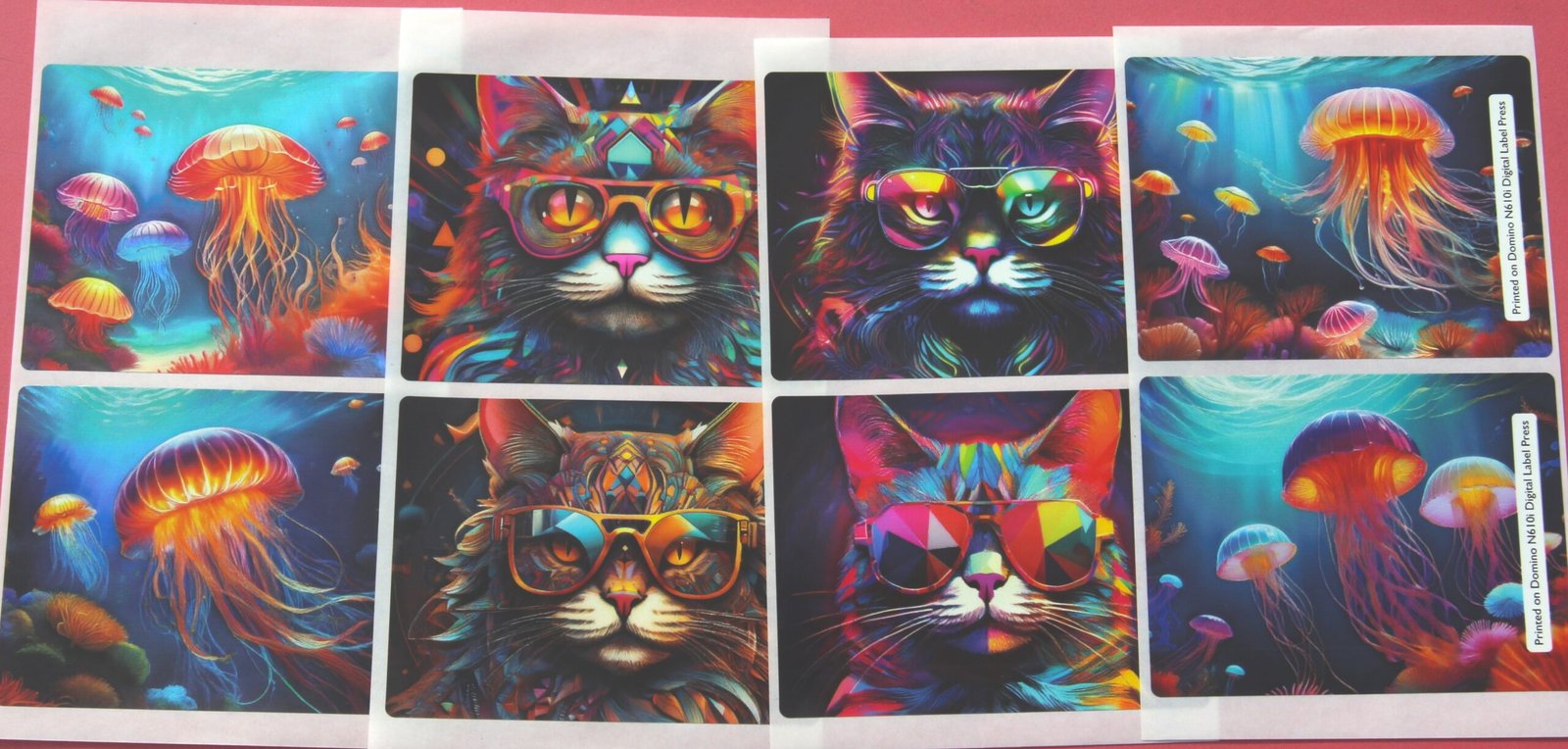
The approximately 50 digital label press installations in the current financial year would likely take the total label press installs to somewhere between 235 to 245 machines. Furthermore, in this year, the number of mid-web presses with increased automation is likely to be higher.
Domestic manufacturers strengthen exports
The growing role of Indian manufacturers is one of the defining characteristics of the market. Their competitive position has improved through developments in press engineering, automation, registration control, substrate handling and finishing capabilities – alongside competitive pricing and local after-sales support.
Indian label press manufacturers such as Multitec, Nilpeter and a couple of others have increasingly targeted developed markets, including Europe and the United States. The Middle East, Africa, and Russia have also emerged as important export destinations.
For FY 2026-27, preliminary estimates suggest that established Indian manufacturers will continue to account for a substantial proportion of narrow-web flexo press installations. Nilpeter India, Multitec, UV Graphics, Alliance, Webtech International, NBG, RK Labels, and Moksha are among the manufacturers contributing to the anticipated capacity creation.
However, the competitive environment remains fragmented. Established OEMs must contend with smaller manufacturers entering the market, and with Chinese and Asian machinery suppliers offering alternatives at several technology levels at competitive prices. International brands leveraging advanced technology and established customer relationships are also developing more competitive ‘made-for-Asia’ models, which could present interesting surprises at Loupe India.
For Indian manufacturers, sustaining growth will require balancing price competitiveness with investments in product development, manufacturing quality, service infrastructure, and export capabilities. Nevertheless, Indian label and mid-web press exports could approach two dozen this year.
Productivity becomes a stronger investment driver
The purchasing priorities of label converters are evolving alongside the machinery market. While price and maximum running speed remain important, converters increasingly need presses that can handle frequent job changes, multiple SKUs, and shorter production runs without excessive material waste.
Servo-driven systems, automatic registration, electronic job presets, and improved tension control can help reduce setup time and improve production consistency. Their value becomes apparent particularly when converters handle a large number of jobs or work with thin films and other demanding substrates on mid-web flexo presses for flexible packaging.
The emphasis on efficiency extends beyond the press itself. According to insights from a press manufacturer, converters are investing in automated unwinding and rewinding, ancillary equipment, and more integrated production workflows to reduce material waste and manual handling.
These investments reflect a broader shift in how converters evaluate machinery. Rather than considering the press solely as a capital purchase, they increasingly assess its contribution to overall production efficiency, operating costs, and delivery performance.
For press manufacturers, the opportunity lies in offering configurations that deliver measurable productivity improvements rather than competing exclusively on the initial purchase price.
Challenges in a competitive market
Despite the opportunities, the market faces several challenges. The entry of new label and flexible packaging converters and the availability of relatively affordable machinery can intensify price competition, particularly in commoditized label applications. Overall volumes are rising but there is some fragmentation and premiumization, which is a sign that overall volume demand has been hit by inflation.
At the same time, converters must ensure that investments in higher-configuration machinery are supported by sufficient order volumes and an appropriate product mix. Greater automation can improve productivity, but the financial benefits depend on machine utilization and the types of jobs being produced.
Label converters must also address shortages of skilled engineers and technicians. Advanced automation can reduce operator intervention, but it increases the importance of technical training, reliable commissioning, preventive maintenance, and responsive after-sales support.
Export development brings additional requirements. Label producers seeking customers in established international markets must demonstrate consistent print quality, reliable performance, technical support, and the ability to meet demanding production requirements.
FY 2026-27 outlook
The FY 2025-26 figures demonstrated the scale of India’s label machinery market and the increasingly important role played by domestic manufacturers. The outlook for the financial year ending 31 March 2027 points to continued investment in narrow- and mid-web flexo presses and a significant increase in digital and hybrid presses.
The next phase of growth will depend on more than installation volumes. Manufacturers will need to strengthen their technology offerings, expand exports and differentiate themselves through productivity, service and application flexibility. Converters, meanwhile, will have to balance capacity expansion, diversification, value addition, and profitability in an increasingly competitive market with volatile costs of raw materials and human resources.
As FY 2026-27 progresses, verified installation figures and manufacturer order data will help establish whether the market is maintaining its previous momentum. According to our informal data gathering, it seems Asian manufactured flexo, offset, digital, and hybrid label and flexible packaging presses are gaining market share. And the European, Japanese, and American manufacturers may be increasingly compelled to follow the early example of Nilpeter, and manufacture where the action is – in India and Asia.