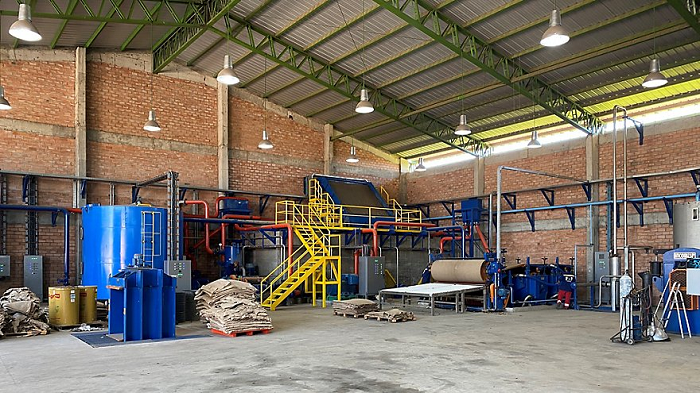
In the run-up to Earth Day on 22 April, Tetra Pak, a food processing and packaging solutions company, is highlighting some of its recent recycling initiatives that are helping to keep valuable materials in use and out of landfills. These initiatives are part of the investments the company has been making for decades, to support collection and recycling infrastructure across the world, growing the number of recycling operations handling cartons worldwide from 40 in 2010 to more than 200 today.
According to the World Bank, global waste is predicted to increase 70% by 2050, unless immediate and significant action is taken. Despite its essential role in feeding a growing global population, food packaging can add to the issue if not properly collected and recycled.

Tetra Pak’s recent collaborations are focused on creating additional recycling capacity, increasing collection rates and ensuring that materials from post-consumer beverage cartons can re-enter the economy.
Markus Pfanner, vice-president, Sustainability Operations at Tetra Pak, emphasizes that building a circular economy requires system-wide action and cooperation, supported by a regulatory framework that creates the conditions to turn challenges into opportunities.
Pfanner says, “We need to move away from a linear ‘take-make-waste’ model towards a more connected circular economy. But being part of a circular solution can’t be driven single-handedly by one individual or entity – scientists, policy makers, recyclers and industry players and citizens must work together.”
Paper-based beverage cartons are recyclable where adequate collection, sorting and recycling infrastructures are in place. Tetra Pak estimates that, globally, 1.2 million tonnes of beverage cartons have been collected and sent for recycling in 2021. But the picture is very fragmented across the globe and long-lasting change can only happen through collective action, transformational innovation and bold investments.
In 2022, Tetra Pak put nearly €30 million into projects worldwide, with plans to go further and invest up to €40 million annually over the next years, in line with its targets on collection and recycling of beverage cartons. As part of the Alliance for Beverage Cartons and the Environment (ACE), the company supports the industry ambition to increase the collection for recycling rate of beverage cartons to 90% and the recycling rate to 70%, in the EU, by 2030.
The company’s goals also include realizing the national recyclability criteria for its packages in all countries where it operates, and fulfilling the Ellen MacArthur Foundation’s Global Commitment, a common vision of a circular economy for plastics.
From expanding recycling capacity via multi-stakeholder cooperation, through boosting new market opportunities for recycled materials to re-inventing sorting for a more holistic waste management system, Tetra Pak’s recycling initiatives help turn all components of a used carton package into quality materials and goods.
Christine Levêque, vice-president, Collection and Recycling, Tetra Pak adds, “Three principles are guiding our circularity agenda: designing out waste and pollution, keeping products and materials in use, and regenerating natural systems. These hero initiatives showcase how innovation and a clear drive to change the status quo are key to keep quality materials in circulation and minimize the use of new ones. None of these developments could be realized without our 70 experts around the globe, who are collaborating every day with recyclers, local authorities and food and beverage manufacturers to drive the transformation needed to scale up collection and recycling.”