Since Rajoo Engineers and Kohli had booked their PlastIndia stands well in advance of Rajoo acquiring a majority stake in Kohli, the two organizations, now part of the Rajoo Group, will have separate stands at PlastIndia from 5 to 10 February 2026 in New Delhi. Diagonally opposite each other, the two stands are in Hall 6 and are working together for the show as a single group to highlight their end-to-end solutions for flexible packaging in addition to Rajoo’s semi-rigid plastic container manufacturing equipment.
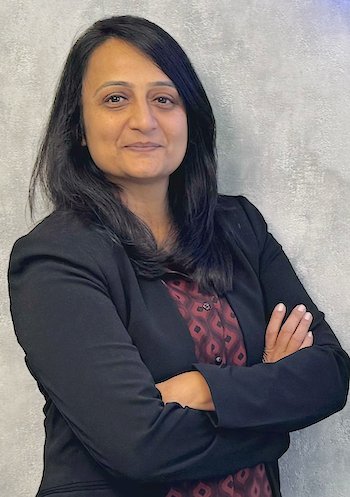
In our recent interaction about the two companies working together, we asked Rajoo Engineers’ managing director, Khushboo Doshi, about what would be shown at the Rajoo stand, to which she answered, “We’re going to display two machines. One is a blown film line, which works with the sustainability concept for the flexible packaging industry, and we are actively promoting it together with Kohli. In addition to the live demonstrations of the new blown film line, we are displaying a multi-station thermoformer for the production of plastic trays and containers for semi-rigid packaging.

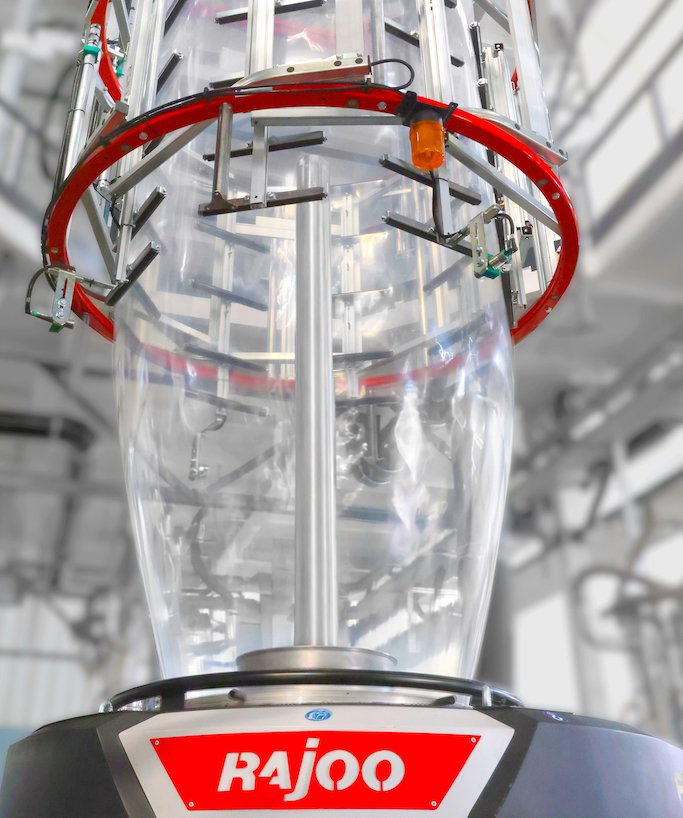
“We will be demonstrating live a 5-layer blown film line running at 600kg/hr output in 2100mm film width, which is much more compact than blown film lines of this capacity. High productivity on a narrower film is the USP of the line focused on flexible packaging applications, including shrink and lamination grade films.”
We ask why this concept is of interest to the market. Khushboo Doshi explains, “Conventional film conversion has relied on wider webs to raise throughput. We are displaying our compact PENTAFOIL blown film line at Plastindia 2026 by increasing web speed, where higher cooling capacity and winding velocity deliver equivalent productivity without additional footprint, lower power consumption, and ease in operation through three applications engineered for narrow tolerances.”
The Rajoo group at the two stands will present the entire gamut of equipment for manufacturing flexible packaging –blown film extrusion, gravure printing, extrusion coating, and conventional lamination, two types of coating, and slitting and rewinding. Additionally, for semi-rigid packaging, a thermoforming machine will be shown.
In the nearby Kohli stand, there will be several presentations and talks in a TV lounge. Kaku Kohli said during our interaction, “These will relate to sustainability and environment, single-family polymer packaging, and several other ideas and concepts which I would like to personally talk about and share with the converting community.”
Kohli further explained that the new concepts in flexible packaging and gravure printing will include water-based gravure printing and best practices for safety and preventing hazards. Some industry experts suggest that water-based gravure is academic and a topic only for conferences and webinars, while Kohli’s presses have performed live demonstrations of water-based gravure printing at the plant in Ambernath. Several converters are also using water-based gravure but are reluctant to share their experience at this point.
Rajoo and Kohli’s coating solutions include both the extrusion coater and a coater for water-based barrier coating for single-family laminates and packaging substrates. This coater is especially relevant because of new applications such as functional coatings. Increasingly, flexible and paper substrates for flexible packaging are being given barrier properties with the use of functional coatings and printable functional coatings.
Speaking about the combined offerings of the group at PlastIndia and going forward, Doshi adds, “All this is under one umbrella. Film extrusion, printing, the laminator, coating, special coating lines, barrier coating lines. So, the idea is to display to the market that everything is available at one window, which will help to improve the overall customer experience.”