We recently met with Manfred Zurkirch, CEO of Neopac Group, a leading tube and plastic packaging manufacturer headquartered in Thun, Switzerland, with plants in Switzerland, Hungary, the USA and India. Zurkirch is a packaging industry veteran who has crossed over to manufacturing from the machinery and technology side. In our conversation with Zurkirch and Anant Gadre, the managing director of Neopac India (3D Technopack), the company’s Indian subsidiary, the two spoke mainly of the company’s premium positioning in the market and its significant investment currently underway adjacent to the company’s current plant in Silvassa.
“India is high on our growth agenda,” says Zurkirch. “With Neopac India, we already have a strong footprint here, and the new facility we are building in Silvassa will serve as our mothership to scale operations and strengthen our technology and quality leadership.”


and Anant Gadre, the managing director of
Neopac India.
Photo- PSA
Neopac Group is a global leader in high-quality and premium tubes and dispensing solutions for the pharmaceutical, cosmetics, and consumer goods industries. Long-standing customers include international pharmaceutical, cosmetics, and consumer goods manufacturers in Europe, North America, and Asia. The company, which operates locally as Neopac India(3D Technopack), is strengthening its presence in India by doubling its capacity with a new 15,000-square-meter plant in Silvassa, slated to be operational by March 2026.
The company is investing nearly Rs 50 crore in the new plant’s machinery, excluding the building and infrastructure costs. “In the past few years, we were constrained in terms of space, but our new plant is an upfront investment because we believe in the Indian market and our ability to grow sustainably here,” Zurkirch emphasizes.
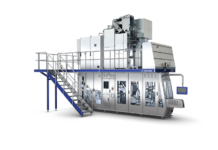
Zurkirch and Anant Gadre, explained that the Silvassa plant will add significant new production and decoration capabilities. “We’re bringing in new equipment and technology for tube making, decoration, and cap production,” Gadre notes.
Co-extruded tubes
Unlike many tube manufacturers in India who cater to the mass-market laminated tube segment, Neopac India operates in co-extruded and high-performance tubes for premium cosmetics and pharmaceutical applications. “Laminate tubes dominate toothpaste and shaving cream packaging segments, led by the other global players in the country,” explains Zurkirch. “We don’t compete there. Our focus is on beauty, skin care, and high-end cosmetic tubes.”
Neopac India’s tubes are characterized by seamless construction, high precision, and advanced decoration technologies such as cold foiling, hot foiling, and screen/flexo or offset printing. These tubes not only offer premium aesthetics but also deliver technical performance, including required barrier and bounce, making them ideal for premium cosmetics and over-the-counter pharmaceutical products.
Growth by premiumization
The Indian market’s steady shift toward premium and luxury personal care products has created new opportunities for packaging suppliers like Neopac. According to Zurkirch, the company is not chasing volumes at any cost; the growth is based on quality, innovation, and technology. “We’d rather stay focused on high-value segments that protect our margins and reputation.”
“We serve both MNCs and Indian brands in the personal care, wellness, and beauty categories,” adds Gadre. “Our tubes are custom-made, fully decorated and printed, delivered as finished products.”
Sustainable and regulatory-compliant solutions
Sustainability remains a vital point for Neopac’s global philosophy, though Zurkirch admits there has been a recent slowdown in momentum across markets. “With some customers, we do feel that sustainability targets have slowed down—particularly in India and North America,” he says. “Some customers have postponed their goals by five or even ten years. In Europe, some customers are watching and waiting, and others are still pushing it strongly, like the French, where, especially among the cosmetic brands, the push for PCR (post-consumer recycled) content and lightweight tubes continues strongly.”
Despite this temporary slowdown, Neopac is aligned with recent Plastic Waste Management regulations in offering recyclable tube structures that comply with India’s EPR (Extended Producer Responsibility) framework. “Our co-extruded tubes are inherently sustainable,” Gadre explains. “We use EVOH-based barrier layers that are recyclable to a certain extent. We also offer mono-material tubes with PE caps and PCR-based solutions for customers who require them, also with EU-compliant, food-grade recycled polymers.”
With the significant research and development taking place in Switzerland, the Indian company exports tubes that are compliant with EU and other export market regulations. Neopac is registered under India’s EPR portal and partners with certified recyclers to manage its waste obligations. It also manufactures tubes with up to 28% locally sourced PCR materials and fiber-based tubes.
Industry consolidation
The tube industry globally, according to Zurkirch, is witnessing ongoing consolidation. “There are not many large players—perhaps ten globally,” he says. “In plastics, you have Albea, EPL, Tupack, and Neopac among the top five. Many smaller companies are struggling, and mergers or acquisitions are happening, but even the prospective buyers have become cautious because growth rates are not infinite.”
In India, the scenario is similar. While large players such as Albea, EPL, and Mahika dominate, there are dozens of smaller companies in the Rs 50–100 crore range. Neopac’s focus remains on scaling organically through technology and premium quality rather than acquisitions.
Looking ahead, the company is optimistic about India’s long-term growth story. “We are just around the corner for the next big jump,” says Zurkirch. “With the new facility, we’ll have more space, efficiency, and the ability to expand further. In any case, we are in India for the long run, because we believe in the market and we believe in our strengths.”