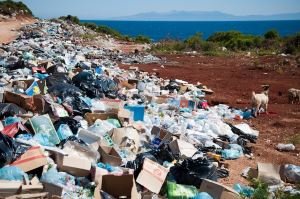
Plastic pollution has been a major cause of concern for environmentalists as well as the industry, which has been trying to find sustainable alternatives and cut down on the use of plastic. Packaging alone—especially single-use items —is arguably one of the largest sources of plastic waste globally, contributing massively to environmental degradation, ecosystem harm, and health risks.
While all this might sound highly alarming, there is some good news. New research from American think tank, The Pew Charitable Trusts, shows that packaging pollution can be almost eliminated if the right measures are taken at the right time, including systemic redesign, reuse models, and improved waste management.

In fact, this is something the pro-plastic lobby has been constantly highlighting at prominent forums such as the Global Plastics Treaty meetings – that plastic is a durable material and, if managed well, is not a demon. Anti-plastic campaigners might have a different take on it, but according to The Breaking the Plastic Wave 2025 report, eliminating packaging pollution is both achievable and economically beneficial—if decisive action is taken now.
However, there is a caveat. Without such action, the amount of plastic polluting land, air, and water each year could nearly double from 130 million tons in 2025 to 280 million tons by 2040, equivalent to dumping nearly a garbage truck’s worth of plastic waste every second.
Most of this growth is driven by expanding production and use of plastics that far outstrip the world’s capacity to manage waste, the PEW report says. In the absence of urgent international efforts, annual primary plastic production will rise 52% from 450 MT in 2025 to 680 MT in 2040, growing twice as fast because waste management, which, even with considerable investment, will expand by only 26%.
Plastic packaging typically has a short shelf life—used once and discarded—yet persists in the environment for a long time. Under a business-as-usual (BAU) path, packaging waste and pollution will continue to rise sharply, while existing waste management systems become increasingly overwhelmed, the report warns.
Although a large share of plastic packaging waste is collected (about 85% in 2025), only a small portion enters recycling streams (around 21%); most ends up in landfills (54%) or incineration (12%).
The most-used polymers in plastic packaging are LDPE/LLDPE and PP, followed by HDPE and PET. We all know that flexible and multilayer packaging—commonly used for food and personal care products—is particularly problematic because it is difficult to sort and recycle laterally, meaning much of this waste firstly escapes collection systems and pollutes the environment, or it is either downcycled, incinerated, or winds up in landfills.
This challenge is compounded by annual production trends with which waste management will not be able to keep pace – as a result, the cost and complexity of managing plastic waste will continue to escalate, straining public infrastructure and natural ecosystems.
System transformation to tackle plastic pollution
System transformation can only come from giving up BAU and from radical but doable measures, according to the report. These could lead to up to an 83% reduction in annual plastic pollution, a 97% cut in annual plastic pollution from packaging, and a 44% cut in annual primary plastic production. The system change includes a 3X increase in mechanical recycling.
The report’s system transformation scenario is being billed as a comprehensive alternative to the BAU path. It combines upstream actions such as reducing plastic production and redesigning materials with downstream measures that improve collection, sorting, and recycling systems. By integrating these efforts, packaging pollution could be cut by up to 97% by 2040, reducing annual leakage into the environment from 66 million tons to less than 1.7 million tons, it says.
The central focus is on reducing single-use plastics, targeting a 66% drop in primary plastic packaging production by 2040 through the elimination of unnecessary packaging, innovative design, and the adoption of reusable and refillable systems.
Reuse models, such as return and refill schemes about which we have written earlier, could account for two-thirds of upstream waste reductions, lowering demand for virgin materials while creating new economic opportunities.
At the same time, waste management improvements would raise collection rates to 98%, and nearly double recycling from 19% to 46%. Complementary measures include simplifying material types, phasing out hard-to-recycle plastics, and using uniform, recyclable materials.
To support this transformation, policy tools—including Extended Producer Responsibility, plastic taxes, and carbon pricing—would internalize environmental costs and drive innovation toward circular, sustainable packaging systems, the report says.
All these sound good on paper, but the real challenge lies in implementation, as India found out the hard way while executing the ban on select single-use plastics. Brainstorming sessions are conducted, and reports are released year after year, but we see little action on the ground. And it is business as usual. Hope better sense prevails in 2026!