Packaging isn’t just about packing food items in a presentable manner. Neither is it only about brand-building and marketing. With multiple roles, it is also about hygiene, increasing the shelf life of food products, and tackling food waste.
Food waste and the significant strain it places on revenue are hotly debated these days. A recent Avery Dennison report puts the spotlight on the burgeoning global food waste bill, the growth opportunity it offers, and effective means to deal with it by way of smart packaging, much along the lines of what was discussed at the recent IPP Group’s FoodTekPak conference.

At the December FoodTekPak meet, the participants discussed how food loss and waste in India are roughly as high as 75 million tons or 51 kilograms per capita per year (UNEP’s Food Waste Report 2024). This is humongous, considering the food industry is estimated to be around Rs 86 lakh crore or US$ 950 billion, roughly 20% of India’s GDP of US$ 4 trillion.
One report states food loss contributes to around 10% of climate change, while according to another, 40% of food produced is either lost or wasted, which means around 24% of global calories are wasted annually. The Food and Agriculture Organization estimates that 13.2% food is wasted between farm and retail, and 17% is wasted between retail and food services.
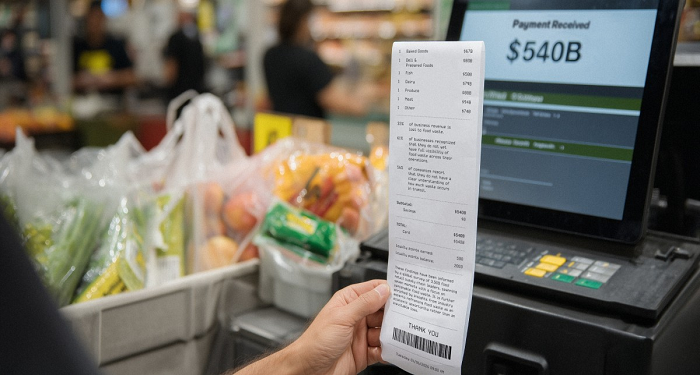
The Avery Dennison report, which we cover in this issue, warns that the economic cost of food waste across the global supply chain is forecast to reach US$ 540 billion by 2026. Also, it’s an opportunity of equal scale waiting to be unlocked. “As with all forms of waste, food waste is an indication of system and resource inefficiency and is a missed opportunity to nourish communities, reduce pressure on agricultural systems, and build a more equitable food future.”
It suggests a slew of measures that could alleviate the problem to a considerable extent. Material innovations, the Avery report suggests, could improve freshness and reduce leakage. Likewise, data platforms could monitor food loss across the chain.
It also suggests intelligent labeling to indicate freshness or ripeness, real-time temperature tags, item-level identification, and packaging optimized by the cold chain. Shelf-life extension technologies, such as barrier materials and compounds to slow ripening, and packaging redesign to reduce spoilage, are some of the strategies that could be deployed to reduce food waste.
Maintaining a balance
However, the solution itself should not end up as a bigger problem. Packaging, while touted as a panacea to keep food products hygienic and fresh for a longer time and reduce spoilage, has the potential of being the monster itself if not used responsibly and in a sustainable manner.
If food waste has become a talking point at global forums, so are environmental problems caused by packaging waste, especially plastic. However, just as food waste can be tackled if the right measures are taken at the right time, packaging pollution can be almost eliminated via systemic redesign, reuse models, recycling, and improved waste management, as we have written in our previous issues.
The FoodTekPak session ‘Designing for Sustainability – New recyclable structures for flexible packaging,’ began with a technical presentation that discussed the challenges and constraints in developing recyclable films and laminates for several key types of food product packaging. Then the stakeholder panelists discussed the practical challenges of collecting and recycling flexible packs, the use of recyclable mono-materials, as well as the confusion among biodegradable, biocompostable, industrial compostable, aerobic, anaerobic biodegradation, and oxo-degradation, as we report in this issue.
Apart from design changes aimed at lateral recycling, recycling for similar reuse of materials is easier said than done, given the limitations in the organized collection and recycling infrastructure in India, which is much lower than the demand. However, going by developments in the industry, investments in recycling are rising.
Recently, PolyCycl, an India-based company that has developed technology for chemical recycling of waste plastics, has received a Series A investment from Rainmatter, the climate and sustainability-focused investment initiative of Zerodha. Several other companies have done serious work by either investing in recycling facilities or developing recyclable packaging solutions, as seen in the winners’ list of the WorldStar Awards.
A set of cross-sector solutions is intertwined as one thing leads to another. All in all, sustainability is about maintaining a perfect balance between technology and responsible use, be it food or packaging. After all, it is all about saving the planet for future generations.