The Intergovernmental Negotiating Committee (INC) to develop an international legally binding instrument on plastic pollution, including in the marine environment, has elected ambassador Julio Cordano of Chile as the next INC chair during the third part of the fifth session (INC-5.3).
Member States convened in Geneva, Switzerland, on 7 February for INC-5.3 to elect the new chair of the plastics treaty negotiations and formally elected Cordano, who is a diplomat and director of environment, climate change, and oceans at the ministry of foreign affairs of Chile.
Following the election of Cordano, the committee also elected Linroy Christian of Antigua and Barbuda as vice-chair. This session solely focused on organizational purposes to address the election of officers, with no substantive negotiations held during the resumed session.
Accepting the position, Cordano said, “Plastic pollution is a planetary problem that affects every country, community and individual. Therefore, a treaty is urgently needed to support concerted action and bring us together to address this shared responsibility. I am willing and determined to play a leading role in helping the Committee cross the finish line.”
The previous chair, ambassador Luis Vayas Valdivieso of Ecuador, formally announced his resignation as chair late last year after failed INC 5.2 negotiations in Geneva, creating a leadership vacuum during a pivotal moment in the treaty process.
Under his watch, the negotiations were frequently criticized for a lack of transparency, breaking down the already fragile trust countries and observers had in the process. The chair consistently catered to the lowest common denominator, despite growing ambition amongst a majority of countries.
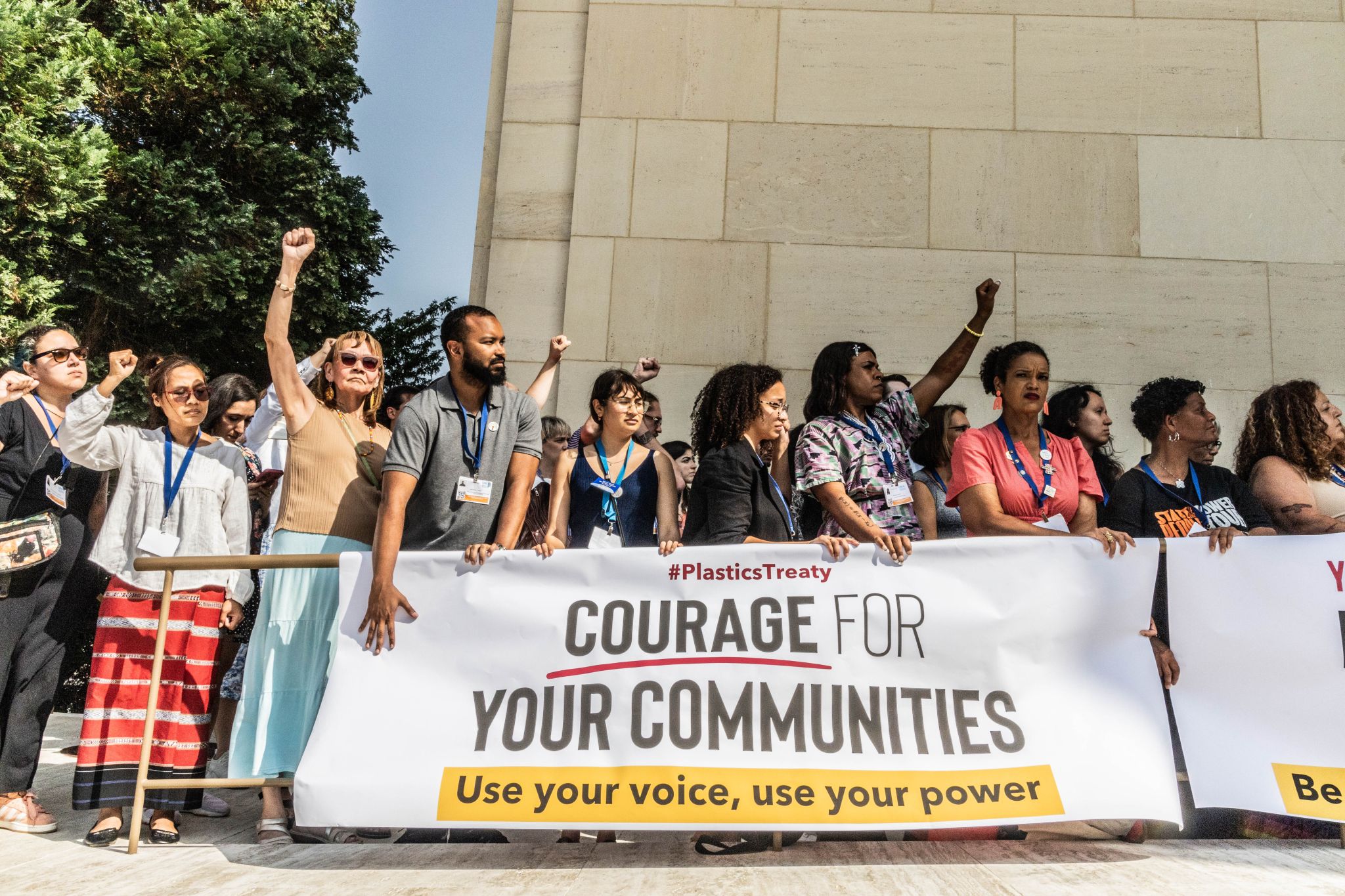
As Cordano takes the helm of the treaty process, GAIA members urged him to chart a different course from his predecessor and restore trust by reestablishing transparency, promoting neutrality, enabling effective decision-making, and ensuring civil society has access and representation in the talks.
They said he must uphold the ambition of member states — to deliver the world a treaty that addresses the full life cycle of plastics, from extraction to disposal, prioritising independent science, human rights, and Global South leadership over corporate and petro-state interests.
Jam Lorenzo, BAN Toxics, Philippines, said, “The election of the new chair is an important step towards progress, but a treaty that addresses the full lifecycle of plastics can only be achieved if member states cease to protect the interests of plastic polluters. The impacts of plastic throughout its lifecycle are undeniable, and member states need to be united in the central goal of protecting human health and the environment if we want an effective global plastics treaty.”
Jyoti Mathur-Filipp, executive secretary of the INC Secretariat, congratulated Cordano on his election and said he looked forward to supporting the committee under his leadership.
The INC process was launched in March 2022 at the resumed fifth session of the UN Environment Assembly (UNEA-5.2), where Member States adopted a historic resolution to develop an international legally binding instrument on plastic pollution, including in the marine environment.
This session, held at the Geneva International Convention Centre, follows INC-5.2 in August 2025, which was also held in Geneva, Switzerland. INC 5.2 ended in a stalemate after stakeholders failed to arrive at a consensus as high-ambition countries and civil-society battling for polymer and plastic production cuts locked horns with a few oil-producing nations.
That meeting was preceded by five INC sessions: INC-1 in Punta del Este, Uruguay, in November 2022; INC-2 in Paris, France, in June 2023; INC-3 in Nairobi, Kenya, in November 2023; INC-4 in Ottawa, Canada, in April 2024; and INC-5.1 in Busan, Republic of Korea, in November–December 2024.