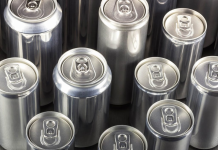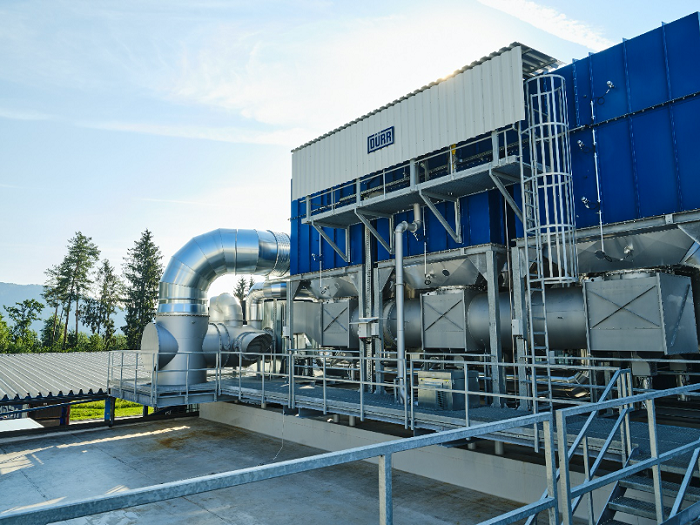
Continued growth across Ardagh Metal Packaging’s (AMP) beverage can manufacturing operations is increasing the need for advanced air pollution control solutions. At its site near Madrid, AMP is addressing these evolving requirements with a new, energy-efficient approach to VOC treatment. Dürr CTS is delivering a turnkey system that combines VOC concentration with regenerative thermal oxidation (RTO).
Designed for autothermal operation, the solution enables reliable emissions reduction while optimizing operating costs. The scalable system that integrates existing and new production lines, supports AMP’s long-term operational requirements and aligns with the company’s commitment to reducing its VOC intensity by 10% by 2030.

A current project with Ardagh Metal Packaging (AMP) underlines this development. At its production site near Madrid, Spain, AMP is implementing advanced solutions to support efficient and environmentally responsible beverage can manufacturing. In this context, Dürr CTS has been selected to deliver a turnkey air pollution control system representing a single-digit million euro range investment.
The project integrates both an existing and a new production line into a combined solution. Due to increasing air volumes and solvent concentration, a two-stage concept has been implemented to ensure efficient and stable operation.
“The can making industry is evolving rapidly, with increasing demands on both production efficiency and environmental performance. Air pollution control is already established as a core element of modern production systems. Our role is to support customers in balancing compliance, energy efficiency and long-term competitiveness. The project with our customer Ardagh Metal Packaging is a strong example of that direction. Having already completed a successful project with AMP, we are excited to join forces again and look forward to delivering another impactful result together.” says Ralf Klöpfer, co-CEO, Dürr CTS.
Two-stage VOC treatment concept for different air streams
Cold exhaust air streams from the inside coating process are first treated via filtration and VOC load, enabling efficient handling of large air volumes with low solvent concentrations. The concentrated air is then directed to a regenerative thermal oxidizer (RTO), where pollutants are removed with high destruction efficiency. Simultaneously, hot exhaust air from the ovens is fed directly into the RTO.
Focus on energy efficiency and autothermal operation
Energy efficiency was a key consideration in the system design. Under normal operating conditions, the solution is engineered to operate with very low additional energy demand, supporting reduced operating costs while ensuring reliable compliance with applicable emission requirements. The system also incorporates energy recovery features that enable reuse of recovered heat within the manufacturing process. In addition, the design supports efficient maintenance through practical access and service concepts, helping to minimize downtime and operational disruption.
Flexibility was another important aspect of the equipment design. The solution is initially configured to support current exhaust air treatment requirements, with the ability to be adapted as operational needs evolve. This tailored approach ensures long-term adaptability to changing production requirements.
Proven partnership and growing market demand
The project also builds on an existing partnership between AMP and Dürr CTS, with a previous installation at another site. Proven performance and low operating costs were key factors in the decision-making process. Installation will begin in the coming months, with commissioning scheduled for early 2027.
The project reflects a broader trend in the can making industry. In recent years, Dürr CTS has secured orders totaling more than €25 million in this segment, driven by increasing demand for sustainable and energy-efficient production solutions.
With its combination of process expertise, integrated system design and focus on total cost of ownership, Dürr CTS continues to support can manufacturers worldwide in meeting both environmental and economic targets.