Effective anilox management can play a critical role in improving print consistency, reducing waste, and enhancing profitability in flexographic printing operations, according to Mahesh Mense, sales manager – Indian Peninsula at Apex International.
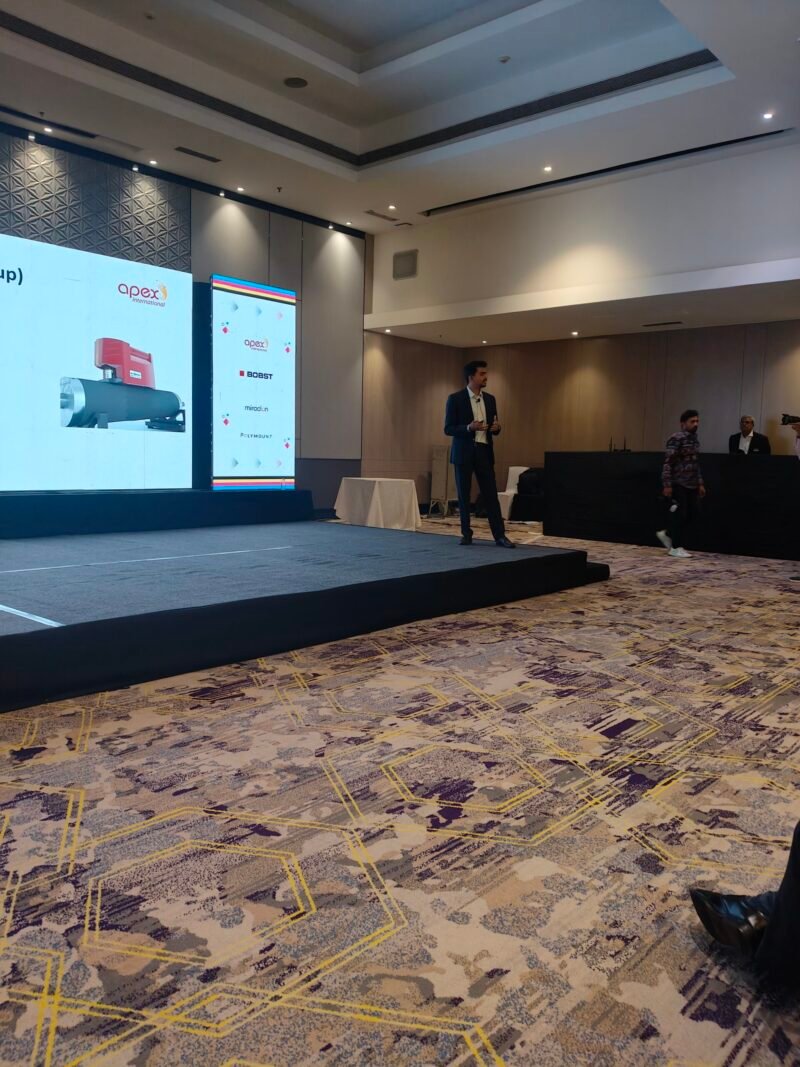
Speaking at the Flexo Forward Conference in Ahmedabad on 5 June, jointly organized by Apex International, Miraclon, Bobst and Polymount, Mense said converters are increasingly being challenged to deliver higher print quality while managing shorter runs, frequent job changes, and a growing number of SKUs.

Modern flexographic printing involves multiple process variables, including plates, inks, substrates, software, and anilox rollers, all of which influence final print quality, he noted. However, maintaining process consistency remains one of the industry’s biggest challenges.
According to Mense, many print shops continue to operate with large anilox inventories sourced from multiple suppliers, alongside different plate and ink systems. This complexity often increases setup times, generates additional waste, and raises maintenance costs.
“Converters are expected to do more with fewer process variables,” he said, adding that process optimization is essential for reducing waste, increasing machine uptime, and improving customer satisfaction.
Mense identified five key pillars of an effective anilox management strategy: standardized anilox inventories, advanced engraving technologies, proper cleaning and maintenance, appropriate storage and handling practices, and regular anilox audits.
He recommended grouping print jobs into standardized application categories and maintaining a streamlined anilox inventory tailored to process printing, combination work, and heavy coating applications. Standardizing specifications across multiple presses can also improve consistency throughout production facilities.
Addressing advances in engraving technology, Mense said conventional 60-degree hexagonal engravings remain widely used because of their versatility and operator familiarity. However, they often require larger inventories and frequent roller changes to accommodate different print applications.
He highlighted Apex International’s patented Genetic Transfer Technology (GTT) as an alternative that reduces inventory requirements while supporting a wider range of applications. The open-channel engraving structure, he said, improves ink transfer consistency, minimizes clogging, and reduces issues such as ink spitting and pinholing.
Mense stressed that regular cleaning and preventive maintenance are equally important. He advised printers to clean anilox rollers immediately after use, implement periodic deep-cleaning programs, and routinely monitor cell volume degradation to ensure consistent ink transfer performance.
Storage and handling practices also play a significant role in extending anilox life, he said. Proper storage racks, protective covers, and careful handling procedures can minimize damage and maintain performance over time.
One area often overlooked by converters is periodic anilox auditing, according to Mense. He compared annual anilox audits to routine health checkups, explaining that they help printers assess volume retention, cell geometry, and overall roller condition.
“Anilox audits should be considered part of process optimization and quality assurance rather than simply a maintenance activity,” he said.
Mense highlighted Apex’s sleeve construction technology, which incorporates corrosion-resistant layers and integrated stainless-steel end rings to improve durability and reduce maintenance issues, particularly in demanding solvent-based and water-based printing environments.
While advanced engraving solutions may carry a higher upfront cost than conventional anilox rollers, Mense argued that reduced downtime, faster changeovers, and lower inventory requirements can deliver a rapid return on investment.
He concluded that standardization, preventive maintenance, and the adoption of advanced technologies are becoming increasingly important as flexographic printers seek to improve efficiency, reduce waste, and meet rising quality expectations in a competitive market.