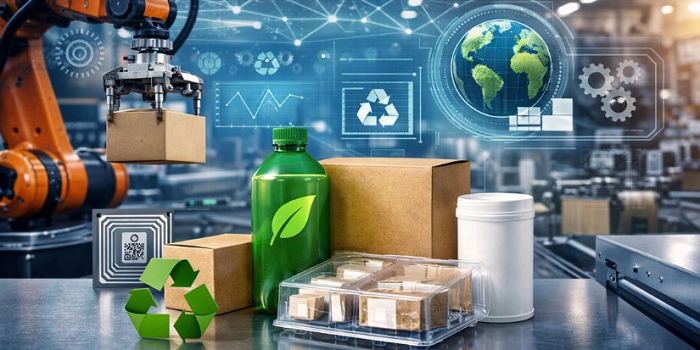
Recycling is no longer just about managing waste responsibly. It is about managing resources intelligently. It is about protecting industries from external shocks, strengthening domestic manufacturing, creating jobs, conserving foreign exchange, and building long-term economic resilience.
Recycling today sits at the intersection of economic resilience, industrial policy, energy security, and supply chain stability. For far too long, recycling in India has been viewed as a municipal or environmental concern — something linked to waste collection, landfill reduction, or sustainability targets. That framing is now outdated. At the centre of this shift lies PET — the material most widely used in beverage bottles and food-grade packaging.

India’s demand for PET continues to rise steadily, driven by urbanization, consumption growth, and expanding beverage markets. Yet a significant portion of virgin PET production remains dependent on crude oil and its derivatives, exposing the industry and the economy to global volatility that is increasingly difficult to ignore. In sectors such as plastics, especially PET packaging, the question is no longer whether recycling is environmentally desirable. The real question is whether India can afford not to build a strong domestic recycling ecosystem.
The recent geopolitical disruptions across energy-producing regions have once again demonstrated how vulnerable global supply chains can be. Crude oil prices fluctuate sharply with every international conflict, shipping disruption, or production cut. For industries dependent on petrochemical derivatives, this translates directly into price uncertainty, rising import bills, and supply instability.
India, which imports nearly 85% of its crude oil requirements, bears this pressure acutely. Every spike in oil prices impacts manufacturing costs, packaging costs, and eventually consumer prices. Virgin PET, being intrinsically linked to fossil fuel economics, remains susceptible to this volatility.

This is precisely why recycled PET (rPET) deserves to be viewed not simply as a waste management solution, but as a strategic domestic resource.
Unlike virgin resin, food-grade rPET is manufactured in India from post-consumer PET waste that already exists, and would continue to exist indigenously, in the economy. It converts discarded bottles into valuable industrial raw material, creating a circular supply chain that reduces dependence on imported fossil-fuel-linked inputs. In economic terms, every tonne of food-grade rPET used in packaging is a tonne of virgin polymer demand offset through domestic value creation.
This has far-reaching implications.
Greater adoption of rPET can help India reduce exposure to global crude-linked price volatility. A stronger domestic recycling ecosystem creates a more resilient raw material base for the packaging and beverage industries. In a world where geopolitical instability increasingly affects commodity markets, resilience itself becomes a competitive advantage. In addition, the sector is directly linked to the long-term sustenance of millions of informal workers and ragpickers, who depend on used plastic bottles for over 50% of their daily income.
The rPET manufacturing not only strengthens India’s industrial ecosystem, but hedges against external shocks. With the right policy support and market adoption, India has the opportunity to build one of the world’s largest circular manufacturing ecosystems around plastics.
Also, recycling conserves valuable foreign exchange. Every incremental reduction on virgin polymer dependence contributes to lowering import intensity. At scale, this can have a meaningful macroeconomic impact, particularly in sectors with high packaging consumption.
Importantly, India already has the policy framework to support this transition. Ministry of environment, forest and climate change (MoEFCC) has mandated the phased use of r-PET content in bottles and Food Safety and Standards Authority of India (FSSAI) has permitted the use of recycled PET in food and beverage packaging and laid down guidelines and relevant procedures. This was a progressive and forward-looking move that aligned India with global circular economy practices.
Key Economic Drivers of Recycling
Job Creation: Recycling operations (collection, sorting, and processing) are highly labor-intensive. They create more jobs per ton of waste than landfilling or incineration. These roles span entry-level, mid and advanced technical positions.
Lower Production Costs: Using recycled materials (such as scrap metals, paper, and plastics) often requires significantly less energy and capital compared to extracting and refining virgin resources.
Supply Chain Security: Sourcing recycled materials locally reduces a country’s reliance on imported raw commodities, protecting the economy from global supply chain disruptions and price volatility.
Circular Innovation: The need to efficiently process waste has sparked a massive wave of technological innovation. Investments in robotics, advanced chemical recycling, and smart sorting facilities create new high-value sectors and attract venture capital.
National and Regional Growth: Transitioning to a circular economy at scale offers massive financial potential. India’s rPET Industry, which is in a nascent stage, is a good example with state-of-the-art technology aligned with the requirements of US and EU markets, capable of catering to the domestic market as well as global markets.
However, policy intent alone cannot drive transformation unless it is matched by industry-wide implementation.
Today, despite clear regulatory direction and growing recycling capacity within India, adoption levels among several major beverage and packaged goods companies remain inconsistent. This gap between policy ambition and market execution risks slowing the momentum of India’s circular economy transition.
The reality is that India’s recycling industry has evolved significantly over the last decade. Food-grade r-PET manufacturers have invested heavily in advanced recycling technologies, quality systems, traceability, and global compliance standards. Indian recyclers today are capable of producing high-quality food-grade recycled resin that meets stringent safety and performance requirements.
The challenge is no longer technological feasibility. The challenge is creating stable demand and long-term commitment from brand owners.
Globally, leading economies are increasingly recognising recycled materials as strategic industrial assets. Countries across Europe and parts of Asia are using recycled content mandates not only to address sustainability goals, but also to strengthen domestic manufacturing resilience and reduce resource dependency.
India must adopt a similar mindset.
Recycling should be viewed as infrastructure for economic security. Just as renewable energy reduces dependence on imported fossil fuels, recycled raw materials reduce dependence on volatile virgin commodity markets. Both are essential pillars of a self-reliant economy.
The transition to circularity is also aligned with India’s broader developmental priorities — Viksit Bharat, resource efficiency, manufacturing growth, and climate commitments. These goals are interconnected, and recycling sits at the intersection of all of them.
The question before industry and policymakers is therefore larger than compliance. It is about whether India wants to continue depending heavily on imported fossil-fuel-based raw materials despite having the capability to build robust domestic circular supply chains.
The answer should be clear.
In the years ahead, countries that succeed will not simply be those that consume more resources, but those that use resources more efficiently and recover them more effectively.
India has the opportunity to lead that transition and set an example for the Global South to follow.
And r-PET can become one of the strongest examples of how sustainability and economic strategy can work together — not as competing priorities, but as the same national imperative.
(The views expressed in the article are that of the author)