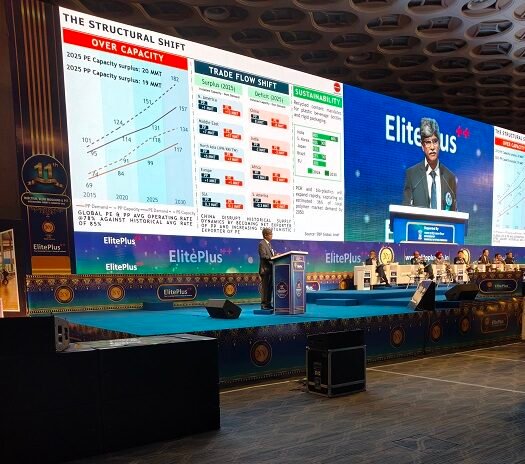
India’s polymer consumption is expected to rise from 25mn tons to around 35mn tons by 2030, creating a US$60 billion market opportunity, even as the global petrochemical industry grapples with overcapacity, weak margins and shifting trade flows, Sumit Basu, executive director of Indian Oil Corporation, said at the 11th Injection, Blow Moulding & PET International Summit & Exhibition 2026 in Mumbai.
Speaking on the theme ‘Polymer Markets at a Crossroads: Managing Volatility, Supply Disruptions and the Shift Towards a New Changed World,’ Basu said India remained one of the few major markets where polymer demand continued to outpace supply, with domestic plants operating at around 95% utilization compared with the global average of about 70%. He attributed the global downturn to excess production capacity in polyethylene and polypropylene, estimated at around 20mn tons each, which has significantly compressed industry margins.
Basu said China has transformed from a major polymer importer into a significant exporter after rapidly expanding its production capacity, altering global trade patterns and increasing competitive pressure on markets such as India. At the same time, the growing adoption of recycled plastics across sectors, including paints and fast-moving consumer goods, has reduced demand for virgin polymers, further weighing on profitability.
Despite these global headwinds, he said India’s long-term growth prospects remain strong, supported by favorable demographics, rising urbanization, infrastructure development and increasing disposable incomes. He projected that domestic polyethylene and polypropylene production capacity would increase by about 50%, from the current 13mn tons to nearly 20mn tons by 2030. However, he noted that India would still face a supply deficit of 2mn-2.5mn tons, underscoring the need for additional investments in domestic manufacturing.
Basu identified high feedstock costs as one of the biggest challenges facing India’s petrochemical industry. He said the country imported 87% of its crude oil and around 50% of its natural gas, placing domestic producers at a cost disadvantage compared with competitors in the US and the Middle East, where feedstock prices were substantially lower. He highlighted dependence on imported technologies, high financing costs and longer project execution timelines as constraints on the sector’s competitiveness.
To strengthen the industry’s resilience, Basu called for greater self-sufficiency through new petrochemical capacity, diversification of feedstocks including coal gasification and propane dehydrogenation, increased investment in indigenous research and development, and strategic joint ventures to secure access to advanced technologies and reliable raw material supplies.
He said Indian Oil is expanding its portfolio of specialized polymer grades to replace imports and plans to scale up production of recycled plastics under its Cycloplast initiative, targeting 100,000 tons of capacity by the time of the next ElitePlus conference.
According to Basu, strengthening domestic manufacturing and technological capabilities would be critical for insulating India’s polymer industry from global supply disruptions while supporting the country’s broader industrial growth ambitions.