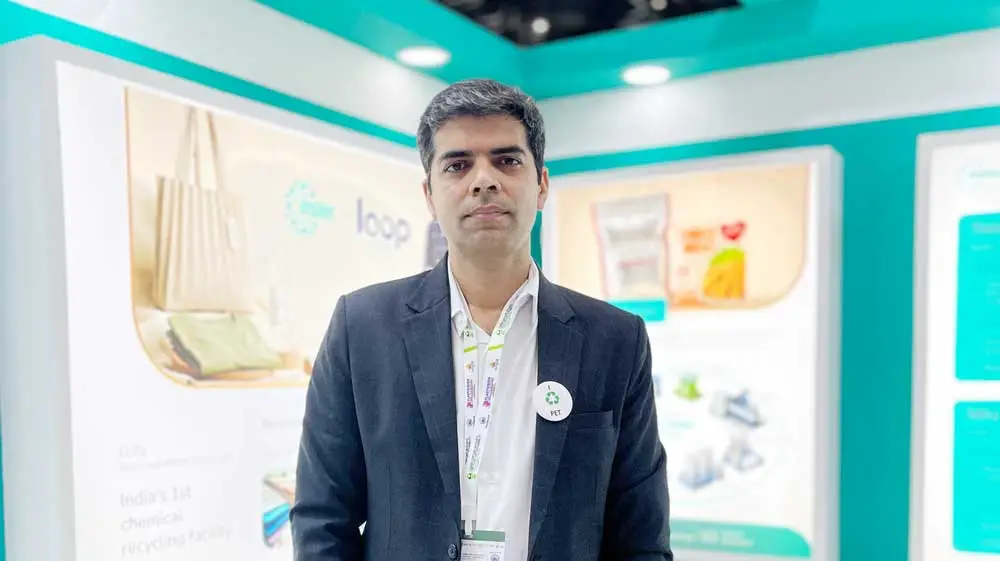
As the world grapples with rising food waste and plastic pollution, the role of packaging is under renewed scrutiny. In a conversation with Packaging South Asia, Vaibhav Jha, CEO of the Gurugram-headquartered Ester Industries, a manufacturer of polyester films, specialty polymers, and sustainable packaging material, explains how the company is addressing these challenges through sustainable innovation.
By developing recyclable, high-barrier materials from post-consumer recycled content, Ester, he says, is helping extend food shelf life while supporting circularity. Effective packaging is not just about protection—it’s about reducing waste across the supply chain and ensuring materials are reused, creating a balance between performance, sustainability, and environmental impact.
Reducing food waste
Food waste is a big problem worldwide, and protective packaging can be a solution. Ester, he says, has a range of innovations to help tackle the problem.
“The scale of food waste globally is staggering. When you realize 30 to 40% of the food we produce gets lost, and a huge chunk of household waste is simply because the packaging failed, it really highlights how crucial effective packaging is. We don’t just see it as a container; it’s our first line of defense in stopping waste across the entire supply chain,” he says.
One of Ester’s solutions is PCR-based polyester films and specialty coatings. “You can think of them as a highly engineered shield. They do an excellent job of blocking out oxygen, moisture, and aroma migration, which means the food keeps its taste and quality for much longer.”
Ester tailors these films depending on what the food needs. For instance, anti-fog films can prevent fresh produce from getting soggy, high-barrier films for sensitive foods, and heat-resistant structures for ready-to-eat meals, he explained.
Beyond the films, Ester has its patented, food-safe rPET chips. Used for bottles, films, or sheets, they solve one of the biggest challenges with recycled plastics. “Our technology guarantees what we call the ‘Three Cs’—clarity, color, and consistency every single time.”
“The most exciting part about our portfolio is that we don’t have to choose between fighting food waste and reducing plastic footprint. All these innovations drastically extend shelf life. Made of recycled materials, they are designed to be fully recyclable again at the end of their life.”
Circular economy
Sustainability, Jha says, is embedded in its product development strategy as the company recognizes that improving recyclability is as important as reducing the overall environmental footprint of packaging.
“The key showcase is the ultra-high heat seal range of films made of recycled PET, making monomaterial polyester films a reality. This dovetails perfectly with our latest joint venture ELITe (Ester Loop Infinite Technologies Limited), which is India’s first circular textile-to-textile recycling project and converts any polyester waste into PET resins (textile to textile, laminate to laminate and bottle to bottle). Thus, monomaterial laminates made from our ultra-high heat seal films are the first truly circular laminate-to-laminate recycling solution of its kind.”
Ester’s ultra-high heat seal polyester film was awarded at FIPSA (Foundation of Innovative Packaging & Sustainability Awards) in the Commercial Sustainability Category (Recycled Plastic Materials), he said. “The majority of our polyester film range is fully PCR ready.”
The company designs packaging solutions compatible with existing recycling streams while maintaining the performance requirements of modern packaging applications.
Food-grade rPET
On FSSAI’s mandatory rPET in food-grade packaging, Jha said the move has promoted the evolution of the entire plastics ecosystem, systematizing things more rapidly than otherwise.
“Our manufacturing processes have always been designed keeping food safety in mind. These efforts have been recognized by FSSAI with relevant food safety certifications.”
Ester, he says, is at the forefront of supporting its customers meet their EPR obligations. “We have meticulous traceability processes to track the last KG of recycled feedstock right from the source. Our manufacturing assets and processes have been certified with all required Indian and International certifications. EPR is an opportunity, more than a challenge,” he says.
To a specific question, he says judging cost-effectiveness of rPET versus virgin PET requires holistic reasoning. Recycled PET and Virgin PET, he explains, have their own cost dynamics driven by their own value chain dynamics, which was demonstrated during the recent Middle East crisis.
During the peak crisis, the virgin PET value chain became expensive and was at times selling at a premium to recycled PET. This was also the case till a few years ago when the rPET demand was not as much as it is now.
“Therefore, though the recent past may show a unilateral scenario of rPET commanding a premium over virgin plastics, I believe cost effectiveness of rPET and virgin PET would continue to be volatile with respect to each other in line with the dynamics in their respective value chains,” he says.
Jha says one should not forget the environmental cost of not promoting usage of rPET, which is a fundamental driver of all regulations and sustainability pledges by leading brands across the globe. “Consumers are increasingly looking for sustainability in all aspects of their purchases. Thus there is a cost of lost opportunity for those who would like to cater to such consumers,” he says, adding there is also a cost of lack of compliance with EPR mandates.
Though on paper rPET may look like a costly solution, on a deeper look, it is a win-win for all stakeholders, including the public, he says.
Recycling business
Moving on to Ester’s recycling facilities, he says the company is focused on converting post-consumer PET waste into high-quality rPET chips suitable for food, beverage, film, sheet, and textile applications. “Through advanced mechanical recycling, precision filtration, and solid-state polymerization technologies, we produce food-grade rPET with purity and performance comparable to virgin material.”
In addition, through its joint venture ELITE, the company is developing a large-scale chemical recycling platform to process polyester textile waste and PET waste into virgin-quality recycled polyester resin. “The facility is expected to have a capacity of 70,000 tons annually and enable circularity across bottle-to-bottle, textile-to-textile, and laminate-to-laminate applications.”
Need for collaboration
As the industry moves toward greater circularity, collaboration across the value chain from waste collection and recycling to packaging design and consumer participation is essential, he says, adding Ester is committed to driving innovation in food-safe recycled materials, recycling infrastructure, and next-generation packaging solutions for a more sustainable future.
“We believe sustainability and performance must go hand in hand. Our focus is not only on increasing recycled content but also on ensuring that recycled materials deliver the quality, safety, and functionality that brand owners and consumers expect.
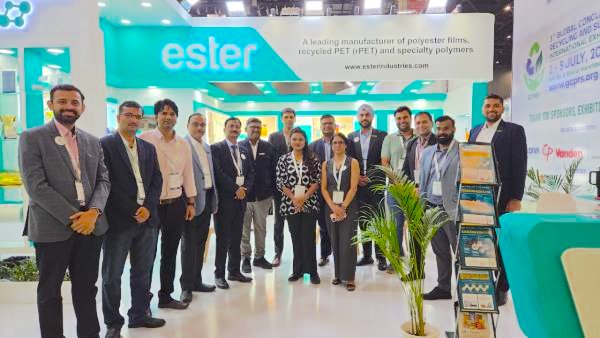
Ester took part in the third Global Conclave on Plastic Recycling and Sustainability 2026 in Delhi, where the focus was on accelerating the transition towards a circular economy through sustainable solutions. “The show provided an excellent platform to engage with brand owners, converters, recyclers, policymakers, and other stakeholders across the value chain.”