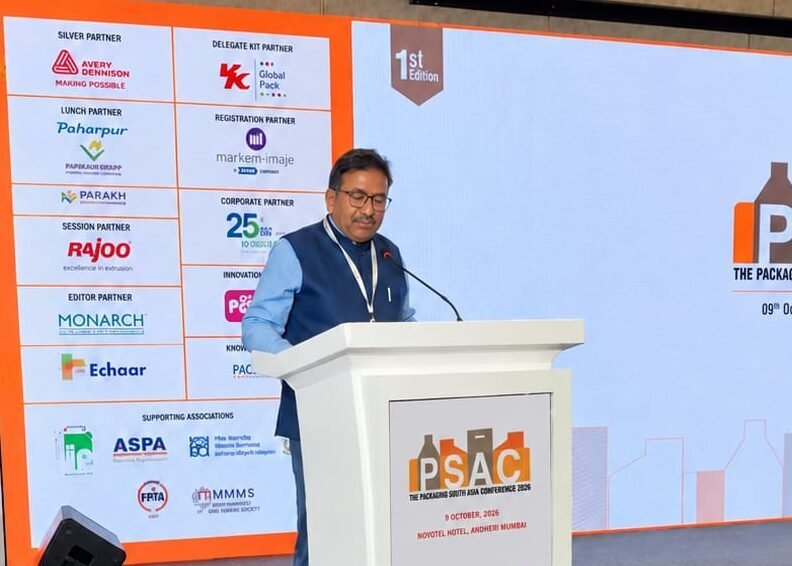
The first edition of the Packaging South Asia Conference at Novotel, Mumbai, on 9 October 2026, brought together key industry stakeholders, policy makers, converters, brand owners, and the supply chain partners under one roof. Chief guest Shri Dnyaneshwar B. Patil, IAS, director of the Indian Institute of Packaging, delivered the welcome address.
Keynote
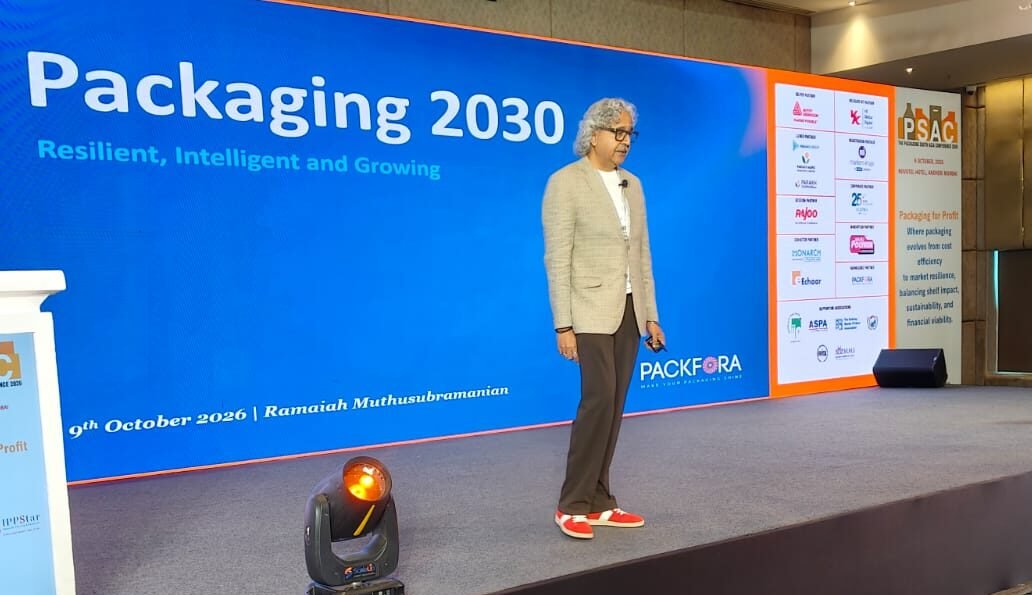
Ramaiah Muthusubramanian, CEO, Packfora Solutions, delivered the keynote address titled ‘Packaging 2030: Resilient, Intelligent and Growing.’ He highlighted global trends driving the value of branded products and their packaging in the coming decade. The decade of growth using AI design tools.

Collaboration
A fireside chat at the conference focused on how collaboration between a brand owner and its packaging partner can unlock growth, innovation, resilience, and long-term value creation.
The panel consisted of Naveen Stuart, head of packaging development, Marico; Dr Surendra Agarwal, founder, Creative Technoplast; and Manish Desai, director, Mudrika Labels. The panel discussion was moderated by Sanjay Ghoshal, head of packaging, Diageo.
The fireside chat titles ‘From Supplier to Strategic Partner’ explored how stronger collaboration between brand owners and packaging partners can drive innovation, resilience and sustainable growth. The discussion also addressed key industry challenges, including fluctuating raw material prices, supply chain disruptions, cost optimization and the growing need for sustainable packaging solutions.
The panel highlighted the importance of moving beyond transactional relationships towards strategic partnerships built on trust, transparency and shared expertise. From optimizing material usage and exploring innovative decoration technologies to involving packaging partners at the early stages of product development, the conversation emphasized how collaboration can deliver better outcomes for businesses and consumers alike.
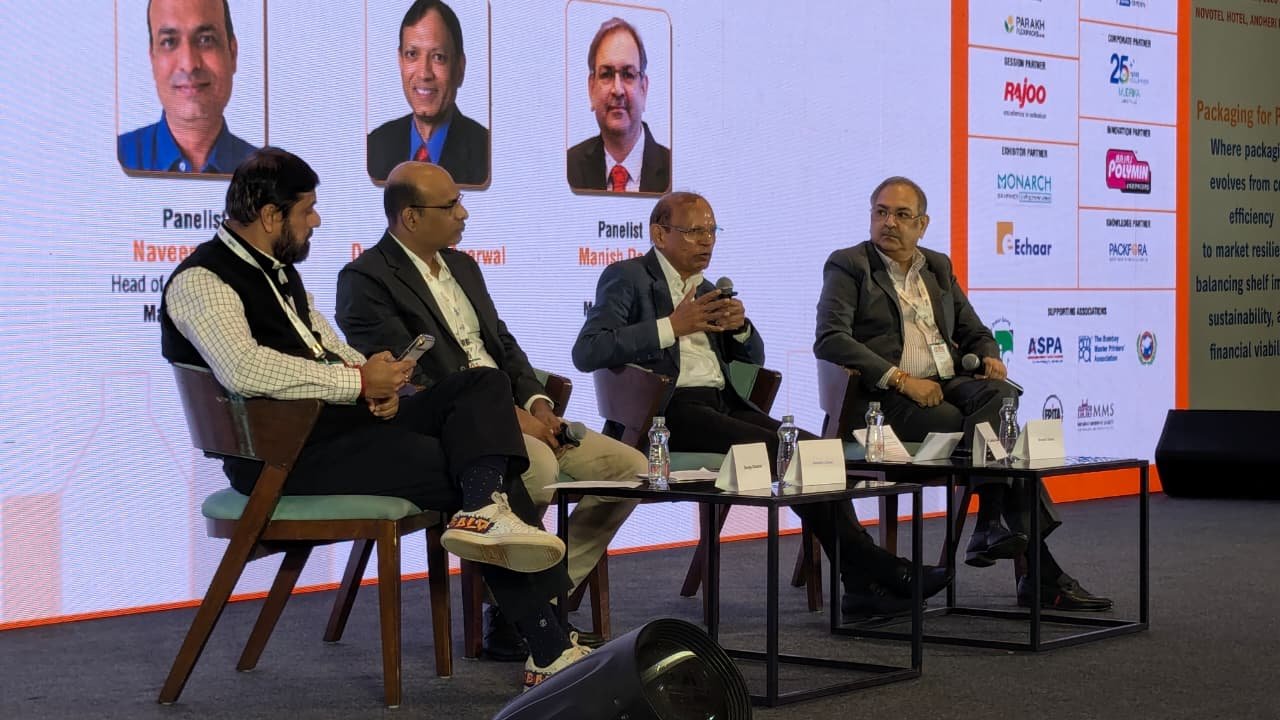
The key takeaway — When suppliers and brand owners work together as strategic partners, the entire value chain benefits.
Counterfeiting
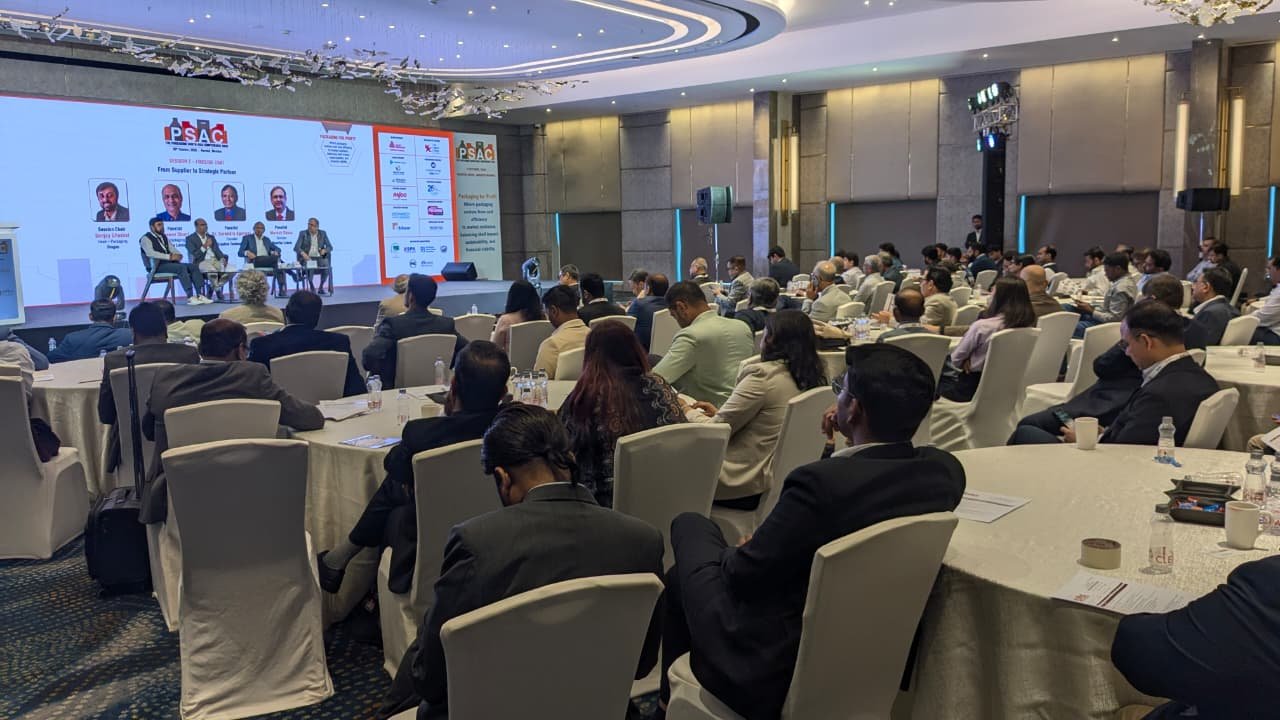
Dr Keshav Kumar IPS (retd), an anti-counterfeiting expert, talked about the legal and criminal angle of counterfeit cases in India. Counterfeit medicines are not just a packaging problem. They are a patient safety issue and a form of organized crime. “Let’s get organized against the organized crime,” he said.
Dr Kumar highlighted the evolving challenges in investigating counterfeit pharmaceutical products, particularly high-value, temperature-sensitive biologics and injectable medicines.
His presentation shed light on how counterfeiting can extend beyond the drug itself to multiple layers of the packaging and delivery system, including vials, labels, seals, pre-filled syringes, cartridges and auto-injectors. Product diversion, unauthorized distribution, repackaging and device manipulation further complicate investigations.
Dr Kumar also emphasized the growing importance of forensic investigation in identifying counterfeit products. This involves examining packaging components, tamper evidence, temperature and transportation records, documentation, digital communications, online marketplaces and supply chain transactions.
Unusual discounts, unexplained inventory movements, duplicate transactions and undocumented dealings can all provide critical clues in tracing organized counterfeiting networks.
The larger takeaway is clear — tackling counterfeit medicines requires more than product authentication. It demands stronger collaboration between law enforcement, pharmaceutical manufacturers, packaging specialists and supply chain stakeholders.
Track-and-trace
Another panel at the Packaging South Asia Conference explored how track-and-trace technologies, smart packaging and advanced labelling can help combat counterfeiting in the pharmaceutical and healthcare sectors.
The panel discussions highlighted the importance of collaboration among pharmaceutical companies, packaging converters and technology providers, particularly for advanced therapies such as biologics.
Beyond being packaging suppliers
How can converters move beyond being packaging suppliers to become strategic partners in driving value, profitability and competitive advantage? The fourth session of the Packaging South Asia Conference 2026 explored this question through an insightful discussion on the evolving relationship between converters and brand owners.
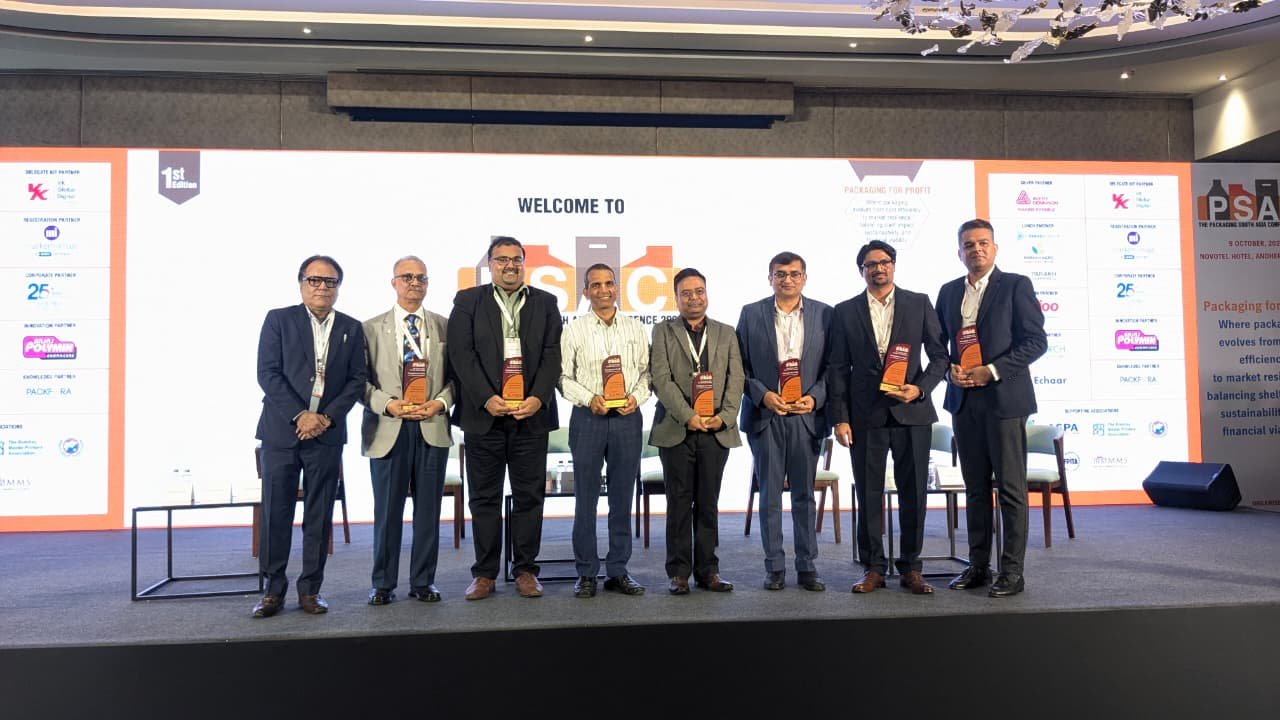
Moderated by Barun Banerjee, the panel featured Vinay Nalawade, Nidhi Basundhara, Swarn Singh Grover.
The discussion highlighted the importance of early supplier involvement, transparency and collaboration in building more profitable and resilient packaging partnerships. Rather than approaching packaging primarily through price negotiations, converters and brand owners need to work together from the planning and design stages to identify opportunities for cost optimization, process efficiency and product differentiation.
The panel also explored how packaging can create value through enhanced consumer experiences, particularly in the age of e-commerce and quick commerce, where unboxing, visual appeal and product protection play an increasingly important role.
Sustainability emerged as another critical area for collaboration, with discussions around recycled materials, post-consumer recycled (PCR) content, recyclability and the need to balance environmental goals with commercial viability and existing manufacturing capabilities.
A key takeaway was that pricing power comes from demonstrable value. When converters bring innovation, technical expertise, operational efficiency and differentiated solutions to the table, they can strengthen their partnerships with brands and build a stronger case for value-based pricing.
Ultimately, the future belongs to partnerships that look beyond the immediate transaction and focus on shared objectives, mutual profitability and long-term value creation.
Swapping roles
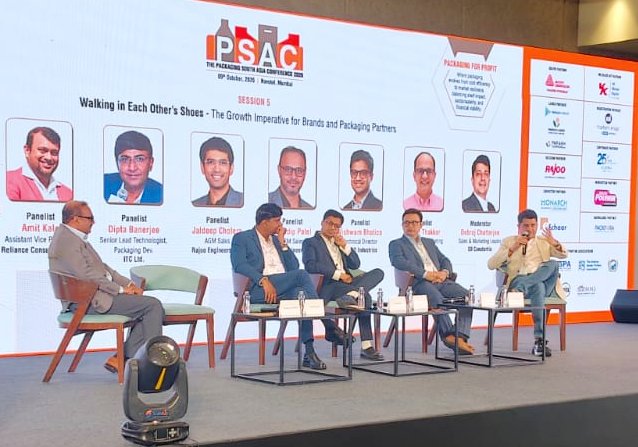
In a panel discussion titled ‘Walking in Each Other’s Shoes: The Growth Imperative for Brands and Packaging Partners, brands and converters swapped roles to debate what really drives growth.
The opening perspective was shared by Santanu Chowdhury of Core Group Industries. The moderator was Debraj Chatterjee of SB Constantia with panelists Dipta Banerjee (ITC), Vishwam Bhotica (SAPCO Industries) and Vishal Thakkar (VK Global).
(With Purva Dwivedi and Shardul Sharma in Mumbai)