The Star Bazaar in South Bombay is an everyday market, extremely comprehensive and price competitive for everyday shopping, for everyone from young health and yoga freaks to middle-class families and elderly couples. The common denominator is the Indian obsession with in-person shopping for fresh vegetables and fruit and quality processed food products – all with the convenience of self-service – everything in one place and at rock-bottom prices. This is the imperative of the modern city – it has to be done in person between the morning walk and breakfast.
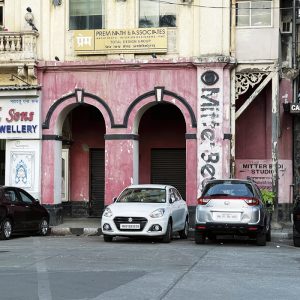
A walk in South Bombay on an early Sunday in March. There are crowds already on Marine drive, some dancing and jogging and others taking selfies. On the eastern or harbor side, we walk from restoration to restoration of the old churches, the first post office, libraries, museums, restaurants, and hotels.
The sun has just risen and the small sailboats are still docked at a seeming mid-tide. We arrive at the Star Bazaar hypermarket that occupies the ground floor of a multistory residential building to do our weekly self-service shopping from an abundance of fresh vegetables and fruits and every kind of dry goods, cooking oils, condiments, and household goods to personal care.
The vegetables and fruit are very fresh and are to be selected and put into paper sacks for weighing and pricing. Strawberries in a plastic box are spectacular and only 29 Rupees and the ripe mangoes are in spongy plastic nets. We put potatoes, tomatoes, onions, cauliflower, drumsticks, and chilies into the brown paper sacks that are abundantly provided in every size, and stand in line to have them weighed and marked. This is done efficiently. However, the sacks are sealed with transparent plastic tape – a sustainable solution or innovation is needed here, perhaps a paper tape, spot gluing, or an innovative crimping solution for a safe carriage home, reuse, and recycling.
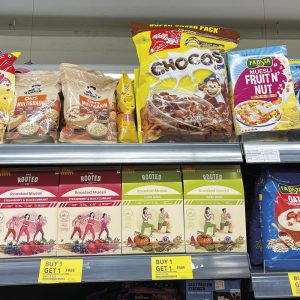
In the processed foods section, there is a preponderance of flexible pouches with the occasional luxury cereal in a bag-in-box carton. The soaps have come back from cartons to mostly coated paper wrappers. House brands abound, from the Star sunflower oil in a 15-kilogram tin to the cashews and raisins in flexible transparent pouches and the aggressive tomato ketchup in a high-barrier stand-up pouch with a spout.
A few days, a young industry colleague explained, “In these inflationary times, we cannot afford anything with fancy packaging. We buy practically everything in flexible pouches, and if we can we replenish the earlier containers of glass or semi-rigid plastic with the new products purchased in stand-up pouches with a spout. We are well aware that the pouches are still the same size while the product inside has decreased, but this is the most economical and convenient way for day-to-day life.”
South Bombay is one of the richest neighborhoods in the country but it has a substantial share of legacy house owners and residents. It is also one of the most demographically heterogeneous areas in the city. For a taxi driver, it is one of the ‘poorest’ areas with few customers for long rides – many of the residents have cars and drivers, and others take public transport or walk, even if they have to continuously dodge other pedestrians or grand constructions and renovations.
Star Bazaar offers a wide range of products. It is managed by Trent Westside, one of the companies of the Tata group. The key to viability in its expensive location is compactness, a well-organized and high density of goods for which its customers do not want to go to a specialty shop or boutique. This is not your Modern Bazaar with SUVs being handed over to a valet service. This is not your obsessive coupon clipping online app for home-delivered food if it’s in stock.
Competitive in-person hypermarket shopping implies fresh produce of the highest quality, good presentation and access, and clear pricing. And everyday products with a choice of brands and the retailer’s brands.
Packaging has to work both for high throughput retailers and the shopper – no-frills – a combination of materials and formats – paper sacks for self-service, flexible pouches, paper wrappers, bag in box, and other cartons but only where needed. Metal packaging for personal care and bulk cooking oil. Semi-rigid and glass bottles only if necessary.
Value-for-money packaging to fulfill the sale paradigms: ‘Super low prices every day! And, Buy one, get one free.’ Discounts are automatically accumulated and applied to regulars. And most of all, this is a social interaction with the real world of needs and necessities. An activity best performed by a couple or in the company of a friend, “Stand with the shopping cart in the checkout line please – so I can get some more stuff, and we can pay and get away as fast as we can.”