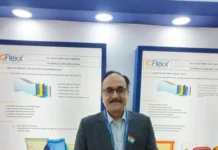
Rajesh Srivastava, executive vice president, Chemicals Business, UFlex, explains the decline of nitrocellulose tech and the advantages of PU-based solutions in gravure printing.
Shifting landscape: Decline in nitrocellulose (NC) availability
Nitrocellulose (NC) has long been a cornerstone of the printing ink industry. Global supplies, however, are tightening due to a complex interplay of geopolitical, logistical and raw material-related challenges.
The ongoing geopolitical tensions—such as the war in Ukraine—have dramatically increased military demand for NC, which is essential in the production of smokeless powder and ammunition. As governments accelerate defense procurement, industrial supply is being squeezed.
Many manufacturers are now prioritizing military-grade NC, with some converting their operations entirely away from commercial production, deepening the shortage. With production concentrated in a few countries—notably China—the supply chains remain highly vulnerable to political pressures and trade disruptions.
In addition, NC production depends on the availability of cotton pulp and robust logistics. Strikes, port closures, and extreme weather events have amplified these disruptions, pushing converters to explore more resilient and sustainable alternatives.
PU Inks: A sustainable alternative with growing momentum
As NC-based technologies face increasing headwinds, the industry is shifting towards polyurethane (PU)-based inks, especially in regions prioritizing sustainability and supply chain security.
NC inks continue to dominate in North, Central, and South America, as well as in Europe, primarily in BOPP/BOPP and PET/PE structures. However, PU inks are well-established in Asia—including China, Japan, India, and Bangladesh owing to their advantages in performance, efficiency, and regulatory compliance.
PU inks offer excellent resistance to heat, chemicals, and sterilization processes such as boil-in-bag, pasteurization, and retort. They are particularly effective for PET-based laminates that require oxygen barrier properties, mechanical strength, and consistent shelf performance.
These inks are compatible with high-speed printing (over 500 meters per minute), enable low ink-to-solvent ratios, and deliver reliability in long print runs lasting over 12 hours. Their versatility makes them ideal for replacing PVC inks, which are increasingly challenged by evolving regulatory frameworks.
There is a common misconception that PU inks are expensive or less functional. However, today’s PU inks are cost-neutral compared to NC and PVC inks when factors like lower GSM coverage, and reduced solvent usage are considered. This has been proven in markets such as India, Japan, China, and the Middle East.
Modern PU inks meet all major global food safety regulations and have become the standard for over 80% of leading Indian converters who seek optimal graphics and bond strength in their packaging applications.
Among the solutions supporting this industry shift, UFlex Chemicals has developed the Flexglide PU ink series, designed to meet evolving performance, safety, and sustainability benchmarks. The Flexglide NT (toluene-free) and NTNK (toluene- and ketone-free) variants offer excellent results on substrates including PET, BOPP, and Nylon. These inks provide low viscosity, reduced solvent consumption, and minimized residual odor leading to longer lifespan for cylinders and doctor blades. They support both dry and extrusion lamination and are compatible with laser-engraved cylinders, thereby optimizing production efficiency.
Flexglide NTNK 6S is a pure polyurethane system designed for a wide range of substrates including PET, BOPP, CPP, Nylon, and PE. It delivers high bond strength and durability through sterilization and pasteurization processes. The formulation allows for lower ink deposition and seamless integration with laser-engraved cylinder to drive further efficiency.
CI Flexglide HB has been specially developed for flexographic printing on heavy-duty laminates that use chemically coated PET. It delivers exceptional lamination bond strength, excellent performance at high speeds, and is compatible with sterilization processes. Notably, it also supports recyclable and sustainable packaging structures by eliminating the need for PVC and CPP resins.
Delivering value and sustainability
As packaging trends shift toward lighter-weight formats, Flexglide’s high color strength at lower GSM enables up to a 20% reduction in solvent use resulting in tangible cost savings.
All Flexglide inks are certified according to leading global standards, including EUPIA, Swiss Ordinance, REACH, CONEG, and FDA, and are suitable for food packaging applications.
Additionally, their low VOC emissions and reduced solvent consumption contribute to a smaller environmental footprint, aligning with the industry’s push toward sustainability. The versatility of the Flexglide series offers converters and brands flexible solutions that perform across multiple substrates and packaging types.
The global shift from NC to PU-based inks reflects both a response to external supply chain challenges and a growing commitment to sustainability, safety, and regulatory compliance. UFlex’s Flexglide ink series is at the forefront of this transformation, offering high-performance, future-ready solutions that align with the evolving needs of modern printing and packaging.