In a fast-moving landscape where packaging converters and brand owners face shifting priorities – from AI adoption to growing regulatory complexity – sustainability remains a central strategic focus. With phased deadlines under the EU’s new Packaging and Packaging Waste Regulation (PPWR) approaching, and governmental and corporate sustainability commitments imminent, the sense of urgency is increasing.
The key to sustainable packaging is ensuring packaging delivers its function with the least environmental impact across its entire life cycle – whether through recycling, reusing or end-of-life biodegradability. Here, we focus on recycle-ready packaging – now one of the biggest priorities in sustainable packaging, for brand owners, regulators, and packaging manufacturers alike.

The path towards recycle-ready packaging hasn’t been easy. Besides the need to create the infrastructure needed to support various recycling, there are fundamental challenges with the packaging itself. Packaging often uses multiple layers and materials for strength and preservation, including thousands of polymer variations – essential for protecting goods such as food and beverages, but very hard to recycle through conventional means. But in recent years, we have started to see real progress.
For example, at the K 2019 tradeshow, Bobst, together with several industry partners, presented oneBARRIER, a family of new alternative high-barrier mono-material solutions for flexible packaging. These solutions aimed to provide recyclable alternatives to traditional non-recyclable multi-material packaging while maintaining the necessary barrier properties for preserving products, especially food and beverages. The solutions first shown at K 2019 were prototypes but just three years later at K 2022, BOBST and its partners presented samples converted and printed on real-scale equipment, assuring quality and barrier performance along every successive conversion phase.
oneBARRIER consists of PrimeCycle, a polyethylene (PE)-based, mono-material solution that delivers exceptional performance and sustainability, and FibreCycle, a 100% paper-based solution meeting the growing need for renewable packaging materials. Both have been certified as highly recyclable, viable and regulatory-compliant packaging, including with the EU’s Packaging and Packaging Waste Regulations (PPWR).
So, do we have everything we need? And if not, what’s next? Sara Alexander, marcom manager Flexible Packaging at Bobst, shares details.

What has been the impact of oneBARRIER to date?
oneBARRIER, and what it represents, is a real gamechanger and we are starting to see its impact expand for our customers. Sustainability is a central focus for all our customers, but the technical complexities of developing and manufacturing sustainable flexible packaging with the right, recycle-ready barrier can be daunting.
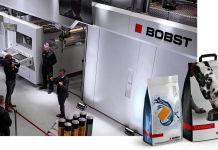
By combining our oneBARRIER know-how with our vacuum metallizers and coating lines, BOBST can help converters to consistently produce top-quality polyolefin-based or paper-based recycle-ready ultra-high or high-barrier packaging, with faster time-to-market from day one. Many of our customers are already benefitting from this, which in turn is supporting wider sustainability goals.
So, what’s next for oneBARRIER?
From the beginning, the vision for oneBARRIER has been for a family of solutions. This means that on one hand we can develop many different combinations and solutions with our partners based on the market needs, availability and convertibility. On the other hand, converters can choose the right solution for their situation.
A key focus for BOBST is currently broadening the oneBARRIER family and expanding its applications. For example, we need to work on solutions with different substrates and chemicals. We also need other options than just ultra-high barrier solutions. We need different barrier solutions for different market situations. And we need to find ways to simplify the process even further. So, we are exploring a lot of exciting options.
Can you talk more about going beyond ultra-high barrier solutions? Why would we need packaging that doesn’t provide an ultra-high barrier?
Not all food packaging requires an ultra-high barrier because the necessary protection level depends entirely on the specific food’s sensitivity, desired shelf life, and storage conditions. For many products, a medium-to-high barrier is sufficient. And for some, such as certain types of cheese that get ruined within a completely airtight seal, it’s necessary.
So, we are investigating a medium-to-high barrier solution. And that instantly helps to simplify the process too, because it is developed without the primary, first coating pass. It’s an exciting development and we look forward to sharing more information on this soon.
Can you see oneBARRIER being introduced for other industry sectors such as folding carton and corrugated in the future?
Yes, certainly. We’re not quite there yet, but research and development is happening at pace. And because we now have all the experience of developing oneBARRIER in flexible packaging, it gives us a bit of a head start.
What other key trends can you see in the future?
I think we will start to hear a lot more about home compostability as well as recyclability. We have to be pragmatic. Many countries still have little recycling infrastructure. Compostable packaging can be disposed of in an environmentally responsible manner and is becoming increasingly readily available, driven by rising consumer demand, regulatory pressure, and material innovations. Now it’s about making it really viable on an industrial scale, making it machinable. I think this will be a very interesting trend to watch in the future.