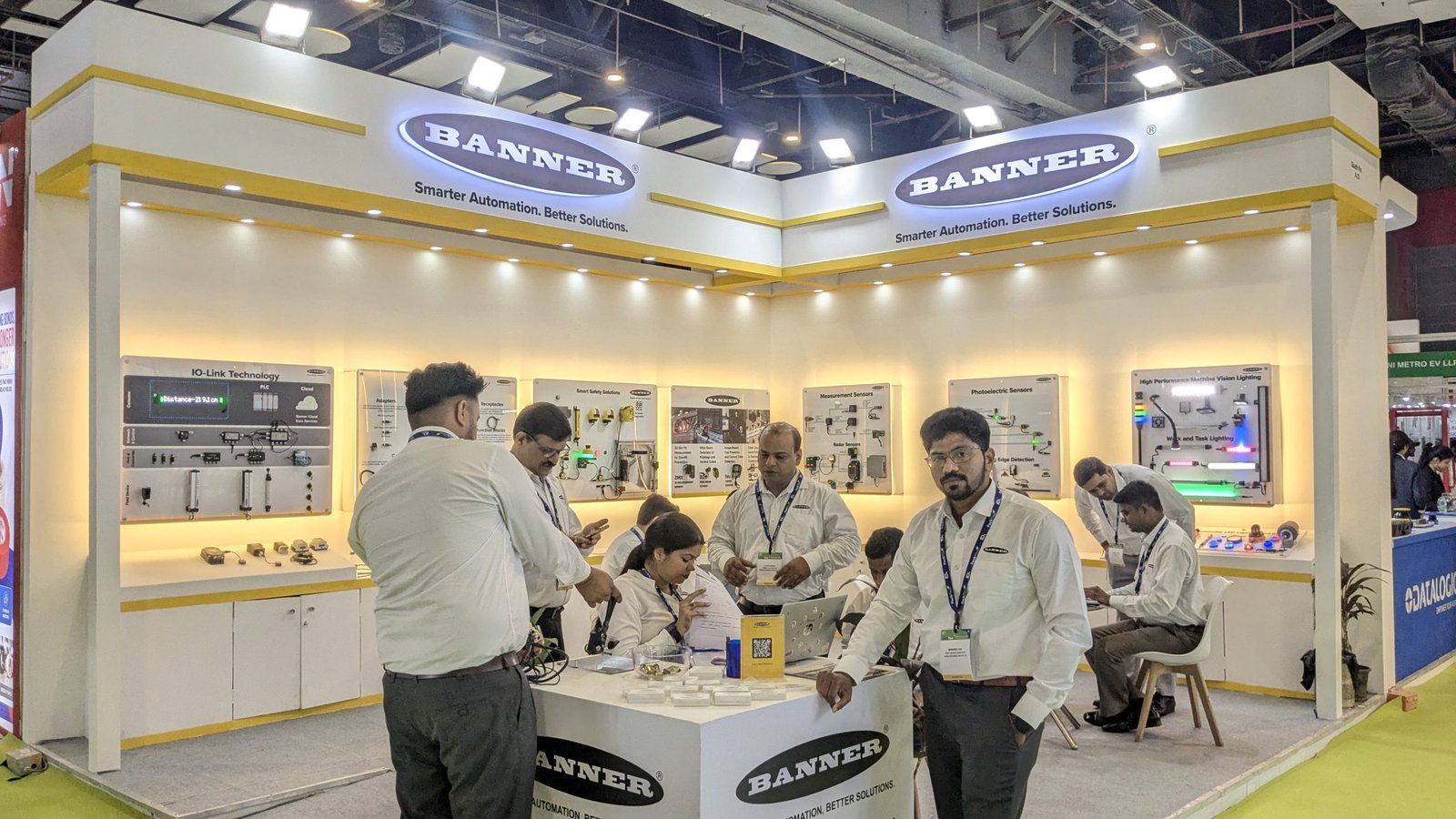
At PackPlus India 2026 at Pragati Maidan in August, Banner Engineering showcased a range of automation technologies for the evolving requirements of packaging and other industrial sectors.
The US multinational specializes in automation products, including sensors, vision systems, safety products, and connectivity solutions. Banner India is a separate entity, with its head office in Pune and branch offices across India, while serving markets in the Middle East and SAARC nations.

The company serves a range of industries such as battery automation, pharmaceuticals, steel, aerospace and semiconductor manufacturing.
According to Atul Deshmukh, director – product management group, Banner Engineering, the company’s approach extends beyond individual automation components. It offers solutions to support complete automation requirements.
Sensors were a key part of Banner’s technology demonstration at PackPlus India. Highlighting their fundamental role in packaging automation, Deshmukh sensors can be used for presence and absence detection, measurement and other applications.
“In the packaging industry, the sensor is the heart of automation. It is a basic element. Automation isn’t possible without sensors,” he explained.
Banner addresses the growing demand for connected manufacturing through IoT solutions. Its portfolio includes sensors, IoT gateways and cloud solutions, enabling data from the shop floor to be captured and transferred for analysis. The company offers predictive maintenance solutions, an area that Deshmukh said is attracting interest from industry.
Another area is connectivity. Banner has expanded its offering to include cables, connectors and junction boxes, complementing its sensor and automation portfolio.
IO-Link for greater connectivity and data
One of the technologies on show was Banner’s IO-Link platform. It can convert conventional sensor data into a more information-rich format, allowing users to access additional information beyond basic sensor outputs, he said.
The technology can help reduce cabling requirements. Deshmukh illustrated the potential savings by comparing conventional wiring with an IO-Link-based approach. If data from 16 sensors has to be transferred using conventional wiring, a significant number of cables would be required. With the connectivity solution, the same data can be transferred with only four cables.
According to Deshmukh, the reduction in cables can translate into savings in copper consumption as well as installation time and effort.
For Banner India, PackPlus provided an opportunity to interact directly with existing customers and potential users. Deshmukh said many exhibitors at the show were Banner customers. Visitors to those companies could be potential users of automation technologies.
“Most exhibitors were our customers. This was a good opportunity to interact with those exhibitors as well as customers visiting them,” he said.
Customization and product development
Banner plans to continue expanding its automation portfolio. Deshmukh said the company launches more than 35-40 products every year, covering different areas of automation.
He identified product customization as one of Banner’s key strengths. Customers can request variations in product configuration based on their specific requirements, including changes to orientation, pin configurations and other parameters. This flexibility gives Banner an advantage in addressing application-specific requirements.
According to Deshmukh, participation at PackPlus allowed them to demonstrate how sensor technology and connectivity can play a central role in improving automation efficiency, particularly in packaging applications.