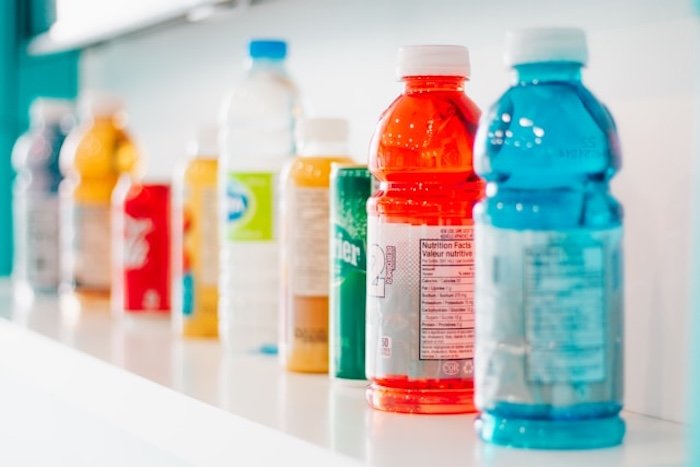
Moving fast towards becoming a US$40 billion market by 2030, Indian non-alcoholic beverage industry has taken up the responsibility of ensuring effective waste management as its core operational strategy and is championing the need and necessity of sustainable business by not only meeting the compliance requirements set by the government agencies but by going beyond and planning for the future.
Outlining the industry’s initiative and focus on sustainable development, president of the Indian Beverage Association (IBA), C K Jaipuria said, “Driven by the strict mandates under India’s amended Plastic Waste Management Rules and Extended Producer Responsibility (EPR) targets requiring 100% recovery and recycling – the industry is constantly working on driving unprecedented efficiency in the circular economy. The three core pillars to optimize waste management are — lightweight engineering, institutionalized digital collection networks, and the fast-tracked adoption of Food-Grade Recycled PET (r-PET).”

“The most efficient way to manage waste is to rationalize material entering the ecosystem in the first place. In this regard, Indian bottling giants have engineered aggressive material reduction programs at the production level,” Jaipuria said.
The stress on preforming optimization has led to refinement in injection-molding technology, which has allowed companies to reduce the weight of standard PET preforms by 10% to 20% across high-volume packs ranging from 600ml to 2.25L.
“Along with this, the closure downsizing is leading to the neck profiles and plastic cap closures for carbonated soft drinks (CSD), juices, and packaged water witnessing weight reductions of 20% to 25%, which is significantly curbing upstream raw polymer consumption,” Jaipuria said.
The IBA president further outlined that, “The urgency of meeting the central government’s scaling EPR targets has been taken up by the beverage industry in the form of formalizing India’s historically fragmented, informal waste-picking ecosystem. This has been catalyzed by the producer responsibility organizations (PROs) and the industry leaders are executing nationwide reclamation strategies via deep joint ventures with specialized PROs such as GEM Enviro and Saahas Zero Waste.”
This socio-economic formalization through these networks is systematically mapping and incentivizing thousands of local kabadiwalas and waste-pickers. By offering guaranteed buy-back pricing, digital weight verification, and direct-benefit payouts, the system is guaranteeing a high-velocity, clean inflow of post-consumer waste.
Adoption of technology through data intelligence platforms by utilizing specialized circular economy platforms such as Race Eco Chain and Banyan Nation, beverage brands now track plastic waste digitally from the initial collection point to the processing mill, generating audit-ready, CPCB-compliant (Central Pollution Control Board) plastic credits with absolute traceability.
Jaipuria added that while the above measures are streamlining the waste management efforts, the goal of the industry and the committed efficiency drive is to transition from downcycling — turning bottles into low-value textile fibers — to a true bottle-to-bottle circular economy.
“In this backdrop, to enhance availability of food-grade r-PET access, major players have established large-scale joint ventures with global polymer processors like Indorama to set up advanced washing and resin-manufacturing units. This has unlocked the massive commercial rollout of 100% recycled PET bottles for select flagship product lines, with industry-wide targets aiming for 30% r-PET integration across core portfolios,” he said.
Another step is to bring in sustainable multi-layer cartons for non-carbonated segments and major packaging partners such as Tetra Pak have integrated certified recycled polymers into their multi-layer carton lines in India, which is successfully matching strict FSSAI food-safety standards while mitigating multi-layered plastic disposal challenges.
The efficiency metrics are no doubt climbing, but maintaining this momentum requires mitigation of two critical challenges, Jaipuria said.
“First is the quality-grade deficit. It needs to be understood that producing food-grade r-PET requires highly efficient and pure post-consumer collection streams. The hard reality is if the plastic is contaminated at the municipal dumping stage, it loses its structural integrity for bottle-to-bottle recycling. The industry needs to invest deeper in source-segregation awareness and smart collection kiosks at the consumer touchpoint, and it requires local government and consumers’ support to achieve this objective,” he added.
According to the IBA president, above all, navigating state-level disparities adds to unnecessary hassle and compliance burden. “While the central CPCB portal provides a unified framework, actual municipal infrastructure and waste-handling fees vary drastically across states. Beverage manufacturers need standardized, single-window municipal access frameworks to optimize their reverse-logistics networks across differing geographies.”
“The Indian non-alcoholic beverage industry is marching ahead and taking the lead in the waste management march under the sustainable growth paradigm with full understanding that the effort will gain further momentum with the support of all the stakeholders – consumers, government and civil society,” Jaipuria said.