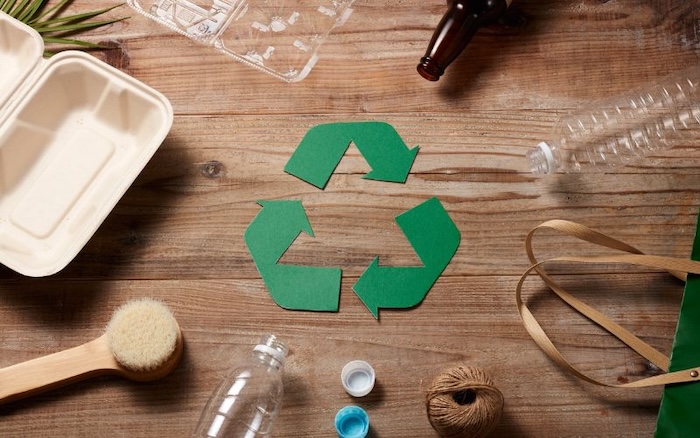
The country’s recycled PET industry continues to struggle with ‘severely under-utilized’ capacities, the Association of PET Recyclers (APR) Bharat has stated, adding that nearly 20-25% of the country’s rPET capacities are lying idle for the lack of demand from plastic packaging users and brands.
According to Goutham Jain, director general, APR Bharat, the under-utilization is severely impacting the industry, which has set up close to 4.39 lakh tons of capacity (including both members and non-members) at an estimated investment of over Rs 10,000 crore.
The Ministry of environment, forest and climate change (MoEFCC) had in its latest guidelines issued in March, mandated the use of 40% recycled content in food-grade PET packaging in 2026-27, starting 1 April.
In addition, the brands are also expected to carry forward the unfulfilled target for the mandatory use of recycled content of FY25-26 (30% mandate) for a period of up to three consecutive years, with a minimum of one-third of the carry-forward target to be achieved every year.
“India imports a significant quantity of virgin petrochemical derivatives linked to crude oil. Any strategic move to reduce import dependence and encourage local alternatives creates a strong opportunity for the recycled PET industry. rPET is not only a sustainable substitute but also a commercially viable domestic resource that can support India’s manufacturing and environmental goals simultaneously,” Jain said.
“The government’s nudge, coupled with the mandate in place, should have translated into a healthy demand for rPET. However, we have not seen demand picking up as plastic packaging users/brands have not been adhering to the mandate,” Jain said.
Transition to rPET is crucial to ensure national resource security, reduced import dependence, and a more resilient domestic packaging supply chain, he said.
“Virgin PET availability and prices are widely affected by external shocks. A strong domestic rPET ecosystem gives India a more stable local source of raw material. Every ton of recycled PET used by the industry helps conserve fossil fuel resources, lowers carbon emissions, reduces import reliance and will make the packaging supply chain more secure,” he added.
Adequate rPET capacities
Contrary to the notion regarding inadequate availability of food-grade recycled PET to meet the targets set for its use in packaging for FY27, APR Bharat feels the Indian food-grade rPET Industry has the “required technology and approved capacity” to support this food-grade rPET transition.
In a recent letter to the union environment ministry, the PET Packaging Association for Clean Environment (PACE) had argued that the government should align targets with the availability of FSSAI-approved recycled PET facilities and consider concessions for carrying forward pending obligations. Industry bodies representing beverage makers had said the current supply of food-grade recycled PET may not be adequate to meet these combined requirements. According to PACE, not enough food-grade recycled PET is available to meet the targets.
In fact, ever since the FSSAI first notified guidelines for the use of food-grade rPET in food and beverage packaging in June 2025, beverage and FMCG players have been arguing that the targets are impractical because of recycling infrastructure limitations, material shortage, and potential cost increases. The government did not budge and released the guidelines.
Jain, however, countered that the FSSAI-approved 17 food-contact rPET plants with a combined capacity of around 4.39 lakh tons are enough to meet the 40% recycled content requirement for FY 2026–27. “This capacity can support the additional carry-forward requirement of up to 10% from FY 2025–26. Besides, the recycled PET manufacturers are expanding at a rapid scale. Their food-grade rPET capacity is expected to reach around 12.26 lakh tons by March 2027. This means the sector is preparing not only for the current 40% mandate, but also for the future increase to 60% in 2028-29 recycled content,” Jain clarified.
Under the Plastic Waste Management Rules 2022 India, brand owners were entrusted with the responsibility of actively building and supporting recycling capacity in partnership with recyclers. Unfortunately, instead of strengthening this collaboration, the rPET industry is witnessing increasing pressure to defer mandated targets.
Recyclers feel such delays risk derailing India’s circular economy ambitions and undermine India’s commitments to combat plastic pollution. A consistent and committed approach from all stakeholders, especially brand owners, is essential to ensure the progress achieved so far is not reversed, Jain said.
APR Bharat has urged all obligated entities to stay aligned with the regulatory timelines and work collaboratively with the recycling ecosystem to build a sustainable and accountable future.
“The technology is ready. The capacity is ready. The industry has invested and is expanding further. India can meet the current requirement and prepare for future targets. What is needed now is the steady adoption by plastic packaging users/brands and consistent adherence to the rules by the bottling and beverage industry,” he pointed out.
Beyond the economy, there is a large-scale social impact affecting millions of livelihoods, mostly from the marginalized fringes of society. A large part of PET collection in India is done by the informal sector.
Nearly 50% of their daily income is linked to plastic waste collection. As demand for food-grade rPET increases, waste bottles get pulled back into the formal value chain. This can improve income stability for waste collectors and create more work across collection, sorting, aggregation, logistics, and processing, Jain said.