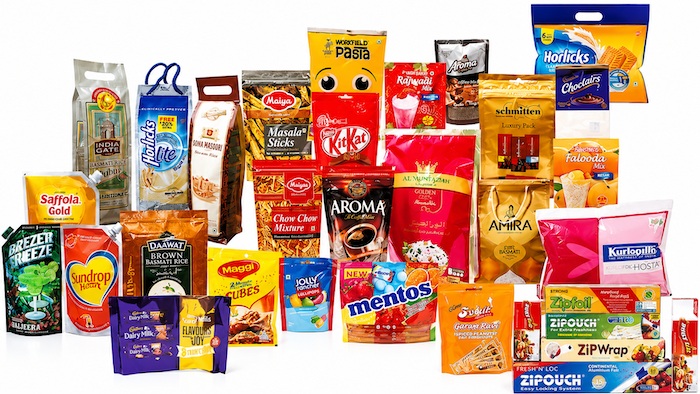
For decades, India’s flexible packaging industry has largely been dominated by gravure. The technology’s ability to deliver consistent print quality across long production runs made it the natural choice for the country’s FMCG-led packaging market, where repeat jobs, multilayer laminates, and large-volume production defined converter economics.
Market realities are, however, shifting. The rise of regional brands, SKU fragmentation, quick commerce, sustainability mandates, and volatile raw material costs is gradually reshaping production priorities. Increasingly, converters are being forced to ask a new question, not whether flexo can replace gravure, but how both technologies can work together more profitably.
This was the central theme of a recent webinar by integrated software and hardware solutions provider Esko, which examined how Indian converters are using flexo and gravure side by side to improve profitability. Thomas Klein of Esko pointed out that the industry’s long-standing flexo-versus-gravure debate may be missing the point. “Rather than comparing technologies, the question should be how to choose the right press for each job,” Klein said during the webinar.
A changing market challenges
India remains one of the world’s strongest gravure markets for flexible packaging. According to insights shared during the webinar, nearly 90% of flexible packaging production still relies on gravure technology, while flexo occupies a comparatively smaller but steadily expanding share. Yet, flexo packaging is reportedly growing at an annual rate of around 7%, reflecting gradual but meaningful shifts in converter strategy.
Packaging requirements are no longer built solely around high-volume standardization. Start-up FMCG brands, regional product customization, language variations, and changing consumption patterns are driving smaller batches and more frequent design changes. India’s fast-growing quick-commerce ecosystem is adding another layer of complexity.
“You have a lot of startup FMCG brands serving regional variants. You have different states, different tastes, different languages, different pack sizes,” he said. “All these external drivers are initiating shorter runs compared to what has been happening a few years ago.”
While gravure remains highly efficient for long runs where cylinder investments can be amortized effectively, shorter jobs often become more difficult to justify commercially because of setup costs and lead times.
The rise of the multipress converter
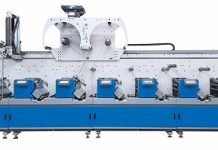
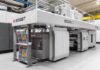
Across global packaging markets, gravure converters are adding wide-web CI flexo presses alongside their gravure assets, while label converters are entering adjacent flexible packaging segments through mid-web UV flexo for pouches and shrink sleeves.
“We see gravure converters adding wide-web flexo presses worldwide,” Klein said. “And label converters are adding mid-web flexo presses for pouches and shrink sleeves. Flexo is winning in view of market dynamics.”
Instead of structuring production around a single technology, converters are increasingly matching jobs to the process best suited for cost, run length, substrate behaviour, and turnaround requirements.
A large-volume snack packaging job may still make economic sense on gravure. But regional promotional variants or lower-volume pouch work may move more profitably to flexo.
Sustainability front
Globally, brand owners are moving toward recyclable packaging formats, reduced material usage, and post-consumer recycled (PCR) content. Although many regulations originated in Europe, their impact is increasingly influencing global supply chains, including India.
Klein pointed to Europe’s Packaging and Packaging Waste Regulation (PPWR) as an early signal of where packaging could be headed. For Indian converters working with multinational brand owners, such shifts are unlikely to remain confined to export packaging alone.
As global brands standardize packaging specifications, recyclable mono-material structures, thinner films, and recycled-content substrates are increasingly expected to become part of mainstream production requirements. These materials, however, bring new printability challenges.
According to Klein, this creates important implications for press configuration. “Flexo is the ideal process to print on very thin and stretchable materials,” he said, noting that CI flexo’s central impression cylinder helps maintain substrate stability during printing. By contrast, gravure’s linear web path may face greater challenges with dimensional variation in increasingly lightweight films.
Esko Quartz technology
For years, print quality remained flexo’s biggest challenge in flexible packaging. Converters widely viewed gravure as the benchmark for solid ink density, highlight reproduction, tonal smoothness, and premium aesthetics. Flexo often meant compromise. That perception, however, may be beginning to shift.
Klein argued that recent advances in screening and imaging technologies are helping flexo narrow the historical quality gap. Esko highlighted its Quartz technology, which the company says improves ink laydown, tonal consistency, and highlight reproduction while reducing defects such as pinholing and dirty printing. For converters, however, the bigger question is commercial.
If flexo can consistently deliver gravure-like results for shorter-run jobs, converters gain the ability to shift work dynamically between technologies based on economics rather than quality limitations. That flexibility could significantly reshape production planning.
Coexistence over competition
India’s flexible packaging future is unlikely to belong exclusively to either gravure or flexo.
Gravure will continue to dominate long-run production where consistency and scale remain critical. But flexo is steadily carving out a larger role in shorter runs, recyclable substrates, pouches, shrink sleeves, and faster-turnaround work. The industry is moving toward coexistence.
And for converters, the competitive advantage may increasingly depend on how effectively both technologies are integrated in a single production strategy.
The future conversation, it seems, is no longer flexo versus gravure. It is about understanding precisely when and where each technology makes the most business sense.