India’s plastics recycling industry is entering a new phase of growth as regulatory mandates, sustainability commitments from major brands and rising demand for recycled content create a stronger business case for investment in advanced recycling infrastructure.
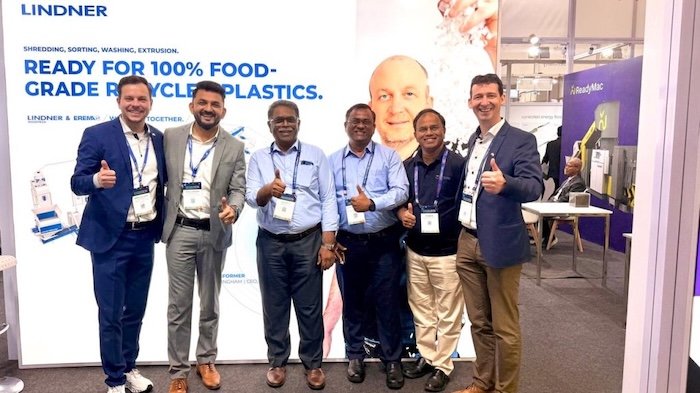
Srichakra Polyplast, one of the country’s leading recyclers, is positioning itself to benefit from this shift through a major capacity expansion that will add 20,000 tons of annual polyolefin-recycling capacity. The company is installing two new recycling lines equipped with advanced washing systems supplied by Austria-based Lindner Washtech. Each one is capable of processing approximately 10,000 tonnes of post-consumer plastic waste annually.
The investment comes at a time when India’s recycling sector is moving beyond simple waste recovery toward the production of high-quality recycled materials suitable for demanding packaging and manufacturing applications.
Speaking about the project, Ravindra P V of Srichakra Polyplast said the company sees substantial opportunities in advanced recycling as regulations and customer requirements become more stringent.
The new facilities will focus on processing post-consumer HDPE, polypropylene and other polyolefin waste streams, including materials that are traditionally difficult to recycle because of contamination, mixed compositions, and varying quality levels.
According to Ravindra, the market is being driven by a combination of policy and commercial factors. Extended Producer Responsibility (EPR) regulations and recycled-content mandates are creating a structural shift in demand for recycled plastics.
“EPR regulations and recycled-content mandates create that demand signal. They move recycled plastics from being a voluntary sustainability choice to becoming a procurement requirement,” he said.
The growing importance of recycled content is particularly evident in the food and beverage sector, where global brands have publicly committed to reducing their dependence on virgin plastics.
Food-grade recycled PET (rPET) is emerging as one of the fastest-growing segments. Ravindra noted that India’s beverage and water packaging industry consumes an estimated 1.4 million- 1.5 million tons of PET annually, creating a substantial opportunity for recyclers.
“The growth potential is significant. India’s beverage and water PET consumption is estimated at around 1.4 to 1.5 million tons, so even a 30 to 40% recycled-content requirement creates a very large demand for high-quality rPET,” he said.
Based on current trends, demand for rPET alone could approach 600,000 tons in the coming years, indicating that the market is moving beyond early adoption toward a period of sustained structural growth.
Despite the strong outlook, recyclers continue to face significant operational challenges.
Ravindra said one of the biggest obstacles is ensuring a consistent supply of high-quality post-consumer plastic waste. While India benefits from an extensive informal collection network, source segregation remains inadequate in many cities, resulting in waste streams that are often mixed and contaminated.
“The biggest challenge is not just collecting waste, but collecting the right quality of waste in a consistent and traceable manner,” he said.
For polyolefins and flexible packaging materials, the challenge is particularly acute. Waste often arrives contaminated with food residues, labels, adhesives, oils, moisture, and odors, making sophisticated washing and sorting systems essential.
To address these issues, Srichakra’s new recycling lines incorporate Lindner Washtech’s advanced cleaning and separation technologies.
Ravindra said the systems offer significant advantages over conventional washing equipment by providing “superior contaminant removal, better retention of material quality, lower water and energy consumption, and improved process stability across varying feedstock conditions.”
The enhanced processing capability will allow the company to handle more complex waste streams while producing recycled materials that meet increasingly demanding customer and regulatory specifications.
Industry observers note that advanced recycling infrastructure is becoming increasingly important as brands seek reliable, large-scale suppliers capable of providing traceable and consistent recycled materials.
According to Ravindra, regulation alone will not be enough to support long-term growth.
“The system also needs strong compliance, clear standards, better enforcement, and improved feedstock quality through source segregation,” he said, adding that long-term offtake agreements from brand owners will be essential to support continued investment in recycling infrastructure.
Beyond its commercial impact, the project is expected to contribute to India’s broader circular economy ambitions.
“Every ton of recycled material used in place of virgin plastic reduces dependence on fossil-based raw materials,” Ravindra said. He said investments in advanced recycling help formalize and strengthen India’s recycling value chain by improving quality, traceability, and scale.
Looking toward 2030, he expects the market to evolve from one driven primarily by regulatory compliance to one focused on quality and performance.
“By 2030, recycled plastics in India will move from a compliance-led market to a quality-led market,” he said.
As recycled-content requirements expand and sustainability goals become more ambitious, companies capable of combining scale, technology, traceability and quality assurance are likely to emerge as leaders in India’s next generation of plastics recycling.