For Windmöller & Hölscher (W&H) India, a manufacturer of extrusion and printing machinery, the 13th Elite Plus Specialty Films & Flexible Packaging Global Summit from 26–27 August in Mumbai is the largest stand-alone gathering of the flexible packaging sector and a great place to meet the whole industry in two days.
“It’s a great place for networking and getting a real sense of the market’s pulse. The platform for presenting and learning about new updates on solutions and technologies is also very valuable,” W&H stated.
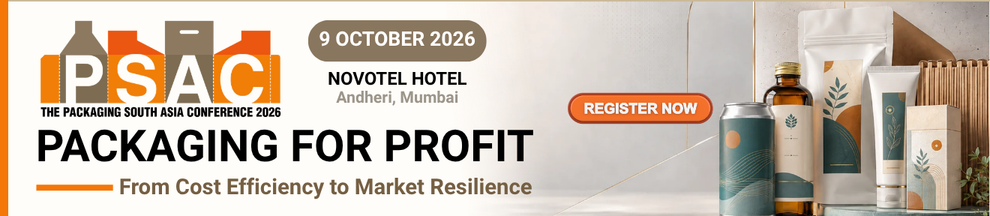
Blown film technology has seen some major innovations recently, which would set the benchmark for performance in the industry. While talking about these solutions, W&H would also showcase solutions that can support its customers sustain the new high levels of performance.
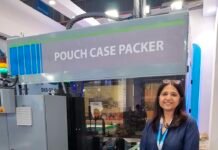
Aashima Wadhwa, India sales manager-marketing, W&H India, says, “Sustainability is not a separate initiative for us — it runs through the core of how the machines are designed to perform. The single-most immediate lever is waste reduction. Every start-up, every product changeover, and every drift in the process consumes raw material that never becomes a saleable product, and film that can’t be sold is the most expensive scrap.
So systems that make production more stable and repeatable are, in a very direct sense, sustainability tools — less material wasted, less energy spent producing rejects, more of every kilo of resin ending up in a good product. In parallel, it continues to develop technology that supports thinner structures, recyclable mono-material films, and the processing of recycled content — helping its customers meet tightening regulations commitments without giving up performance.
“We see efficiency and sustainability as the same goal viewed from two sides,” she adds.
She said that W&H expects honest, technical conversations with convertors that know their production intimately — and those conversations are the real benefit. “They sharpen the understanding of what customers in a region may require next, which feeds directly back into how we develop and support our technology. We see the summit as a chance to strengthen relationships.”
The company aims to be seen not simply as a machine supplier, but as a long-term partner in a customer’s performance over the entire life of a production line. If convertors attending the summit leave with a clearer sense of what’s possible on existing equipment, and how W&H works alongside them to sustain it, that’s a good outcome.
On industry trends, she explains that the push toward recyclable and mono-material structures, driven by both regulation and brand-owner commitments, is raising the technical bar on what film has to do. Sustainability and cost pressure are pointing in the same direction — reducing material waste is now both an environmental and an economic imperative, and that reframes how convertors think about efficiency.
“The human factor is often underestimated. With skilled operators in short supply and lines running around the clock, the knowledge required to run a machine at its best can’t sit only in the experience of a few people. Intelligent assistance systems that make expert-level operation repeatable by anyone, on any shift, are becoming essential rather than optional. Underlying all of it is a shift in mindset — from buying performance once to sustaining it continuously,” Wadhwa added.
For visitors and industry stakeholders at the summit, she said. “First, the performance you’re paying for and the performance you actually get in daily production are often not the same. The difference is usually far larger and far more recoverable than most producers assume. Closing that gap doesn’t always mean new capital investment; a great deal is possible with the line you already own.
“Second, real performance isn’t a number you hit at commissioning — it’s something you sustain, year after year, through the right technology, the right support, and a genuine partnership. We’d encourage everyone to come and talk to us about their own production. We’re here to listen first, and to show what’s possible,” she concludes.