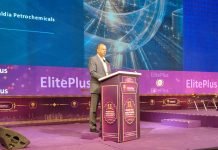
The 13th ElitePlus Conference on Specialty Films and Flexible Packaging, apart from attracting a record crowd of participants and exhibitor partners, presented a deep and complex collection of contemporary global concepts, ideas, technologies, and innovations. The close to three dozen presentations described massive domestic and global export opportunities, and innovations taking on the challenges of sustainable and recyclable packaging, skilled human resource erosion, scaling production, diversification to new industries, and substantial investments in new projects based on new materials.
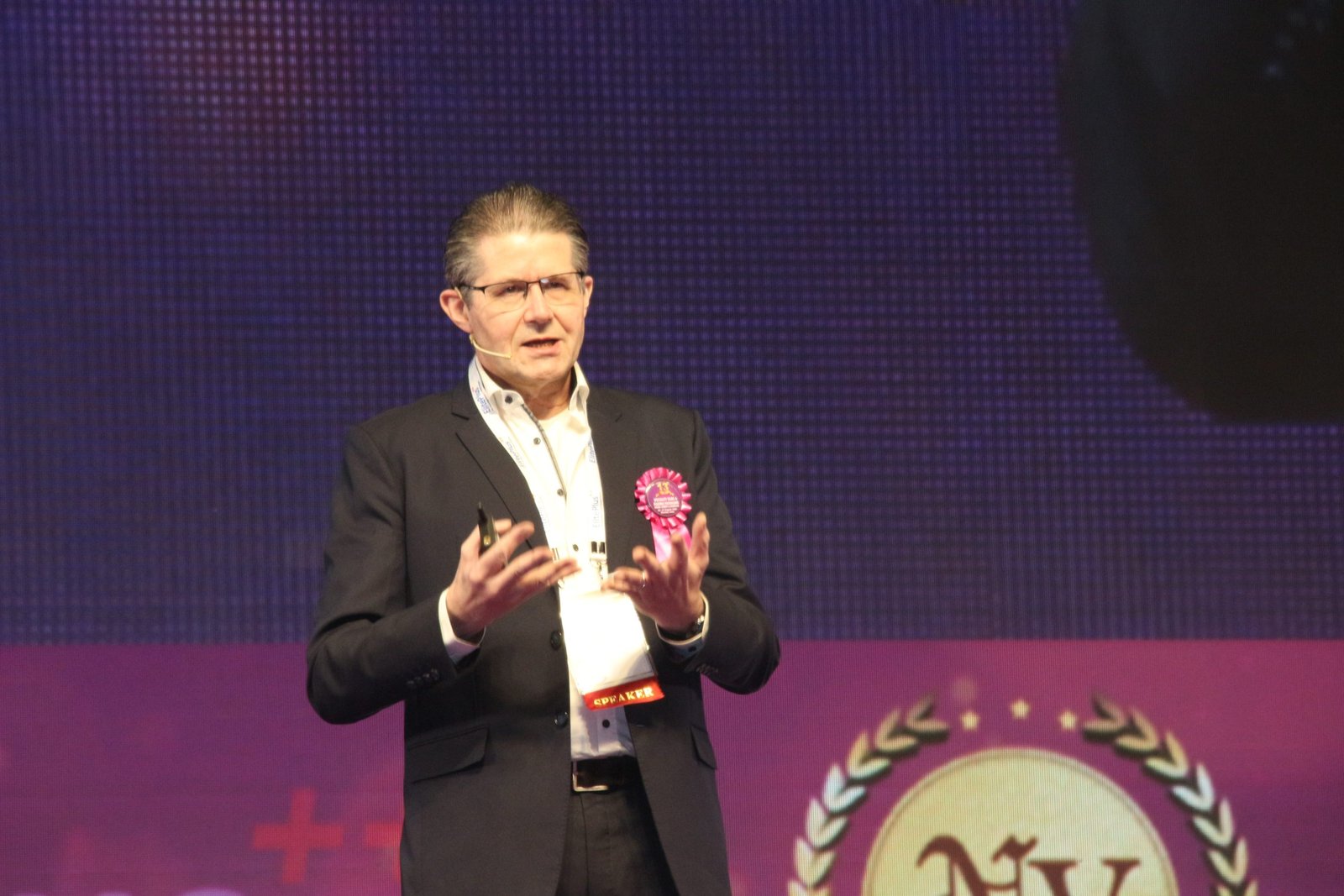
As plastic recycling becomes an organized industry, one heard an impassioned presentation by Manfred Hackl, CEO of the Erema Group, stating that only 35 million tons, or 8% of plastic waste, is recycled today, which needs to rise to at least 250 million tons by 2050. While global recycling volumes are expected to be 7.2 times higher than today, a higher-quality PCR material is needed consistently, comparable to virgin material.
“Brands want plastic with a positive image instead of a negative one,” he said. Hackl added that while Erema currently has 160 recycling-related machines in India, it is enhancing this footprint by establishing the Erema India Foundation with Lindner. In addition it is joint venturing with Amtec to install a machine locally for training and making the technology more accessible to what is clearly a key growing market.
Stefan Barot, president of the Chemical Division of Balrampur Chini Mills, spoke about the company’s investment in a 60,000 ton plant for producing the raw material for PLA films and packaging materials. He also brought on stage the leadership of one of the country’s leading flexible film providers, Polyplex, with which Balrampur is partnering to implement the flexible film production aspect of the project. One must keep in mind that PLA films, while marketed as an eco-friendly bioplastic, have as yet no established waste stream in India, and are said to adversely affect other recyclable plastic waste streams by even minute contamination.
Another interesting presentation clearly reflecting the continued strong growth of flexible packaging in the country was by Bruckner Maschinenbau’s sales manager Tobias Lanksweirt entitled, “The Next Big Thing in Biaxial stretching.” Stating that adversity also creates opportunities, he projected India’s middle-class growth to 715 million by 2030 alongside the highest worldwide growth in energy demand.
To answer this opportunity, he introduced the Bruckner 12-meter-wide biaxial machines that can run thin films at 700 meters a minute. “Cosmo First is already running the world’s first 700m/min BOPP line, and Dhunseeri Polyfilms has ordered the world’s first 700m/min BOPET line.” In addition, 4 more 700 m/min lines are sold to Indian customers.
Apart from rising demand for flexible films for packaging, he spoke of the demand from the electronics and energy storage, or battery industry for films as thin as 1.6 microns. In the end, Lanksweirt came back to the packaging story by suggesting a paper-based structure with 5-micron BOPP film laminated to paper for packaging.
There were several other interesting presentations at ElitePlus linked to the paperization of flexible packaging, innovative automation of film production, machine maintenance for quality and uptime, and training technologies, that we hope to cover in subsequent issues.