Just about every product that we buy comes with a barcode somewhere on the product or its packaging. But there are big changes coming to the humble barcode that will affect the design and printing of packaging.
The basic purpose of the barcode is to display the product’s Global Trade Item Number, which is an internationally recognized way of identifying different types of products. This system allows products to be exported globally but still carry the same identification.
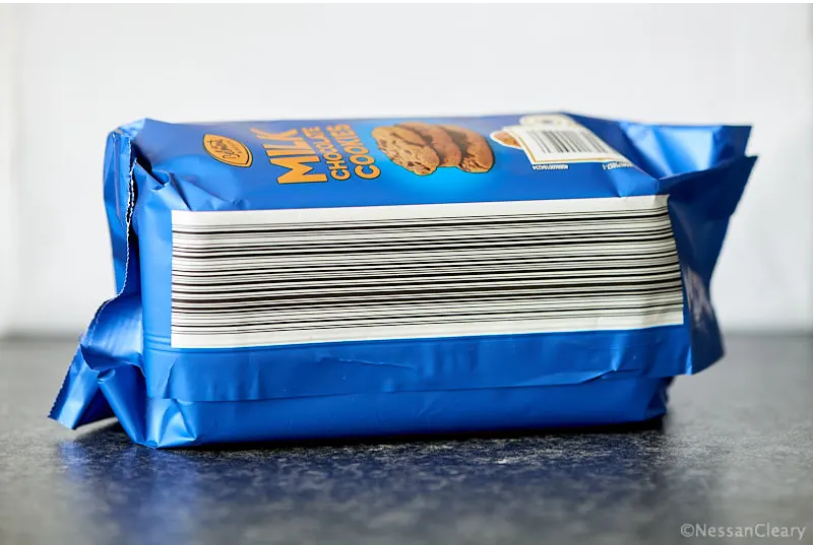
The basic concept grew out of the North American UPC Universal Product Code that was developed for use in the early 1970s by the Uniform Grocery Product Code Council, more commonly known as the Uniform Code Council. It’s a 12-digit code that’s mainly used in the US and Canada and first appeared around 1974 on a pack of Wrigley’s chewing gum. There are different variants with the most common being UPC-A for retail point-of-sale use.
By the mid-70s an extra digit was added to identify different countries. This led to the founding of the European Article Number association in Brussels, which adopted a slightly modified version of this as the EAN-13 barcode. As such it helped to facilitate the movement of goods between the different European countries and was rapidly adopted by other regions, notably Asia. There is also a Japanese Article Number which is a variant on the EAN-13 code.
There is also a shorter 8-digit version, the EAN-8, for use where space is limited, as well as 2- and 5-digital variants for adding extra information such as pricing. The familiar 1D barcode, which is made up of long black lines of different thicknesses separated by white space is often known as the EAN barcode. All these different codes have come together under the GTIN umbrella, with UPC now known as GTIN-12 and EAN-13 as GTIN-13.
By 1990 UCC and EAN had signed a global cooperation agreement as they continued to expand their reach into new countries, and into new technologies such as RFID Radio Frequency Identification. By 2004 these organizations had morphed into the not-for-profit Global Data Synchronization Network, which is usually referred to by the much snappier monicker GS1 and which now administers all the different barcode systems.
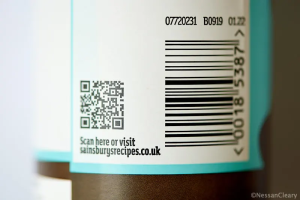
GS1 is headquartered in Brussels but there are separate GS1 organizations in more than 90 countries. GS1 defines what the barcode standards are, and runs a central database for all the different product identification codes. Consequently vendors need to register as members with GS1 to obtain the necessary barcodes for their products, which ensures there is no duplication.
The GTIN-13 code is made up of several parts. The first three digits, sometimes known as the GS1 prefix, are the country code. An example of this might by 539 for Ireland, or even 978 or 979 for Bookland, meaning the ISBN International Standard Book Number for cataloging published books. In addition, the 020 to 029 prefix is set aside for internal use by individual retailers. The prefix is followed by a manufacturer code, and then a product code, both of which can have a variable number of digits. The final position is a check digit.
Sunrise 2027
The next chapter is the Sunrise 2027 initiative that was first announced back in 2022. This marks the transition from the existing and ubiquitous one-dimensional barcodes with their horizontal black lines to new two-dimensional barcodes. The definition of what makes a 2D code can cover several different types of codes. That includes QR codes but there are also several other types of 2D barcodes. Among the other options are: Data Matrix, which can be very small and are often used for tracking factory parts; PDF417, which can include address and package information for delivery labels; and Aztecs, which are used by airlines for boarding passes on smartphone apps.
However, QR codes will be the most common for most consumers. These are easily recognized through having position markers at three corners so that scanning devices can easily locate them regardless of the angle they are held at. There’s even a variant, Accessible QR codes, that are designed for easier use with accessibility apps. They have larger size and high contrast so that they can be scanned at longer distances than normal of just over a metre away, useful for people who might otherwise have trouble locating the QR codes. They incorporate features such as a description of the QR code’s purpose for those who rely on screen readers.
QR codes can hold up to 7000 numeric characters including multimedia links. They can cope with error correction of up to 30%, which is handy for outdoor advertising that might suffer some damage from the elements.
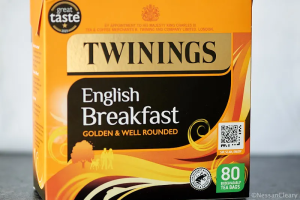
Regardless of which 2D code, each product will retain the same GTIN number. But retailers will be able to add in other information such as: batch numbers, that can be used for product recalls; use-by dates, to reduce the legal risk of selling out-of-date stock like baby food; or a website address with additional information about the product for consumers.
Digital Product Passport
All this dovetails perfectly with the EU’s Digital Product Passport concept. This was introduced in 2024 as a way of tagging every product with specific data about its characteristics and, in particular, options for recycling that product.
This was part of the Eco-design for sustainable products regulation, so it includes information such as material composition and instructions for disassembly, as well as information on repairability of a product and availability of spare parts.
The first part of it is the central EU DPP registry, which opened on 19 July 2026, and enables products in all categories to be registered. The data must be kept at the registry for at least ten years.
The system itself will be rolled out across different product categories, with some due to come into force in 2027, notably batteries for e-bikes, textiles, footwear and toys. Other items will be phased in over the next few years but every product should be covered by 2030. Responsibility for the DPP falls to whichever company is introducing the particular product to the EU market, which might be the importer for products manufactured outside the EU. Since the DPP will include a great deal of information, such as the materials used and the manufacturing process, the importer will be legally responsible for obtaining these details from the manufacturer, as well as any information required to clear customs. As such, these codes will affect many manufacturers outside the EU, such as textile producers in India or automotive manufacturers in China.
And Chinese companies have an advantage as China is rolling out its own DPP, partly to make it easier for Chinese companies to export to the EU but also to give China the same advantages that the EU is looking for, mainly around traceability and recyclability. The Chinese system has three tiers. These include the National DPP Registration Management Service, which acts as a central registry and also sets the standards to be implemented. Then there are different DPP frameworks that vary across different industries for manufacturers. The third tier is for Enterprise-level systems and allows manufacturers and exporters to ensure they comply with international standards. GS1 China, working with the Chinese Textile Information Centre has already produced the first national DPP white paper for textiles to ensure interoperability for Chinese exporters.
China is also developing a Product Carbon Passport, that would give verified information on the carbon footprint of each product, which could also be added to the DPP.
The easiest way to attach a DPP to a product is via a barcode, but the DPP requires more information than a standard barcode can hold. This is one of the main drivers behind the widespread adoption of the new 2D barcodes.
It’s important to note that the DPP covers a products’ entire lifecycle so it’s not just a one-off code. Instead relevant parties can update the registry to add further information throughout the life of that product.
Beyond passport control
Aside from the product identification, stock taking and product passport requirements, these codes also offer brands two major opportunities. The first is for greater engagement with customers, encouraging them to scan the QR code with their smartphones to learn additional information about those products. That might include recipes for food items or linked marketing campaigns or even special offers – anything that might add value to a product or give a brand an edge over the competition.
The second advantage is that the QR code can enable different degrees of verification to limit the risk of counterfeiting. That can help retailers check the products they are stocking, and give consumers more confidence in the items they are buying.
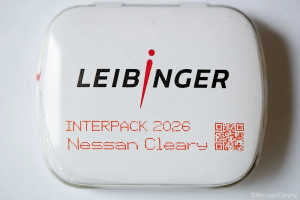
Ironically, QR codes have been used in consumer-facing scams so the general public is likely to be a little bit cautious about their use in some cases. A typical scam might involve printing a new QR code onto a blank label and then placing this over the original QR code such as a billboard advertisement. This has been done on carpark payment systems to redirect payments but could also be used to hack devices.
Nonetheless, with the Sunrise 2027 deadline rapidly approaching we are all going to see a lot more 2D codes on packaging. They’re going to become a familiar part of our shopping experience and are likely to be much more upfront on packaging as brands embrace the opportunity to engage more with consumers. Some brands will have to update their packaging designs but many household items already incorporate QR codes.
One of the areas in the printing sector that will be most directly affected will be coding and marking. In some cases, where unique serial numbers are needed for each individual product the codes are going to have to be printed live on a production line. But even with static 2D codes there is an issue as not all of the existing coding and marking solutions can handle the higher resolution required to produce 2D codes at the current production speeds.
This was one of the lessons from the Interpack show earlier this year, which I’ll look at in more detail next week.