Webtech International Machines, an Indian manufacturer of flexographic printing and converting machinery, will showcase its latest developments in servo-driven flexographic technology at Loupe India 2026 in Greater Noida. At the expo, to be held from 29 October to 1 November 2026 at the India Expo Centre & Mart, the company will focus on technologies that help converters manage shorter runs, increase SKU counts, and meet tighter turnaround requirements.
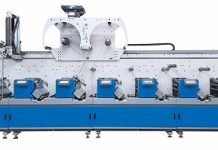
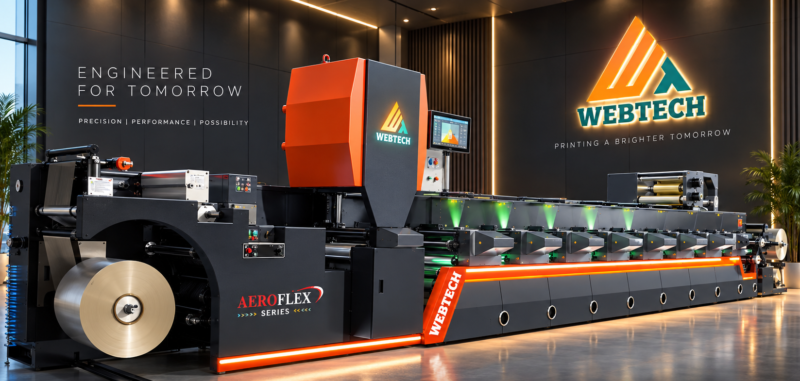
According to Shivnandan Singh, CEO and director, Webtech International Machines, the company will showcase three key platforms: a 550-mm gearless fully servo sleeve-type flexo press with eight servos per printing station; a 720-mm 4-color gearless fully servo sleeve-type flexo press developed for flexible packaging; and a 450-mm 8-color triple-servo flexo press featuring Webtech’s single-gear-based technology.

The presses are designed to handle a wide range of applications and substrates, including labels, PET, BOPP, aluminium foil, lamitube, shrink sleeves, in-mould labels (IML), LDPE and other flexible packaging materials.
“The major highlight will be the launch of our next-generation gearless fully servo sleeve technology—one of the most significant developments from Webtech to date,” Singh said.
The new platform incorporates features such as pre-print pressure setup, AI-integrated functions, quick job changeovers and a management reporting system. Webtech plans live demonstrations at its stand, allowing visitors to assess the press’s printing performance, registration stability, web handling and automation capabilities.
The company believes automation and repeatability will become increasingly important as Indian converters deal with shorter production runs and greater SKU complexity. Technologies such as sleeve systems, pre-register, automatic registration control, job-setting recall and automated pressure setup are intended to reduce the time and waste associated with job preparation.
“Our development philosophy is centered around doing more productive printing with less setup time, less waste and less manual intervention,” Singh explained.
He said the objective is to increase saleable production per shift while reducing startup waste, downtime and operator dependency. Production reporting and intelligent automation are intended to provide management with greater visibility into machine performance and operational efficiency.
Looking ahead, Singh expects automation, digitalization, intelligent manufacturing and substrate versatility to be among the major technology trends influencing the Indian label and packaging market over the next two to three years. Beyond basic machine monitoring, he sees greater adoption of production data, job traceability, remote diagnostics and management-level visibility.
Sustainability, he added, will remain an important consideration, with waste reduction, improved energy utilization and stable process control becoming increasingly relevant to converters.
Singh said Webtech’s participation at Loupe India 2026 is built around the theme, “Engineered in India. Built to Compete Globally.” The company aims to demonstrate the growing capabilities of Indian flexographic engineering while highlighting its ability to deliver advanced automation, precision and technical support.
“We want visitors to experience first-hand how far Indian flexographic engineering and manufacturing have progressed,” Singh said.
At the exhibition, Webtech will be located in hall 12, stand M30, where its next-generation gearless fully servo sleeve-type flexographic printing press will be a key attraction.