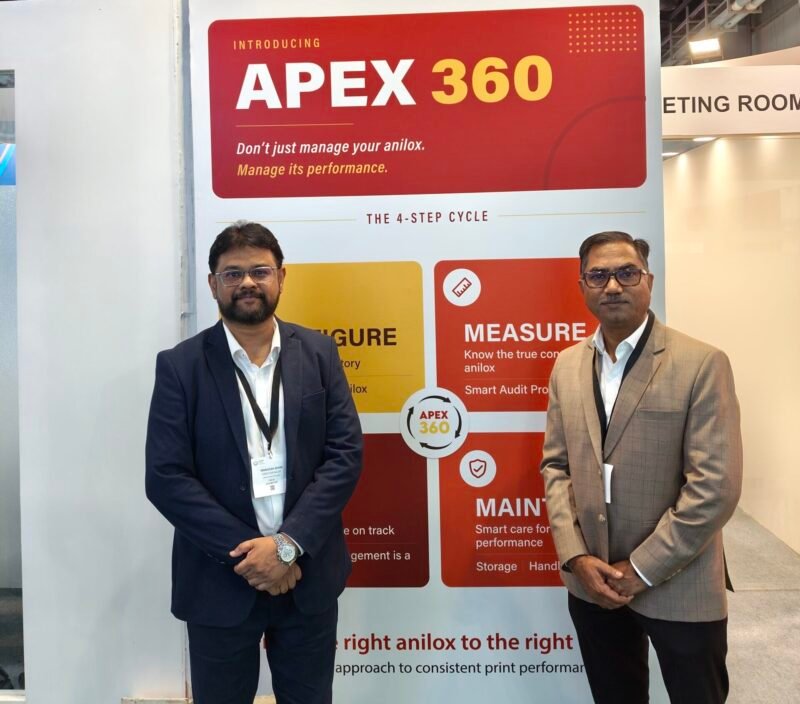
Apex International is expanding its support for flexographic printers through Apex360, an initiative that provides converters with end-to-end technical assistance—from equipment specification and process consultancy to performance management and maintenance.
Speaking to Packaging South Asia at Loupe India 2026, Mangesh Bhise of Apex International said the program had been in development for around six months and was intended to address the gaps in technical support to flexographic converters.
Apex360 will help converters select the right specifications for applications, including traditional flexographic label printing, shrink sleeves and reverse printing for flexible packaging on narrow- and mid-web presses. The program will cover process consultancy, performance analytics, maintenance and equipment health checks.
“The idea is to have the right specifications for converters right from the beginning,” Bhise said, explaining the initiative would extend beyond equipment sales to cover performance management and maintenance.
Apex has already audited around 600-700 applications as part of the initiative, with encouraging interest from established printers and newer entrants to flexographic printing. Bhise said both large global accounts and converters that had invested in the technology two or three years ago were looking for ways to improve process management.
The company expects to introduce a nominal fee for the service from 2027, reflecting the time and technical resources required to conduct audits and provide continuing support.
Anilox management and process optimization
A central element of Apex360 is anilox roll management. The health checks are intended to identify issues such as declining ink volumes, excessive wear, clogging, and problems arising from unsuitable coatings or inks.
Bhise said the objective was to help converters identify process deviations and take corrective action before they affected print quality or production efficiency. Regular assessments could establish when cleaning or replacement was necessary.
Apex has introduced laser cleaning machines and is expanding its involvement in cleaning chemicals to provide a more comprehensive offering.
“This is not just about joining the dots. The idea is to complete the entire anilox ecosystem, right from offering the right solution to performance management,” Bhise said.
The company’s portfolio includes seven to eight different screen and engraving options designed for specific market applications. Bhise said Apex’s technical team, many of whose members have engineering backgrounds and hands-on experience on printing presses, was central to diagnosing problems and recommending appropriate solutions.
Flexographic printing moves into flexible packaging
The expansion of Loupe India to include flexible packaging alongside labels reflects the gradual diversification of label converters into flexible packaging, where flexographic printing is gaining ground alongside gravure.
Bhise described the shift as gradual, with established packaging companies including Huhtamaki already operating across multiple printing formats. Smaller and mid-sized converters are also exploring expansion from narrow-web into wider-web applications.
However, the economics vary depending on the application, print width, production speed, and run length. For converters working with mid-web equipment in the 600-700 mm range, reverse printing and flexible packaging offer opportunities, although production speeds remain a consideration, particularly with UV and LED curing systems.
Bhise said these configurations typically operate at around 150-200 meters per minute, while good-quality central impression (CI) flexographic presses can reach 300-350 meters per minute.
Application requirements influence equipment selection. Shrink sleeves, for instance, have different production constraints from wraparound labels and other flexible packaging applications.
Shorter run lengths, increasing stock-keeping units and sustainability considerations are changing converter requirements. Digital printing is becoming part of the wider production discussion as printers seek to improve efficiency and make shorter runs economically viable.
Bhise pointed to developments in ink and curing technologies, including innovations from Flint Group, as examples of how converters could gain greater flexibility without extensive changes to existing equipment.
Indian manufacturing creates opportunities
Bhise said the Indian printing and packaging industry was entering an interesting phase, with more original equipment manufacturers establishing local manufacturing operations. This could create opportunities for Apex as the installed base of flexographic equipment expands and demand for technical support and after-sales services increases.
He said the company’s relationships with major OEMs reflected confidence in its technology and service capabilities.
As label converters consider investments in wider-web equipment and flexible packaging applications, the competitive landscape is likely to change. Existing wide-web converters will have to respond to new entrants and changing production requirements.
Bhise expects gravure printers to explore further opportunities in flexible packaging from a sustainability perspective, while flexographic technology continues to evolve across label and packaging applications.