The Body Shop is a British beauty brand founded in 1976 in Brighton by Anita Roddick. Through the cosmetics, skin care, and perfume company, Roddick challenged industry norms, championed ethical sourcing, and put purpose before profit. Hence, The Body Shop came to be known for its natural and ethical approach to beauty.
Fifty years on, The Body Shop continues to lead across 70+ markets. Opening its first store in India in 2006, it has spent two decades doing more than just selling cosmetics. From advocacy for youth participation in democracy to empowering waste pickers through the use of fair trade plastic, the brand has attempted to fuse purpose with impact at every step, recounts Harmeet Singh, chief brand officer, The Body Shop Asia South.

Over the past 20 years, the brand’s initiatives, such as Why25, Youth Collective Council, and End Period Shame, led to environmental action through Plastics for Change and Return, Recycle, and Repeat. It continues to champion gender equity and accessibility in both its workplaces and stores.
As it completes two decades in the country, The Body Shop is reigniting a movement, Singh said, “One that proves that when beauty has backbone, change isn’t a campaign but a commitment.” The Body Shop currently has 200+ stores across India and more than 350 SKUs (stock-keeping units) across various product categories.
With a primary target audience comprising personal care and beauty enthusiasts who value ethically sourced, sustainable offerings, the brand serves conscious consumers seeking cruelty-free, nature-inspired products with a purpose. “They are drawn to brands that align with their values, particularly those advocating for environmental responsibility and social impact. The Body Shop resonates particularly well with individuals who seek high-quality beauty and skincare products backed by strong ethical commitments and community-driven initiatives,” Singh explained.

The Body Shop’s core ethos is rooted in sustainability, ethical sourcing, and a commitment to positive social and environmental impact, Singh said. “We champion cruelty-free beauty, community fair trade, and empowerment for marginalized communities. Our brand values are embedded in every aspect of our functioning – ethical beauty, sustainability, inclusivity, and actionism. We believe beauty is also about making responsible choices that leave a positive impact on the planet and people.”
Product ingredients are sourced ethically through long-standing community fair trade partnerships, ensuring fair livelihoods for marginalized communities and supporting local economies. “We maintain a strong stand against animal testing and advocate for global change in this aspect. Every product created by The Body Shop is cruelty-free,” Singh said.
Singh said environmental responsibility is another central aspect of the brand’s operations. The cosmetics major collaborates with waste-management organizations to reduce its environmental footprint and promote circular practices in its operations.
Store design and packaging choices reflect the company’s commitment to sustainability and low-impact consumption, Singh said, adding, “The Body Shop is an advocate for social justice and inclusivity, reflected through product campaigns that challenge outdated beauty norms and uplift the marginalized. For us, encouraging authentic self-expression and diversity is the way to go.”
Since the late 1980s, The Body Shop has been a vocal advocate against animal testing in cosmetics, leading global campaigns that have shaped industry standards. “Today, our commitment is stronger than ever. Our customers can trust that every purchase supports a world where beauty never comes at the expense of animal welfare,” Singh said.
Sustainability is at the heart of its philosophy as the brand focuses on crafting effective yet environmentally responsible products. The brand’s bespoke Community Fair Trade (CFT) program, launched in 1987, is the best expression of its commitment to sustainability, Singh said.
The Body Shop’s sustainability initiatives in India
The Community Fair Trade (CFT) program is built on long-term partnerships with artisan producers and farmers, enabling fair pay, decent working conditions, and community investment. “Our approach to sustainability extends beyond ingredients. We believe packaging should never be at the planet’s expense. Through our five-year partnership with Plastics For Change, we’ve diverted over 2,330 metric tons of plastic waste, prevented 4.4 million kilograms of CO₂ emissions, and empowered 2,000+ informal waste collectors with safer, more dignified livelihoods. More than half of the community members who benefited are women, ensuring fair wages, safer working conditions, and vital social services. In 2025 alone, we donated 19 electric tricycles to support waste collectors with better mobility and income opportunities.”
In order to create long-term, systemic change, we have embedded circular economy principles into our operations, Singh said, adding that the brand’s Return, recycle, repeat (RRR) program enables customers to return used packaging to in-store collection points for recycling.
The Body Shop’s Activist Workshop stores are designed with reclaimed wood and 100% recycled materials, reflecting its dedication to reducing environmental impact. To enhance accessibility, the brand has introduced Braille category call-outs in its Activist Workshop stores across Mumbai, New Delhi, Gurgaon, and Bengaluru. “This initiative, inspired by disability rights activists, created an inclusive shopping experience for visually impaired customers in 2024. We plan to expand Braille integration to additional stores across India by the end of 2026.”
Another distinct element of these spaces is the integration of locally relevant murals that celebrate local culture, diversity, and women’s empowerment. Each mural is carefully curated to reflect the identity and heritage of the community it inhabits, Singh said.
In Chandigarh, for example, its store features a mural honoring the strength and spirit of women of Punjab. In Bengaluru, the artwork draws the city’s cultural landscape. Similarly, murals in cities such as Delhi and Mumbai are inspired by local narratives and grassroots changemakers. These art pieces act as visual storytelling tools that forge meaningful connections with local communities.
Penetration into smaller markets
The Body Shop India has increased its focus on strengthening its presence in tier-II and tier-III cities, where the demand for beauty products is growing. The brand is investing in retail expansion, localization, and personalized customer experiences to connect with consumers beyond metros.

Digital platforms and omnichannel engagement allow it to stay relevant and responsive to the needs of a young, informed, and ethically inclined audience, Singh explained, adding that expanding into smaller markets requires a thoughtful recalibration of the brand strategy, retaining a premium positioning while addressing affordability.
“We have undertaken a significant pricing transformation across core product categories, reducing prices by up to 30%. This recalibration is a redefinition of value at an omnichannel level, delivering high-quality, ethically sourced products at prices that are more accessible to a wider audience,” he said.
By striking a balance between premium and affordability, the company embodies mass relevance as well, Singh said, adding that its presence in emerging markets is about building meaningful relationships anchored in trust, transparency, and shared values–aspects that define The Body Shop.
Sustainable products & practices
The Body Shop’s marketing strategy for sustainable products hinges on transparency, accessibility, and education. “We highlight our ethical sourcing and sustainability initiatives in all communications. Campaigns like ‘More Love for Less’ have made our premium products more accessible through reduced prices, broadening our reach to aspirational yet price-sensitive consumers. We leverage omnichannel expansion, including retail, travel, and quick commerce, to meet customers where they are. In-store Activist Workshop formats and recycling programs engage and educate customers about sustainability, making them active participants in our mission.
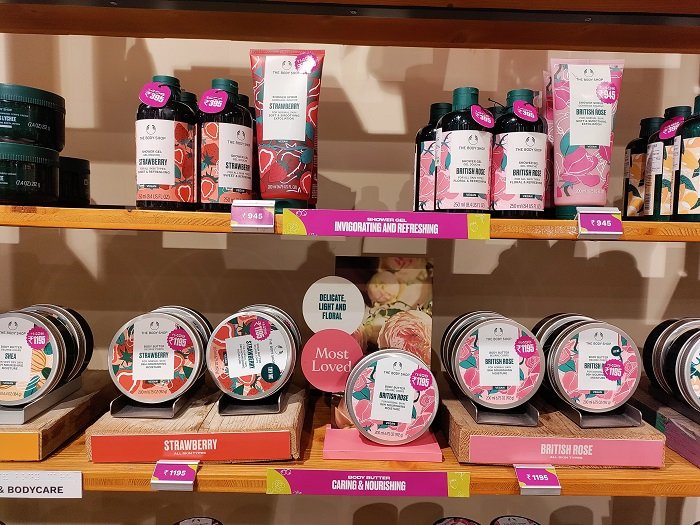
The Body Shop’s packaging embraces several key packaging trends, such as the use of recycled and recyclable materials, especially Community Fair Trade recycled plastic, minimalist designs that communicate efficacies and sustainability. Distinctive color palettes and product-specific designs make its products easily recognizable and attractive on shelves.
“We have transitioned our body butter tubs to feature aluminium lids as it is recyclable, lightweight, and helps lower the overall plastic content of our packaging,” Singh said, adding the Body Shop’s packaging is instantly recognizable by its signature green. “We complement this with clean whites and earthy tones, creating a sense of purity and transparency. Each product line features distinct hues inspired by its key ingredients, making it easy for customers to identify their favorites.”
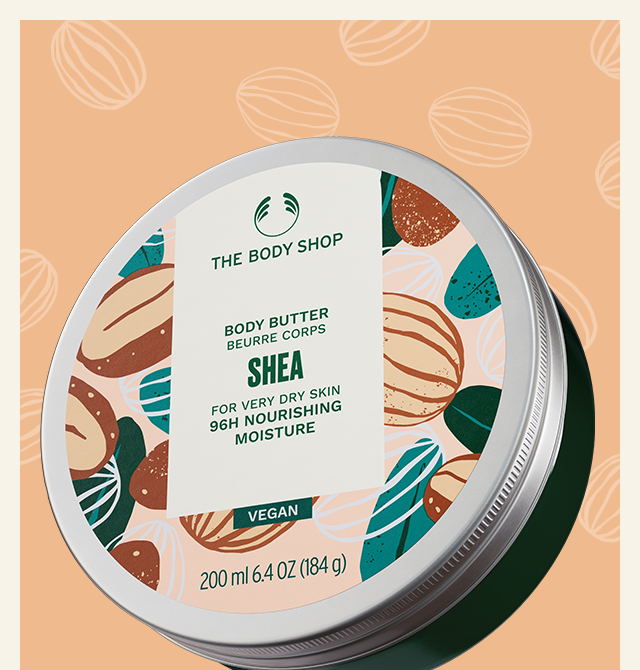
With the launch of its The India Edit collection, The Body Shop has taken its design philosophy a step further to connect with Gen Z. This range features bold, vibrant colors and playful graphics inspired by Indian culture and contemporary trends. Each product in The India Edit line uses eye-catching hues, like fiery pinks, stem greens, and peppy yellows, making them visually striking and highly shareable on social media.
“These design choices celebrate individuality, reflect the energy of modern India, and make it easy for customers to identify their favorites. By blending our classic natural aesthetic with the vibrancy of the India Edit, we ensure our products stand out on the shelf and resonate with a new generation of conscious, style-savvy consumers,” Singh concluded.