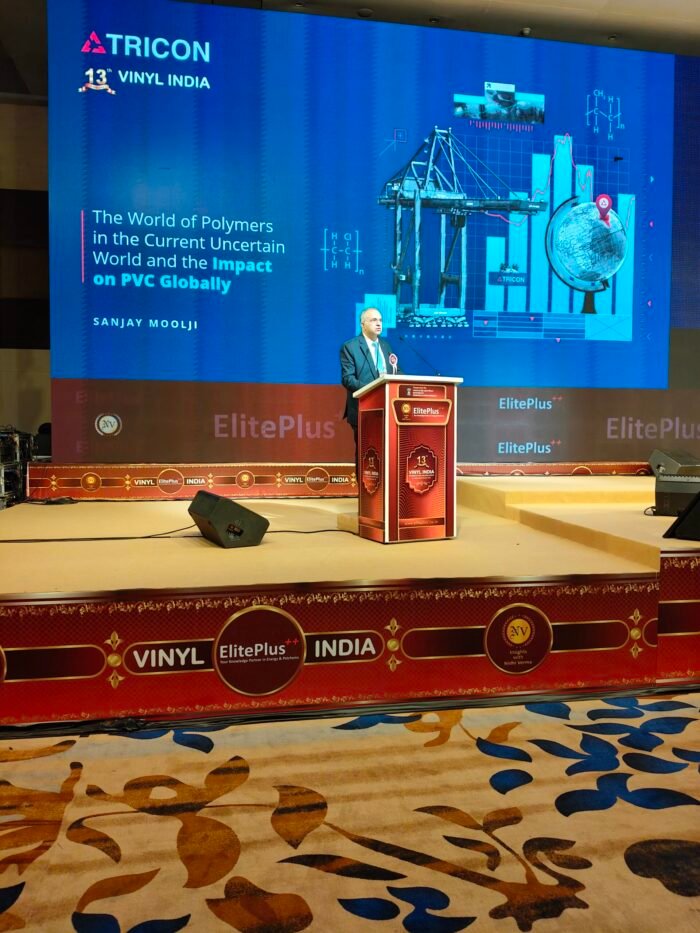
Global polymer markets are entering a prolonged phase of uncertainty and structural imbalance, with factors such as supply overhangs, geopolitical disruptions and shifting trade flows reshaping the outlook for PVC, Sanjay Moolji, chief strategy officer at Tricon Energy, said at Vinyl India 2026 organized by ElitePlus.
Moolji described the current environment as one where “the only certainty is uncertainty”, urging industry stakeholders to view PVC within the broader context of global polymer dynamics and macroeconomic shifts.

He said that the world today consumes over 300 million tonnes of polymers annually, with nearly 120 million tonnes traded globally. Polyethylene and polypropylene dominate demand, while PVC ranks as the third-largest polymer. However, growth has moderated to around 3.6–4%, reflecting a slowdown compared to the stronger expansion seen a few years ago, he added.
A major structural issue, Moolji stated, is excess capacity built during the previous decade, driven by optimistic demand projections and large-scale investments, particularly in China. This has resulted in persistent supply surpluses that could take the rest of the decade to rebalance.
China’s aggressive capacity expansion, initially fuelled by expectations of sustained construction growth, has now led to significant oversupply as its real estate sector slows. The country has consequently become a major exporter, reshaping global trade flows and exerting pressure on prices.
In the PVC segment, global installed capacity stands at over 65 million tonnes against demand of about 51 million tonnes, underscoring the scale of the surplus. Around 60% of PVC consumption is tied to construction and infrastructure, making the sector highly sensitive to housing cycles and economic conditions.
While developed markets continue to account for large volumes, emerging economies are driving incremental growth. Asia remains the largest consumption hub, with India standing out as a rare bright spot in an otherwise subdued global landscape.
India’s demand trajectory is being powered by infrastructure expansion, urbanisation and demographic shifts. With an estimated requirement of 78 million homes over the next decade and a rising middle class, PVC consumption is expected to grow at 5–6% annually. Despite new capacity announcements, the country is likely to remain import-dependent, with demand projected to reach around 4.2 million tonnes by the end of the decade.
However, recent geopolitical tensions have added a new layer of complexity. The disruption in the Strait of Hormuz has exposed vulnerabilities in global supply chains, with hundreds of vessels delayed and critical feedstocks such as naphtha, LNG and petrochemicals impacted.
For India, the fallout is particularly significant. Supply constraints in key exporting regions such as Northeast Asia, combined with feedstock inflation, are expected to tighten availability of key intermediates used in PVC production. This could alter trade flows and increase reliance on alternative sources, including China.
The ripple effects extend beyond energy, affecting logistics, production costs and overall market stability. Moolji warned that even if conditions improve, it could take months for supply chains to normalise fully.
Despite these challenges, he stressed that adaptability will be critical for industry players navigating the evolving landscape. As global markets transition from a seller’s to a buyer’s market, success will increasingly depend on the ability to respond to rapid and unpredictable changes, he concluded.