As India’s printing, packaging and converting industries move toward faster production, greater automation and more sustainable substrates, precision tooling is becoming increasingly important. For TGW International, a global manufacturer of industrial machine knives and blades and part of Edge Industrial Technologies, these changes are creating opportunities across flexible packaging, printing, labels and converting.
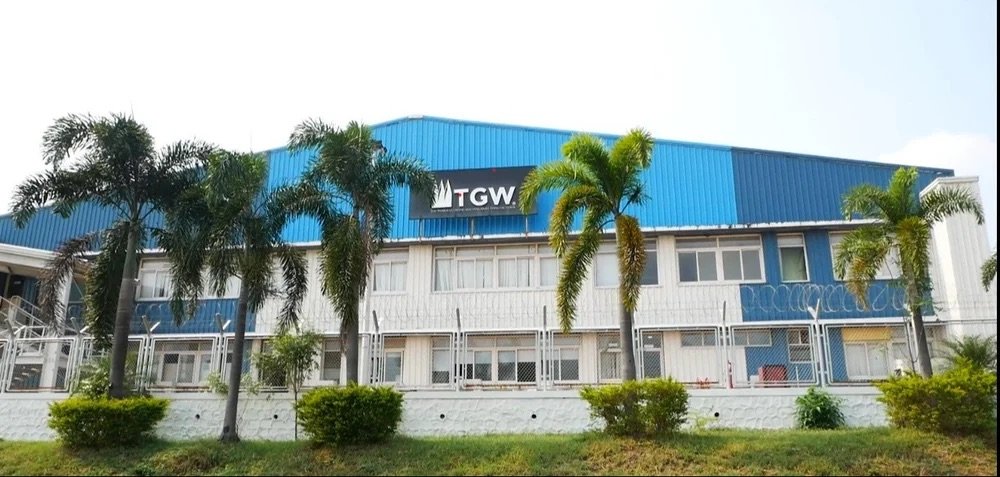
Starting from Sheffield, England, and with more than a century of machine knife manufacturing experience, TGW entered the Indian market in 2010 with the incorporation of TGW Machine Knives in Indore. Local manufacturing began the following year.

According to Shailendra Singh, India regional sales manager, TGW International, the Indian operation has expanded significantly since then. “Over the years, the Indore operation has grown exponentially from 60,000 blades in the first year to 8.3 million finished blades by the end of 2025.”
The Indore facility today serves both Indian and international markets, supported by Edge’s wider manufacturing and engineering network. In India, flexible packaging, particularly food packaging, remains a major contributor to the business. Singh points to the growing demand from the print and label industry, driven in part by pharmaceutical packaging, as well as demand from gypsum-board applications linked to construction activity.
“What these sectors share is a dependence on clean, consistent, high-speed cutting, and that is precisely where precision tooling earns its place on the line,” he says.
Engineering the right blade
TGW’s portfolio includes circular, razor and dished slitters, shear-cut and crush-cut knives for converting and flexible packaging. For printing and labels, it supplies perforating, trimming and finishing knives, while its packaging portfolio includes form-fill-seal knives, sealing jaws, crimpers and heat-seal bands.
“In the Indian market specifically, demand is strongest for circular and serrated knives used in flexible packaging,” Singh says. “We are seeing steady demand for sealing knives for food trays, as well as straight knives.”
Material and blade engineering are central to TGW’s approach. Depending on the application, the company works with carbon steel, D2, M2 and M42 high-speed steels, stainless grades, powdered-metal tool steels, tungsten carbide and ceramic, supported by coatings and surface treatments.
“The difference is engineered into the blade before it reaches the line,” Singh explains. “We select the base material to suit the application, from carbon steel, D2 and M2 or M42 high-speed steels through stainless grades and powdered-metal tool steels to tungsten carbide and ceramic, and we match hardness on the Rockwell C scale to what is being cut.”
The local manufacturing advantage
TGW considers its Indore manufacturing operation a key advantage in serving the Indian market. Local production enables shorter lead times, local-currency pricing and quicker response to customized requirements.
The company combines made-to-order production with stocked inventory, vendor-managed stocking programs and blanket orders. Singh says lead times in India can be as short as five days depending on the customer requirement, compared with a standard industry lead time of four to six weeks.
New materials, new challenges
The shift toward recyclable mono-material packaging is changing the requirements of cutting tools. Mono-PE, mono-PP, BOPP-based films and downgauged structures can be softer, more elastic or tackier than traditional materials.
“These substrates are often softer, more elastic, or tackier, and they can stretch or tear rather than cut cleanly if the tooling is not right for them,” Singh says.
For TGW, this makes sustainability partly a tooling challenge. Changes in substrates can require adjustments to blade geometry, metallurgy and coatings. At the same time, faster automated lines are placing greater emphasis on blade life, consistency and uptime.
“A blade is no longer judged on price alone but on how long it holds an edge, how consistently it cuts at speed, and how quickly it can be changed over,” Singh says.
TGW is consequently positioning itself as a technical partner rather than simply a blade supplier. “We see ourselves as a tooling partner rather than a parts supplier,” Singh says, adding the company is developing a total-cost-of-ownership programme in which its engineers visit customer plants to recommend blades based on specific applications.
Building for future demand
Singh identifies eCommerce and qCommerce, sustainability regulations, automation, digital printing and growth in food, FMCG and pharmaceuticals as key drivers for precision tooling in India.
“Each of these trends raises the bar for tooling,” he says. “New substrates need blades engineered specifically for them, faster lines demand longer-lasting and more consistent edges, and shorter runs mean more frequent changeovers where reliability matters even more.”
TGW is responding with further investment in India. Singh says the company recently invested US$1.5 million in modern equipment and has applied for a license to manufacture two million knives to anticipate demand from India and the wider APAC region. The group is also preparing to unify its brands under the single Edge identity from 2027.