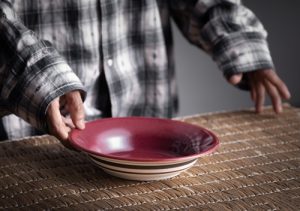
Bhubaneswar-based Beads is a design studio that creates elegant, ethnically inspired, and environment-friendly products. Specializing in creating bespoke handcrafted ceramic tableware, it is venturing into experimental crafts that include brass, paper mache masks, sabai grass, and more.
Each item produced at the studio which houses a team of skilled artisans, is meticulously carved to perfection under the mentorship of Jagannath Panda, an artist and art curator based in Delhi. Attention is paid to quality and detail.

The product portfolio of Beads includes Sarta, a beer mug with a cane handle; Bohana, an eight-piece dining set; Wakumu Tumbler, Akari tea cups, Baleri shot glasses, Gris pasta plates, and Gunjeli large dining plates. Each product from Beads has the artist’s signature, serving as both a certificate of authenticity for customers and a symbol of its support for the artistic community.
With a keen focus on minimizing plastic usage in packaging, their design prioritizes eco-friendly materials, promoting reuse and upcycling. Sandeep Hota, director of Beads, said, “Driven by our unwavering dedication to sustainability, we made a deliberate decision to revolutionize our packaging practices. Opting for eco-friendly materials such as jute bags and honeycomb paper, along with implementing plastic-free labels, became pivotal steps in significantly reducing our environmental footprint.”
Through sustainable packaging initiatives, Beads extends beyond delivering eco-friendly products. “It brings us great joy to witness our customers repurposing our jute bags and Baleri boxes, as it reflects their shared dedication to sustainability. We hope to inspire others to join us on the journey towards a greener future, where eco-friendly practices become the norm,” he says.
The brand says it promotes reuse and upcycling through its packaging design by consciously selecting materials that are not just eco-friendly but also reusable. In the interaction, Hota explained how the jute bags and packaging boxes from Beads are designed to be used multiple times. “The Baleri box, originally intended for holding six shot glasses, has been creatively repurposed by many of our customers as a dry fruit box or for storage purposes.”
The intentional choice of materials not only aligns with Beads’ commitment to sustainability but also inspires the customers to contribute to the culture of reuse and upcycling, minimizing waste and making a positive impact on the environment.
Discussing the challenges in promoting sustainable packaging, he said raising awareness about the importance of sustainability among consumers and encouraging them to prioritize eco-friendly options are some of the main hurdles. “In a market saturated with conventional products, it is challenging to shift consumer preferences towards sustainable alternatives.”
Hota says competing in a global market means facing stiff competition from larger corporations with greater resources and market reach. “As a smaller, niche studio, we at Beads keep finding innovative ways to differentiate ourselves and communicate the unique value proposition of our sustainable products to consumers worldwide.”
Despite the many challenges in sustainability in packaging and promoting eco-friendly products, Hota envisions a promising future in the international market. According to him, the global shift towards sustainability and environmental consciousness is gaining momentum, and consumers are increasingly seeking products that align with these values. “We anticipate that eco-friendly products, including our stoneware ceramics, will continue to gain prominence on the international stage. The demand for sustainable alternatives is likely to grow as consumers become more aware of the environmental impact of their purchases.”