Artificial intelligence is increasingly becoming an operational tool in the packaging industry, helping manufacturers improve efficiency, reduce material wastage, strengthen quality control, and accelerate sustainability initiatives. While adopting sustainable packaging materials often involves lengthy testing, validation, and machinery modifications, AI-based applications can deliver measurable improvements both in material procurement and through existing production infrastructure.
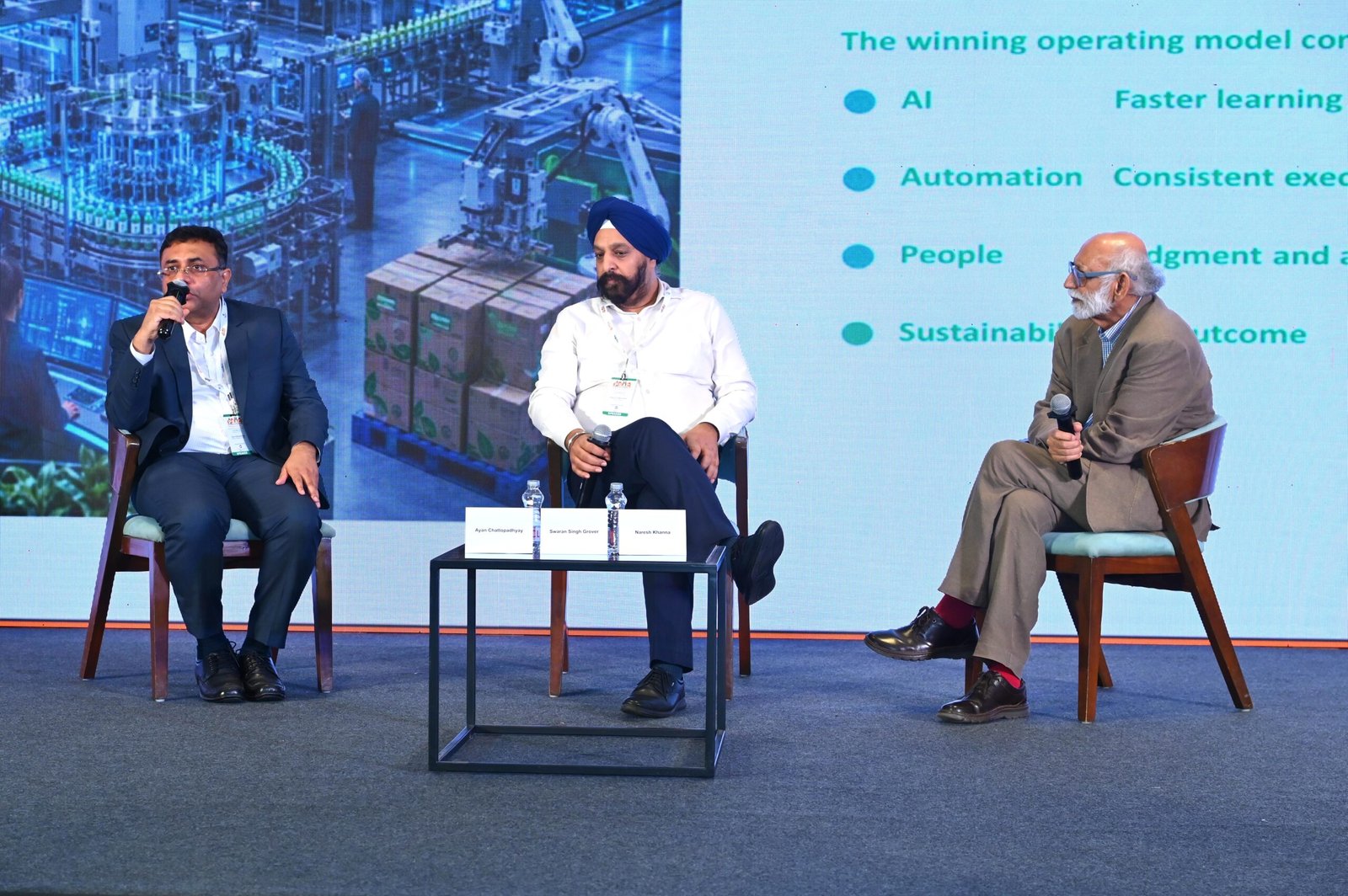
In the session, ‘How AI is Changing Packaging Faster Than Sustainability’ at PSAC 2026, Ayan Chattopadhyay, senior manager, filling and packing, Nestlé R&D Centre India, and Swarn Singh Grover, director, R&D, India cluster, Mars Snacking India, explored these ideas. What was a bit surprising, although it should not have been, was that AI is not just talk for these brands but actual practice aimed at efficiency, sustainability, and time to market.
AI transforms filling and packing operations
In his presentation, Chattopadhyay focused on AI applications in packaging machinery and end-of-line operations. He pointed out that AI and automation should be viewed as enablers of sustainability rather than competing priorities.

Photo- PSA
“For decades, our industry has focused on making packaging more sustainable. We have invested enormous effort in reducing material use, improving recyclability, lowering energy consumption and minimising waste. Yet today there is another force transforming packaging at an unprecedented pace. This force is artificial intelligence,” he said.
He explained that introducing sustainable packaging materials into existing factories requires collaboration between material suppliers and machine manufacturers, followed by multiple trials and technical evaluations, including barrier, transit and migration testing. AI implementation, however, can often build on existing infrastructure through sensors, programmable logic controllers (PLCs) and machine-learning algorithms.
One example he discussed was temperature control in flow-wrapping operations. Frequent machine stoppages and restarts can cause sealing-temperature fluctuations, affecting seal integrity and increasing defective products and material wastage. AI-based auto-tuning of machine parameters, including film tracking, jaw synchronization, pressure control, and dwell-time settings, can alleviate these interruptions. Filling and sealing systems can learn from machine operating data and automate adjustments when changing laminates, reducing setup time and unplanned stoppages.
Other applications include predictive maintenance using IoT sensors, AI-assisted robotic case packing and digital twins. Digital twins can simulate production lines before physical installation, helping manufacturers plan line balancing, machinery requirements and factory layouts. “In the future, we need factories which are not only supported by automation; we need intelligent automation,” Chattopadhyay said.
AI across design, manufacturing and retail
Grover presented a broader perspective on AI applications, identifying three stages across the packaging value chain: design, manufacturing and the marketplace. At the design stage, AI is helping accelerate pack graphics, color combinations, front-of-pack and back-of-pack information, nutrition panels and ingredient declarations. He also highlighted predictive modelling for packaging material testing, shelf-life assessment and transit trials, referring to collaborative work with IIT Mumbai.
 He further highlighted AI’s potential to identify alternative packaging materials through internal databases. Consumer-facing applications he cited as an example include the use of QR codes on Chocos packs, providing consumers access to nutritional information and to compare breakfast choices, including traditional foods such as poha.
Tech upgradation & scaling AI across the supply chain
During the panel discussion, moderator Naresh Khanna asked how large manufacturers would encourage contract manufacturers and co-packers to adopt similar technologies. Chattopadhyay explained that new technologies are first evaluated through proof-of-concept trials at selected in-house factories and pilot lines. Industrial validation follows to establish their reliability under actual production conditions. Only after successful validation would the company encourage co-packers to invest in the technology.
Grover said Mars evaluates manufacturing partners against the quality standards expected for its brands, while also considering their willingness to invest in technological upgrades. He highlighted cybersecurity as another important consideration when extending digital technologies beyond internal manufacturing facilities.
Concluding the discussion, Grover emphasised that AI must complement human intelligence. “AI can simplify; it can compute for you, but your experience and intuition suggest what will work, and will always play,” he said.
AI + automation = packaging for profit
Chattopadhyay reinforced the importance of combining AI with automation. Automation helps execute operations, while AI helps optimize them. Their convergence, he asserted, can deliver business benefits while accelerating sustainability objectives.

Photo- PSA
Khanna concluded by highlighting the often-overlooked role of filling and sealing in packaging sustainability. Industry discussions have traditionally concentrated on materials, substrates, films and recyclability, while the engineering and technology involved in the actual packaging process have received comparatively less attention.
He pointed out that significant sustainability gains are possible through better temperature management, reduced energy consumption, improved machine settings and fewer production errors.
The session underlined that AI is not a substitute for sustainable material innovation. Rather, it offers manufacturers another route and perhaps an immediate cost optimization way of achieving sustainability targets through intelligent production, improved quality assurance, and better utilization of existing resources.