Maxcess International is deepening its investment in India as the country’s converting and packaging equipment makers gain a competitive edge over foreign rivals.
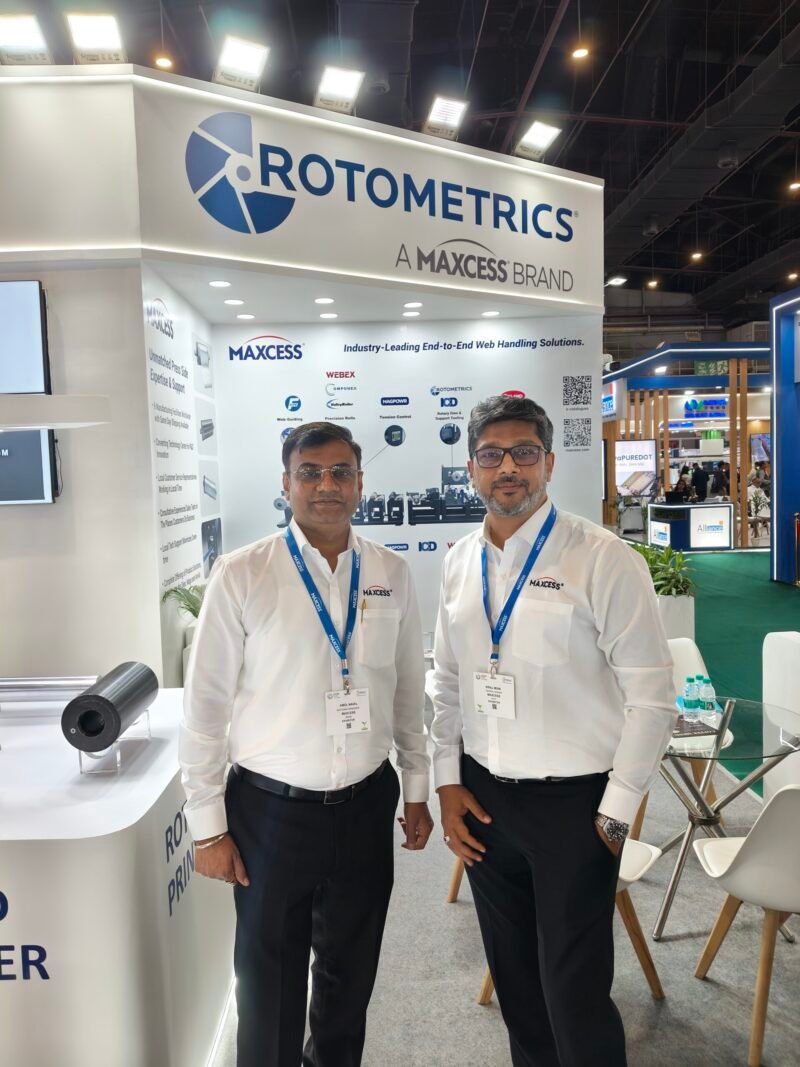
Speaking at Loupe India 2026, formerly known as Labelexpo India, Niraj Muni, general manager for India at Maxcess, said the company exhibited at the show for many years and arrived this time “with full strength.” He described this year’s edition as one of the best he has attended in more than two decades in the industry.
A global group with a 25-year Indian presence
Headquartered in the US, Maxcess operates more than 30 manufacturing sites worldwide and has been present in India for 25 years. Its portfolio spans solutions “from unwind to rewind,” sold under brands, including Fife, Tidland, Magpowr, Webex Valley Roller, Componex and International Cutting Die(ICD). Fife is its web-guiding line.
Maxcess showed a range of converting tools aimed at helping converters raise productivity and profits. The standout was its adjustable-angle tool, which Muni said is well-regarded globally. The company set it up as a live demonstration so visitors could handle it and understand its features firsthand rather than judge it from a brochure.
Customers on both sides
Maxcess serves both original equipment manufacturers (OEMs) and end users. Muni cautioned against reducing the business to a single split, since each brand serves a different need.
OEM-led lines: Web guiding and similar products typically ship with the machine, so most of those customers are OEMs. Some end users upgrade to Fife systems on existing lines.
End-user demand: Rotometrics tooling is also built into machines, but upgrade and replacement tools are often bought directly by converters.
“It’s a good mix of both,” Muni said.
Indian OEMs find an advantage
Muni said the exhibition reflected a clear industry shift. Currency movements, logistics costs and raw material pricing, shaped by the global economy, are making life harder for foreign machine suppliers and easier for Indian manufacturers. He estimated that about 95% of the machines installed or demonstrated at the show were of Indian origin.
“We are in an early stage of recognizing” the trend, Muni said, adding that Maxcess has restructured its India strategy around it, which he summarized as “local for local.”
From repairs to local assembly
Maxcess began investing in India three years ago, anticipating the market’s potential. It opened a repair facility in Mumbai, which is widening its scope to include local assembly. The move takes the company closer to customers, shortens delivery times and allows Maxcess to pass cost advantages on to buyers, Muni said.
The company remains a global manufacturer, and for the Indian market it still depends on its core technology from abroad. Its near-term goal is to localize components rather than full production.
Outlook
With Indian OEMs gaining share and a local assembly base taking shape in Mumbai, Maxcess is positioning itself as a supplier that can move at the pace of the domestic market. Muni’s view of the show was upbeat: it has improved with each edition, he said, and this year was among the strongest.