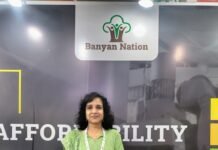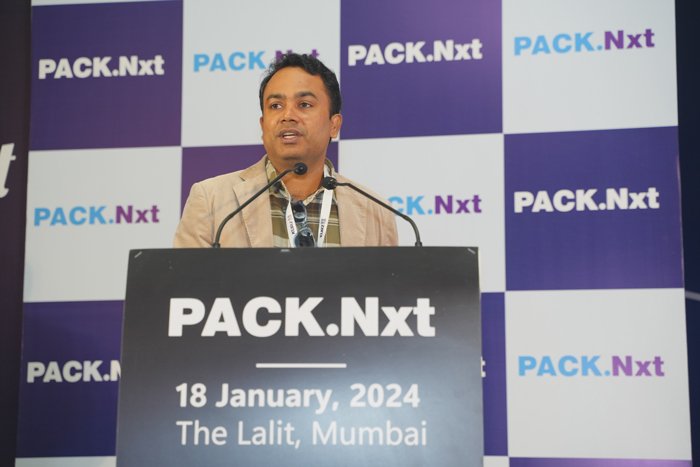
Mani Vajpeyi, the CEO and co-founder of Banyan Nation (along with Raj Madangopal), began his presentation at the PACK.Nxt conference by revealing his optimism for 2024 for the country’s plastic recycling industry, mainly because of the regulations coming into force in 2025. One presumes, he meant both the Indian plastic waste management rules that have already specified and notified the ratios of recycled materials to be used in various plastic-using categories and global regulations such as the European CEFLEX rules, which also require a high degree of compliance by 2025.
In his relaxed chat with the audience of brand owners, packaging professionals, packaging converters and enabling suppliers, he demonstrated first of all, the structured model of Banyan Nation’s plant in Hyderabad for the high-quality mechanical recycling of PE and HDPE, which are part of the polyolefin family. A highly curated and segregated supply chain for plastic waste collection has been established in a model that he said is based on that of the Amul milk cooperative. “We are the Amul of trash-wallas, raddi-wallas and waste collectors,” he said.

With the help of a short video of the Banyan Nation plant in Hyderabad, he showed its scientific process of cleaning, deodorizing, and extrusion of high-quality recyclate resins that can be laterally used to again produce – “Close to human product containers. Our recyclate quality is so high,” he said, “because of the traceability of our material sourcing, our proprietary technology for hot washing that includes meticulous water management, deodorizing steps and our world-class extruders that make these clean, safe and traceable.”
‘We can help brand owners meet their sustainability goals’
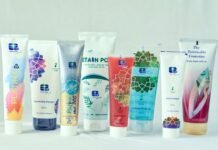
Vajpeyi reiterated that the company has already recycled nearly two billion bottles and containers and said that with the EPR regulations mandating a high percentage of recycled resins, re-dozing with high-quality recyclates can be from 30 to 80%. This achievement comes from the innovative collection system where the input feedstock is already pre-segregated, consisting for example of highly segregated recyclates bottles.
Bringing in segregated materials is not enough, washing is needed to eliminate surface contaminants and this is done using proprietary washing techniques developed over the last seven years. A special technique can remove even thermoset paints from car bumpers. “Our technology is over-engineered to eliminate all contaminants,” Vajpeyi said, adding, “Batch-to-batch color consistency is easy for 20 tons, but providing 2,000 tons is difficult and for this, we use de-oderization for food grade output and the best extruders.
“With our certified pan-India catchment area, we collect polyolefin rigids and films and we curate, customize, and recycle a very pure form of recyclates that are free of heavy metals and cross-material contamination. Even as we are expanding our spectrometric, colorimetric and gravimetric instruments and labs, and quadrupling our capacity by 2025, I can say to the brand owners here, we can help you meet your sustainability goals.”