Noida-based flexible packaging company UFlex has teamed up with US-based Spectra Systems to bid for the proposed polymer banknote program, according to sources cited by news agency, the Press Trust of India (PTI).
The program has been initiated by Bharatiya Reserve Bank Note Mudran Pvt Ltd (BRBNMPL), a wholly-owned subsidiary of the Reserve Bank of India (RBI) in a bid to improve the durability and cost efficiency of currency, especially lower-denomination notes that see heavy circulation and wear.

The tender states the requirement of biaxially oriented polypropylene (BOPP) film, uniformly coated with pacifying ink in the required color and finished with an anti-static coating to ensure a good surface for printing and ink adhesion. The requirement is for 68,000 reams, split equally at 34,000 each for the ₹10 and ₹20 denominations.
The tender was floated on 17 July with 18 August set as the deadline for expressions of interest (EOI). It followed the government’s approval to introduce polymer currency on a trial basis. PTI’s sources said a joint proposal from UFlex and Spectra Systems has been submitted. UFlex did not respond to a query seeking comment on its participation, PTI reported.
In a Lok Sabha reply on 27 July, minister of state for finance Pankaj Chaudhary said the RBI, on the recommendation of its Central Board, had sent the government a proposal under Section 25 of the RBI Act, 1934. It covers one billion pieces each of ₹10 and ₹20 polymer notes for field trials, followed by regular issuance in these denominations if the trials succeed. He said the government has approved the proposal.
Chaudhary added that the introduction of polymer notes is still at a preliminary stage, and any impact on digital payments can only be assessed after regular issuance begins. He noted that banknotes and digital payment systems are complementary tools for the public.
According to PTI’s sources, the program is expected to involve technical evaluation and testing of substrate samples ahead of larger procurement. The assessment is likely to look at security features, manufacturing consistency, scalability and long-term supply capability. The UFlex-Spectra partnership combines UFlex’s polymer manufacturing and industrial strengths with Spectra Systems’ expertise in banknote authentication and security technologies, the sources said.
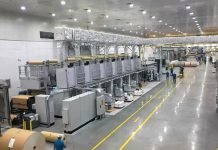
According to information on UFlex’s website, the company has two BOPP film lines in its Noida plant. Media reports in November 2925 stated that UFlex was also working on plans to build a 54,000-ton-a-year BOPP line at its complex at Dharwad in Karnataka.
Background
Multiple financial media reports stated the RBI targets circulation from the start of FY28, subject to successful testing and operational assessments. Governor Sanjay Malhotra had said in June that the central bank had begun the tendering process for the polymer substrate and would test the notes under Indian climatic, usage and infrastructure conditions before deciding on a wider rollout. “We are still at a pilot stage,” he had said earlier this year.
The push is aimed at improving the durability and cost efficiency of currency, especially lower-denomination notes that see heavy circulation and wear. Polymer notes typically last three to four times longer than conventional paper notes and resist water and dirt.
They can also carry security features such as transparent windows and holograms, and proponents say the substrates can be recycled.
Malhotra had said the initiative would help expand India’s currency printing capacity as cash requirements grow. The RBI’s FY26 annual report shows security printing expenditure fell to ₹4,875.2 crore in 2025-26 from ₹6,372.8 crore a year earlier.
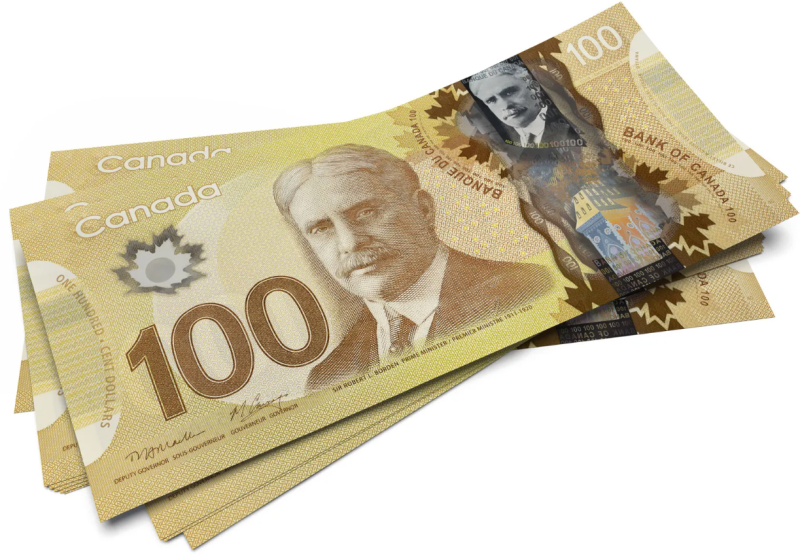
Polymer (plastic) notes are used fully or partially by around 60 countries. Australia was the first to adopt them, in 1988, and others include the United Kingdom, Canada, New Zealand, Singapore, Vietnam and Romania.
India has tried this before. A 2012 pilot, with trials in Bhubaneswar, Jaipur, Kochi, Mysuru and Shimla, was reportedly shelved after ATMs and counting machines struggled with the thinner, smoother, slipperier notes. There were also concerns about dependence on specialized global suppliers for the polymer material.
The government has denied rumors that paper currency will be banned and all notes will be replaced with plastic. Polymer notes will circulate alongside paper notes as legal tender, with the pilot limited to ₹10 and ₹20. The exact timeline and expenditure cannot yet be determined.
The move comes as India examines the feasibility of polymer-based currency substrates and the industrial capacity needed to produce them at scale.