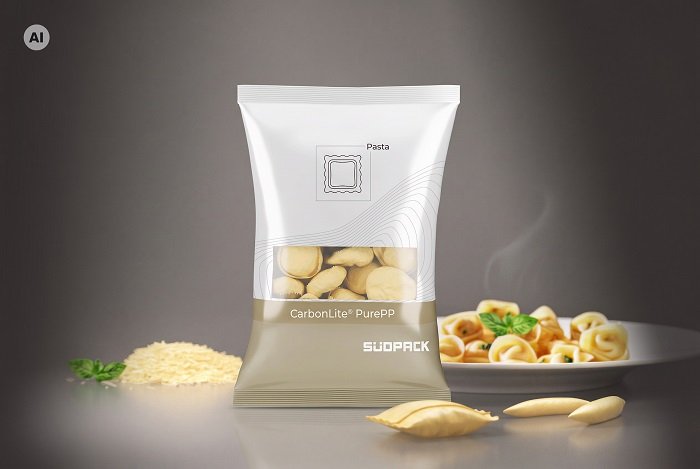
Due to their high moisture content, fresh pasta products such as noodles, gnocchi, ravioli, and filled pasta place stringent demands on thermoformed and pouch packaging in terms of barrier properties and shelf life.
With innovative high-performance films and packaging solutions that combine product protection and environmental responsibility with economic profitability, Sudpack – a leading manufacturer of high-performance films and packaging solutions for the food, non-food and medical goods industries – has established a strong market position as a development partner for the industry.
Fresh pasta is one of the most dynamic segments in the refrigerated convenience category, with new product concepts, flavor profiles, and portion sizes continually making their way onto refrigerated shelves. From high-protein pasta, international flavors, and fusion recipes to vegan and vegetarian options as well as new preparation methods, manufacturers are constantly developing new ideas in response to demand for quick, high-quality meals and changing dietary trends. In short, fresh pasta today combines convenience with great flavor and enjoyment, while new culinary ideas sit alongside established classics.
The global market for fresh refrigerated pasta alone is currently estimated at between USD 9 billion and USD 11 billion, and is projected to reach USD 19.5 billion by 2033. This growth is also shaping developments in the packaging market, where the focus is now on striking the right balance between product protection, functionality, and PPWR compliance.
Packaging: balancing cost, regulation, and performance
When assessing packaging concepts, the cost of the material itself is now only one part of the equation. What matters far more is the interplay between regulatory requirements and economic profitability – and ultimately how a solution performs throughout its entire life cycle, right through to end of life. Food packaging that uses less material and is developed in line with Design for Recycling (DfR) principles can potentially benefit from eco-modulation and recycling-oriented fee models, for example. Depending on the country and when total costs are taken into account, a slightly higher material price can therefore be offset by lower EPR fees. At the same time, process reliability, product protection, and shelf life remain consistently high, while the packaging films can also provide the heat resistance required for pasteurizing fresh pasta products.
Coextrusion – the key to high-performance mono-material concepts
Coextrusion is one of Sudpack’s core strengths. By precisely combining different functional layers, the film manufacturer can tailor key properties such as barrier performance, mechanical stability, sealing performance, and machinability to the specific application. Compared with laminated structures, these coextruded high-performance films can often achieve the required performance at thinner gauges. This enables producers to use lighter packaging solutions, which can generate economic benefits throughout the value chain and additionally reduces CO2 emissions due to lower raw material consumption.
Sudpack’s product range includes packaging concepts for a wide range of requirements – from pasteurized and non-heat-treated products to products requiring refrigeration, as well as those that offer a long shelf life even without refrigeration.
CarbonLite Flow Pack PurePP
Flow packs are now a common packaging concept for products such as gnocchi, Spätzle, and filled pasta. These lightweight pouches simplify procurement and logistics because, unlike tray-based concepts comprising a bottom and top web, they are produced from a single film web. Compared with tray packaging, the lower weight of a flow pack can also help reduce overall costs through lower EPR fees.
The Sudpack film is highly material-efficient and designed in line with DfR principles. As a PP mono-material solution, it can be recycled via existing PP recycling streams. In one customer application, for example, material use was reduced by more than 20% compared with the previously used PA/PP structure. Across 10 million packs, this translates into savings of more than 15 metric tons of packaging material – with no compromise on product protection.
PP-based thermoforming concepts
The Multifol thermoforming concept based on flexible film is an ideal solution for packaging larger products such as filled pasta or ravioli. A vacuum is created to hold the product securely in place, allowing the pack to be displayed upright, hanging, or flat at the POS. This film is also designed as a PP mono-material in accordance with DfR principles. Depending on the product and the customer’s requirements, Sudpack also offers PP-based rigid film concepts, including versions with a peelable top web for easier opening and greater convenience.
From collaborative development to reliable implementation
But how can product protection be assured? What adjustments are required on existing packaging machines? How will new materials perform during processing? And how do material use, recyclability, and potential fee structures affect total costs?
No matter which packaging concept a customer selects, Sudpack’s experts support producers throughout the transition to packaging that is designed for recycling – from the initial idea and every stage of development through to successful implementation. This includes sampling tailored to individual applications, application engineering support, testing and validation on specialized test equipment, and assistance with CO2 and recyclability assessments. The objective is clear: to minimize the risks associated with the transition and ensure that new packaging concepts can be reliably integrated into existing production processes.