Wanjie India, the Indian partner of Hebei Wanjie Machinery, will showcase a range of printing, inspection, slitting and die-cutting technologies at Loupe India 2026, with a focus on helping converters improve productivity, flexibility and production efficiency.
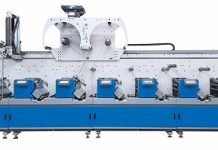
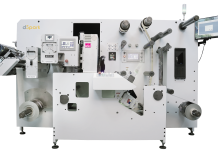
The company will present three key solutions — the WJPS 350D, a 6-color intermittent offset press with flexo, on-rail cold foil and turnbar capabilities; the WJFT inspection and slitting machine, capable of running up to 200 m/min; and the WJMQ high-speed flatbed die-cutting machine.
According to Rakesh Patel of Wanjie India, the machines have been developed around the changing requirements of Indian label and packaging converters, who are increasingly required to manage diverse applications while maintaining quality and production efficiency.
“Indian converters are increasingly looking for equipment that can deliver high-quality output while offering flexibility across different jobs and production requirements,” Patel said. He said the machines combine multiple capabilities, high production speeds and precision to help converters manage diverse applications.
A key highlight will be the WJPS 350D. The 6-color intermittent offset press integrates flexo, on-rail cold foil and turnbar capabilities, making it suited for label applications requiring multiple processes and value-added finishing.
Patel said the combination of printing and inline converting capabilities is particularly relevant to modern label production, where converters are looking to achieve greater flexibility within their production workflows.
The company will highlight the WJFT inspection and slitting machine, which operates at speeds of up to 200 m/min. The machine is positioned to support high-speed production while incorporating inspection and slitting within the same workflow. The WJMQ flatbed die-cutter, meanwhile, is designed for high-speed and accurate finishing applications.
Beyond individual machines, Wanjie India sees automation and integrated production processes becoming increasingly important for Indian converters. Shorter runs, growing SKU counts and tighter delivery schedules are placing greater emphasis on efficient changeovers, quality control and production flexibility. “Over the next few years, we expect automation, production flexibility and integrated processes to become increasingly important in the Indian label and packaging industry,” Patel said.
He pointed to the growing relevance of hybrid and multi-process printing, along with inline inspection, as converters respond to demands for greater consistency and traceability. Sustainability, he noted, will remain an important consideration, particularly through efficient production, reduced material waste and better resource utilisation.
At Loupe India 2026, Wanjie India aims to demonstrate how different stages of the label production workflow can be connected. “Rather than showcasing machines in isolation, we want visitors to understand how printing, finishing, inspection and die-cutting technologies can work together to improve productivity and flexibility,” Patel said.
Visitors can meet the Wanjie India team at Hall 11, Booth K44 at Loupe India 2026 from 29 October to 1 November 2026 in Greater Noida.