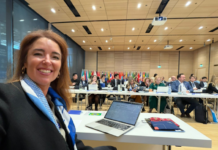
The third edition of the Save Food Congress took place at the Messe Centre in Dusseldorf with a reiteration of its aims—bringing both awareness and action to a movement that needs to address the polarities of excess and want in a far too divergent world. The conference saw the renewal of agreement between the Food and Agricultural Organization (FAO) of the United Nations and Messe Dusseldorf to continue their cooperation in the Save Food initiative. Save Food is one of the six initiatives of the UN KOP conference on climate change held in 2015.

The Congress is humbling for technology companies that are generally committed to more, faster and automated production compelled to talk on this platform about simpler and more appropriate technologies for emerging economies to prevent food losses on the farming, harvesting, sorting, processing and logistics side. Nevertheless, it is a sobering thought that already more people in the world die of obesity related deaths than to those related to malnutrition. In the European Union, 88 millions tons of food worth about EUR 143 billion is wasted annually.
The German government has established a division to tackle food waste with a “too good for the bin” awareness program. Its spokesman outlined the government’s 3-step strategy, including targeting its communication at the 800,000 young people who come of age each year in the country; investment in science research to prevent food waste to match or compete with research and development for the increase of food production; and to attract and enable startup companies to find solutions that are both creative and have their own business velocity. A view that can be said to be shared by several speakers is that, “While the private sector holds the key to addressing the issues of preventing food losses and food waste, the public sector is an enabler through policy, frameworks, economic initiatives and research.”
India invites investment in food processing and packaging

others. Photo PSA
A featured speaker at the Save Food Congress was Gargi Kaul, joint secretary and financial advisor to the Ministry of Food Processing in the Government of India. Kaul said that the Indian government is committed to reducing food losses currently estimated to be of the order of US$ 138 billion, by 10% annually. She openly invited foreign direct investment in food processing and packaging pointing to the 42 mega food industrial parts that the government has approved and of which 8 are already operational—together with the government’s recognition of better storage and cold chain logistics facilities. “We require food processing and packaging technology,” she said. “In addition, there is an opportunity in the food retail sector of US$ 33 billion in the next ten years.”
Kaul invited interested stakeholders to the Food India 2017 conference being organized by the Indian government from 3 to 5 November 2017 in New Delhi. Subsequent to Kaul’s forthright and well-received presentation, the FAO presented its case study research of food losses in Andhra Pradesh.
Azuri Health of Kenya presents a solution
Tei Mukunya, the managing director of Azuri Health, a small and medium enterprise in Kenya, presented her company’s success in preventing losses of the
mango crop in her region by building a small mango processing and packaging
company that delivers sliced and dried mango slices as attractive shelf-ready
packages for domestic consumption and exports.
Mukunya described the achievement of a hygienic and sustainable business
as well as the challenges of scaling it up with increased mechanization and technology along with the use of new materials. Azuri Health has received immense
help from consulting firm Africons as well as technology suppliers such as Bosch
and Multivac. Mukunya herself is an accomplished and articulate agriculture and
food industry consultant who has taken on an entrepreneurial role.