waste - search results
AD named 2018 Edie finalist
Avery Dennison has been recognized by Edie, a leading information resource for sustainability-oriented companies, as a finalist in the 2018 Sustainability Leaders Awards. Avery Dennison was named in the Employee

“We need smart, resource-saving packaging”
Germany-based Windmöller & Hölscher (W&H) is a world leader in providing machines for manufacturing and printing flexible packaging. With a staff of 2,700 and an export ratio of 93%, in 2016 the company turned over nearly EUR 800

Tomra Sorting Solutions eyeing the Indian mid-segment market
Although India is among the leading producers of food grains, fruits and vegetables in the world, an alarmingly large proportion of that produce is wasted annually due to
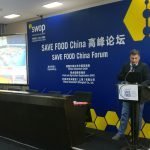
Save Food initiative debuts in China
The Save Food initiative marked its debut on 8 November during the Shanghai World of Packaging (SWOP) 2017 in China, which was held from 7 to 10 November in Shanghai. Just like India, China too faces a huge problem of food wastage due to

Innovation, flexibility and opportunity at Comexi’s CTec in Girona
On 24 October 2017, more than 50 directors, engineers, senior and chief executives from the flexible packaging industry as well as important clients joined the successful open house event at Comexi’s Girona CTec facilities. Comexi and hubergroup

APP at Paperex 2017
Asia Pulp and Paper (APP), the largest paper and pulp producer in the world, is an Indonesian company with significant presence in Indonesia, China, Western Europe
UPM Raflatac offers new generation solutions for sustainable packaging
UPM Raflatac is introducing a unique lifecycle approach called forest positive along with RAFNXT+, a next-generation solution for sustainable packaging to

Packaging design competition ‘Better with Less’
Billions of consumer packages are consumed globally every day, and the amount is growing. The Better with Less – Design Challenge is challenging packaging designers to create environment-friendly, functional packaging solutions for everyday
Color management matters
Over-used terms like ‘innovation’ often conjure images of a new feature-laden smartphone, or some other type of gadget that doesn’t exist today. Besides hardware and software innovations, the

Indian brands are aggressively modernizing
In 1987, when Huhtamaki PPL’s current chairman Suresh Gupta joined the company (known as Paper Products Limited at the time), the total sales were less than Rs. 100 crore. In the three decades since his joining, the