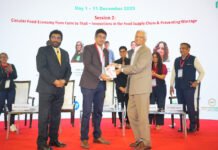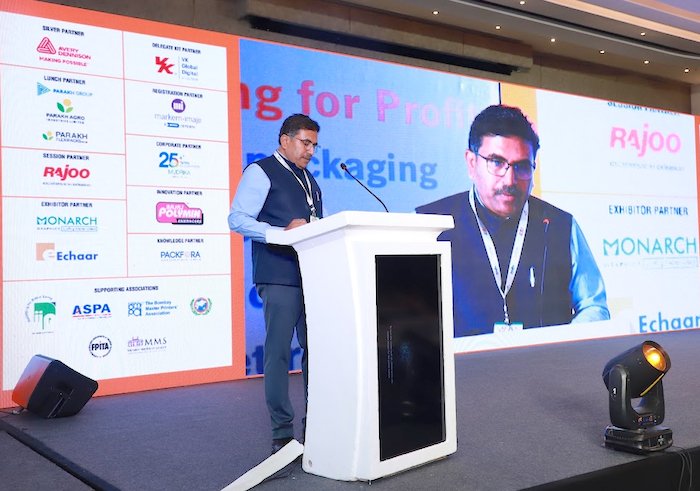
From the start of the Packaging South Asia Conference in Mumbai on 9 October 2026, it was clear that current and potential food and beverage production is a key driver of the Indian economy. And that the alignment of food processing and sustainable packaging is essential to reduce food loss and waste. The Chief Guest Dyaneshwar Patil, a Joint Secretary in the Indian Administrative Service who, amongst his several responsibilities as the Development Commissioner of SEEPZ-SEZ, is also the Director of the Indian Institute of Packaging, spoke about his rural upbringing as a farmer’s son, and the need for hygienic and safe food packaging and its advancement since his own school days.
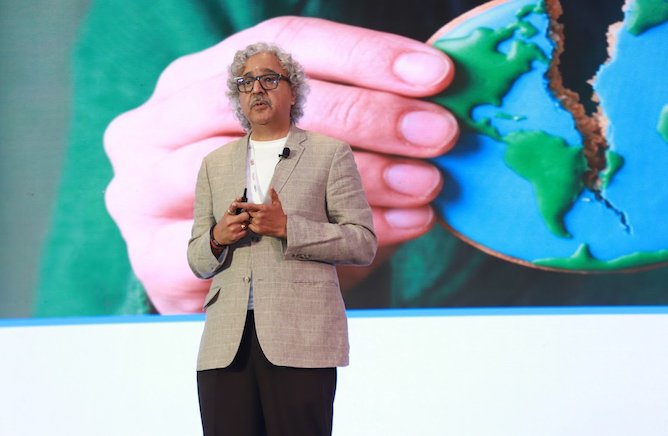
He suggested that changing demographics and consumer behavior require a new level of creative thinking in the consumer product industry and its packaging suppliers, aided by data and Artificial Intelligence. He added that regulation, sustainability and compliance are accelerating the next wave of packaging innovation.

India’s Gen Z population exceeding 460 million and Gen Alpha population exceeding 360 million, make it the world’s largest combined population in this age demographic, said Muthusubramanian. He explained that significant poverty reduction has created more than 146 million affluent consumers who, together with the world’s largest Gen Z and Gen Alpha population, are reshaping consumption. This makes the country the world’s third-largest quick commerce market.
The current trends in exports of refined fuel products, phones, and pharmaceuticals could make India a global export hub, he said, adding that digital capabilities are becoming the new industry baseline. Citing AI as a generational technology that will have a generational impact, he said it will transform packaging in terms of client ideation and conceptualization, artwork variants, 3D prototypes, shelf impact testing, and compliance checks.
From hours and days, these processes will move to real-time collaboration, minutes, and hours, and, in some cases, be totally automated. Given the scale of our economy, demographics, and increasing affluence, he predicted that India offers a huge canvas for reimagining the future.